Brassicas

Today saw the sowing of the various summer, autumn and winter brassicas. This year we’re going to try and lessen the load on the chest freezer, as we tend to sow everything at once, and harvest it all at once. I don’t think Suz has still forgiven me for the weekend I visited my parents, leaving a barrow of cauliflowers at the back door as they’d all flowered during the week. All needed washing, cutting into florets and freezing.

This year we’ve sown, outside in trays or raised seed beds:

All Year around Cauliflower – one lot for an autumn harvest, and we’ll sow another lot later for over-wintering.

Cavolfiore Romanesco Precoce – a natty pointy cauliflower, one to harvest in late summer/autumn. If memory recalls it has a rather creamy texture, and a slightly nutty flavour.

Beaumont F1 (autumn) Broccoli – we’ve gone for Broccoli as opposed to Calabrese, as Broccoli is happier to be transplanted when raised in a seed bed. Also, with Broccoli, as you pick the side shoots, more will grow. The more you pick, the more you get. Calabrese tend to have one main head and smaller side shoots once that’s picked.

Evesham Special Brussels Sprout – a sprout that you can harvest from September to December, so Christmas dinner will be dressed entirely properly (it’s practically naked without sprouts, in my very humble opinion).

Golden Acre (Primo II) Cabbage – cabbages are where we generally fall down, growing too many of one type. This round headed cabbage will, in theory, provide us with bulky green goodness from July to October.

January King 3 (Savoy) Cabbage – our winter cabbage, I love these, will take over from the round headed cabbage, harvesting it from November through to March, when spring cabbage will take over from it.

We’re missing red cabbage from above – the fact we use so few, mainly for pickling, it will be cheaper and easier to buy three or four plugs from the local nursery.

Spring cabbages will be sown in August, ready for harvesting next February through to March – I need to be careful that they aren’t sitting anywhere we need to plant stuff – onions follow brassicas and they quite like an early start. If we plant from sets then we have no problem with the other brassicas, and if we plant leeks where the spring cabbages have been grown then the cabbages will be fine where they are until quite late, as we don’t transplant leeks until May/June.

Raised Bed

With the incredible weather continuing, another day saw the raised bed filled with various salads – Sparkler 3 radish, Apollo F1 spinach, Webbs Wonderful lettuce, Misticanza di Lattughe mixed lettuce (from the great Italian Franchi seed range) and Wild rocket. As rain has been scarce for almost a week, the newly planted fruit trees have also had a good watering, to keep them happy. The blossom is out on many of the fruit trees, at this rate it should be a good crop this year! Even more dandelions were pulled, and the numbers are dropping now, which feels good. I also placed cloches where we’re to plant out the various squash later in the year, to help warm the ground in readiness.

Root Crops

Another scribbled mental note – these are so useful for the following year, to get a feel for the plants that do well here. The day began with the usual dandelion beheading – another barrow full, then watering the new fruit trees in as it’s been a dry week so far. The strawberries and raspberries had some of the lovely manure donated by Ken spread around their bases, as did the rhubarb and gooseberries. The geese had their full clean out – fresh straw in the houses, ponds emptied and refilled.

Then on to the root crops. This plot hasn’t been manured, but the squash stations will have plenty added just before they go in later in the year. For now the stations will have cloches dropped where the plants will go, to help warm the ground up. The seed that went in today were one 9′ row of Flyaway F1 carrot, three rows of Boltardy beetroot and three rows of Hollow Crown parsnip.

All root crops were netted against the dreaded pigeon, sparrows and rabbits. Or row of peas were also netted, but we need to rethink the layout of the peas and beans to make netting easier. Whatever the case, we need more netting!

The final job of the day was to water in all the seeds sown over the last two days – that was over an hour’s job as the onion patch was also beginning to look a bit parched. As were the strawberries, rhubarb, gooseberries and currant bushes. A quick check on the chicks, who have now taken up residency in the garage as the fluff and dust produced by week two was just too much to keep them in the house, and 10 o’clock saw me finally stumbling in, to a warm fire and mahoosive mug of sweet tea. Perfectamundo 🙂

What a Day!

With Suz and Jay popping out, Smiler and I got stuck in with more sowing. He sat in the greenhouse and sowed Incredible F1 sweetcorn, Butternut Squash and Jack O’Lantern pumpkin. I’d toddled down to the patch and started the daily dandelion massacre (every time a yellow head is seen it’s pulled…I’ve seen what a field of dandelions looks like and it’d be a nightmare to grow veg in). Then it was back to vegetable bed preparation, marking out the sites for the four bean wigwams and the six bean and pea trenches. After lunch Suz’s parents, Colin and Jackie, turned up and everyone got stuck in. Well, everyone but Jay who had remained at the house, up to something. Suz sowed the entire flower bed – Sunflowers, Nasturtiums and Marigolds. Jackie de-weeded the rhubarb and gooseberry patch, Colin took on the raspberries up at the house and Smiler helped me put in some broadbeans before continuing with the dandelion massacre.

We put in two 9′ rows of De Monica broad beans – an early variety that hopefully we can freeze before the main harvest sucks up any spare time we might have. Then we had a single 9′ row of Scorpio main crop broad bean.

As far as peas went, we put in three 9′ rows of main crop Onward marrowfat peas. The danger we have of crops we eat during the summer itself is that we have a deluge of veg, so we’re trying to weight the food in favour of storage, to see us through the eight months where there isn’t the food to be had.

After a seriously long day, we all migrated back to the house where Suz had prepared a gorgeous meal – roast King Edwards from last year, massive leeks that had over-wintered in the patch, cauliflower cheese and roast chicken. And for pudding we found out what Jay had been up to – lemon and lime honey muffins and mixed summer fruit (from our freezer stash) crumble. Absolutely amazing end to a fantastic day – full bellies and tired bodies 🙂

Potatoes

We’re trying something different with the potatoes in terms of their spacing. The earlies are spaced at 2′ between rows, 9″ between each spud. Normally we’d plant the main crop spuds at 12″ between each potato and 2′ between rows, but 2′ gets rather cramped when trying to mound them up, and eventually some spuds are revealed to the sun. This year we’re trying 2.5′ between rows and 9″ between each spud in a row. The varieties we’ve planted today are:

1st Earlies
Swift – the earliest to harvest, this will break the potato gap following winter.
Vales Emerald – a cross between Maris Peer and Charlotte, great flavour and good general disease resistance. Also 25% higher yoked than other similar varieties.
2nd Earlies
Charlotte – lovely waxy texture, perfect for summer salads 🙂
British Queen – a heritage variety, apparently incredible mashed with butter. Can’t wait to try them!
Main Crop
Valour – one of our favourites, purely for the fact that we get decent crops here from them, they’re one of the few few main crops that boil well, and they’ve decent disease resistance.
King Edward – the classic roaster, we’d never be without this in the ground, although last year’s crop wasn’t great.
Desiree – good drought resistance apparently, but not sure about the flavour yet.
Maris Piper – a good all rounder.

Onions

The sun god is most definitely favouring us at the moment, and I have a hunch there’s a good year ahead. Taking advantage of the weather, Smiler and I spent a good few hours putting 750 shallot, onion and garlic sets in. We put in Picasso shallots, our favourite pickling shallot, Red Karma onions, a sweet red salad onion that also stores well, and Hercules and Stur BC onions – the latter being a new one on me. The garlic was the Solent White, an ever faithful that has served us well over the last few years. Let’s hope the weather continues! What really surprises me is the cost of onion sets – the Hercules cost less than a penny each! 79p for 100 sets – we could have sown the entire onion patch, 800 onions, for £6.32 – that’s around £200’s worth of onions if bought in the shop. Crazy!

20140412-212511.jpg

The First Sowing Outside!

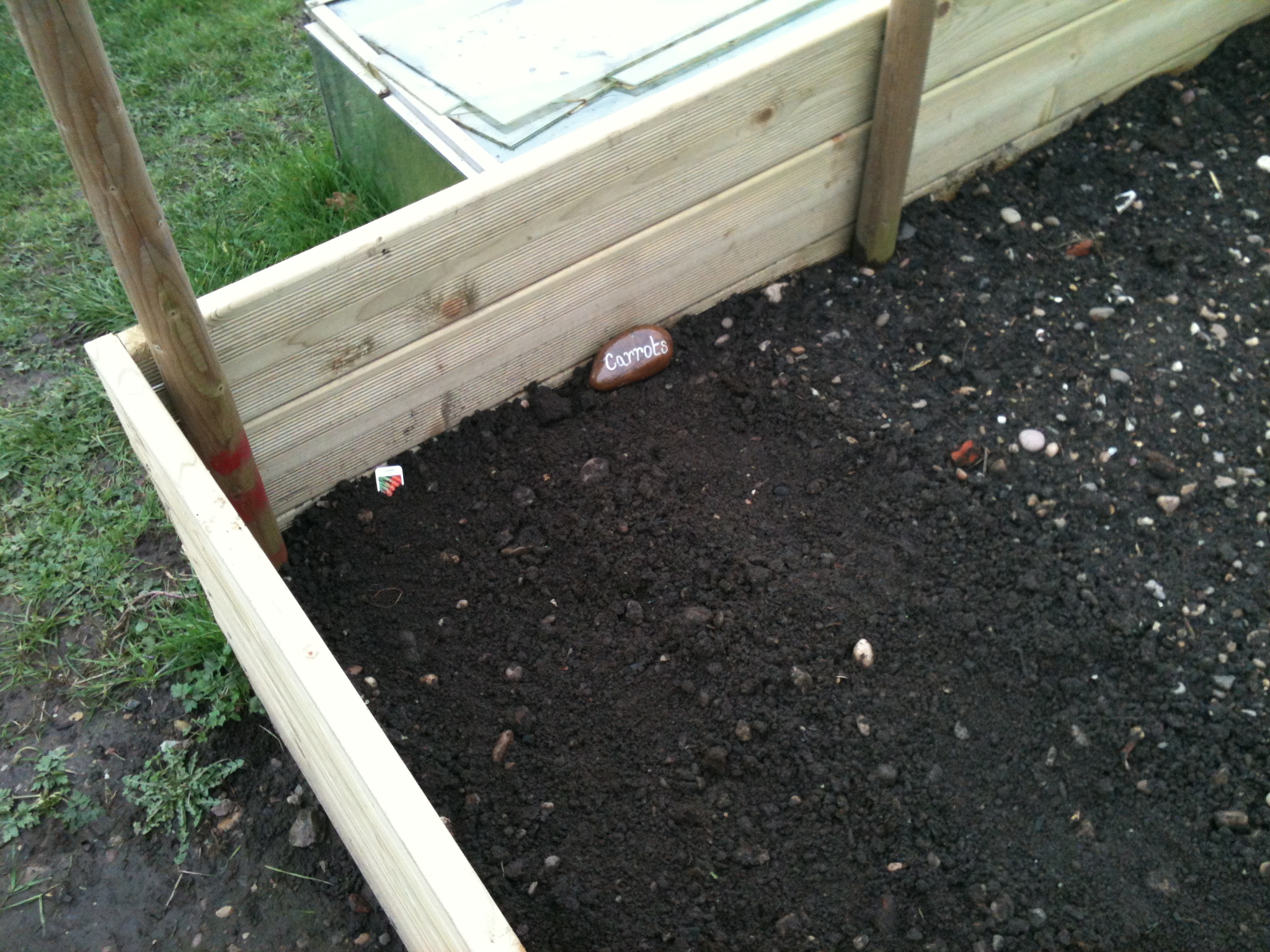
It had to start sometime, so those old stalwarts of the frost, carrots, were the first in. The new and improved raised bed is put to action with two 10′ rows of Royal Chantenay 3 carrots sown – nice baby carrots. And it’s also the first time I get to use my one of my Christmas presents from Suz – local pebbles with the names of the veg written on it, and then varnished. Best pressie ever!2014 Carrots 2014 Carrots Pebble Marker

Damson Gin

Christmas Damson Gin

Christmas Damson GinIt’s that time again, and this year’s damson supply has been a darned site better than last year which, for us, was practically non-existent.

The recipe was almost the same as this one – but I decided to add some typically festive spices – nutmeg, cinnamon and cloves. Absolutely gorgeous!

Cabbage and Onion Harvest

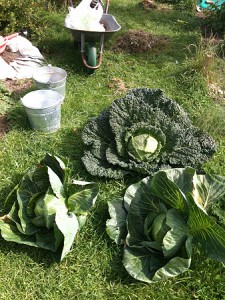
2013 CabbagesWith the great weather continuing, we tried a new technique to dry the onions out, stringing them outdoors and hanging them on some of the many builder’s spikes we use here. The round and savoy cabbages are also looking partcularly decent – the scaffolding mesh and groundsheet method of growing is definitely the future! 2013 Onion Harvest

Homemade Redcurrant Cordial & Rhubarb Juice

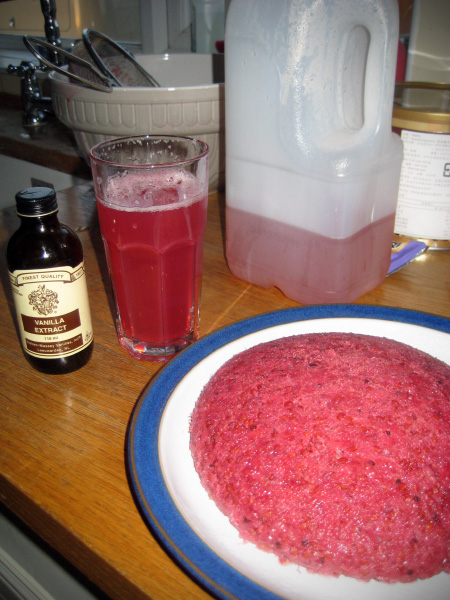
2013 Redcurrant CordialThis is another easy one – along the same lines as our homemade rhubarb juice. The picture says it all really – squeeze every last drop of juice from your redcurrants – or you can blend them and leave them to drain through a seive – find a way that works for you with what you have to hand. Then add a small amount of vanilla essence, to take the bitter edge off, and sweeten to taste. We use sweeteners, but sugar is better if you don’t need to use sweeteners, and a spoon of honey wouldn’t go amiss. Boil the juice down, to remove the excess water, and you have created a cordial that you can add water to when needed! Chill it, and use within a couple of days.

Rhubarb juice is exactly the same method, except you use the waste water left over from cooking your rhubarb! Leave the water in the pan you cooked your rhubarb in, strain it if there are bits floating in it. Add the vanilla essence and honey and sweeteners/sugar, bring to the simmer, just to mix the ingredients, and leave to cool before popping in the fridge. This is one of my favourites, especially as it uses something you would otherwise throw down the sink!

For a particularly refreshing version of either, add a dash of lemon juice to either