
The Flock
From the time we planted our orchard tree whips, the idea of a low-carbon way to maintain the grass was always in the back of our minds.
The first attempt was to use Pilgrim Geese. However, we found the mess they made, together with the worries around continual avian flu lockdowns, meant the flock was never expanded past the current four we have.
Finally we settled on two Shropshire wethers, Dougal and Dylan. They do a fine job of keeping the grass short and healthy, and clear up many of the windfalls during autumn. They also add nutrients back into the ground as they bimble along.
Why Shropshire Sheep?
Shropshire sheep are a medium sized breed, being farely easy to manoeuvre, if ever a sheep is easy to manoeuvre! The rams typically weigh around 120 kg, and Dougal is most definitely that and possibly more. They are hornless, which is not only safer, but helps them become less entangled in fencing than other breeds – though they will still try and prove that theory wrong if the grass looks greener on the other side of the fence.
They are the perfect sheep for orchard work, to which we can whole-heartedly testify. They do not rear up on their hind legs to reach fruit, but will take lower hanging fruit and leaves. Most importantly, they do not tend to eat the bark of trees, which has made them very popular in vineyards and Christmas tree plantations around the world. They are docile, friendly, and will follow you for miles for a handful of treats!
The Wool
The wool is classed as Shortwool and Down, and is typically 10-15 cm long with a micron range of 24.5 – 33. It is classified as fine by the British Wool Marketing Board, and is a typical downland wool – springy, resilient and lacking the sheen of lustre wools. It has enough crimp to make the fleece elastic and easy to spin, giving a bouncy, light, airy, hard-wearing yarn. It also takes dye well, though we haven’t tried that yet.
The Wool Processing
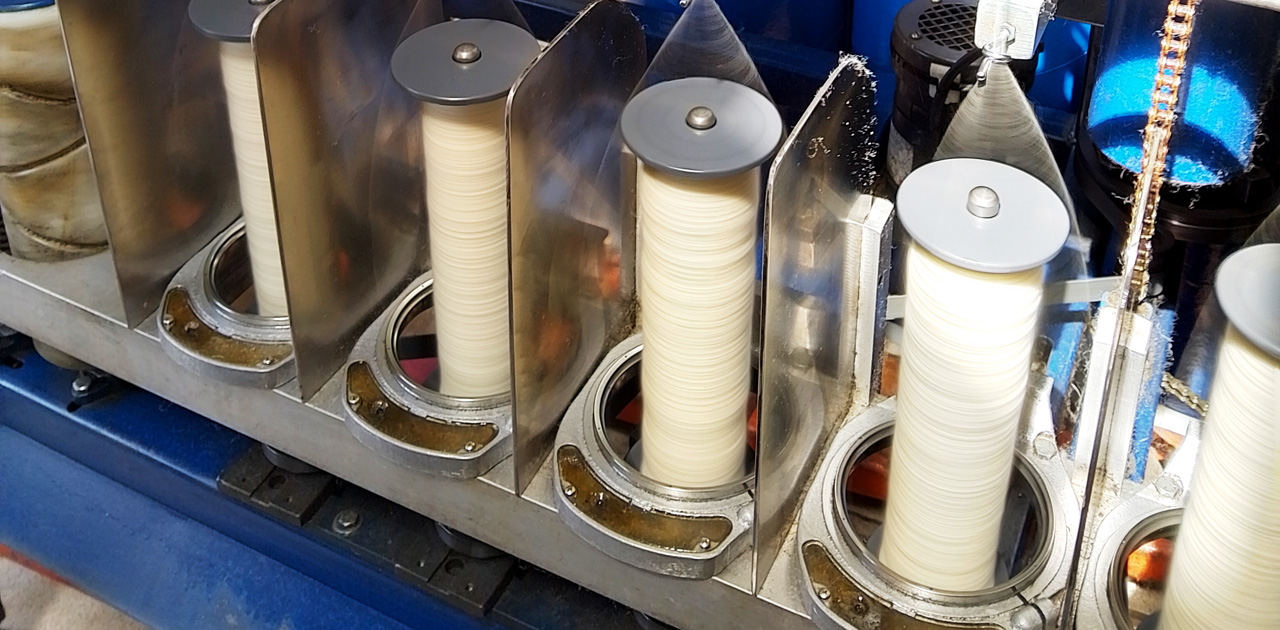
After shearing, the fleece are hand-picked to remove grass and straw, then skirted to remove the muddy lower edges. They are then taken to Shire Mill, a local wool mill, where they are processed into the weight we specify.

Availability
We only have two sheep, Dylan and Dougal, who are our resident lawn mowers. For this reason, we have a limited supply of their woolly goodness, but do please get in touch to find out the availablity.