Posts

Sowing, Transplanting & Shuffling

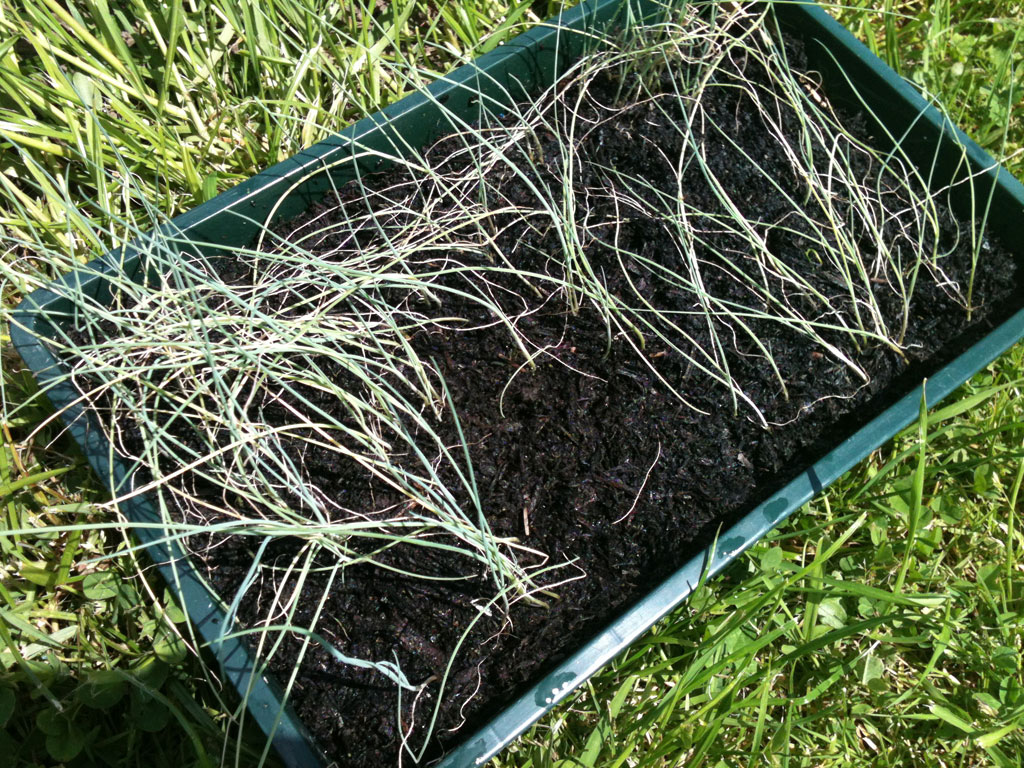
2015 Baby Leeks

Baby Leeks

With glorious weather finally foisted upon us, there was no time to lose! It’s been a rather weird start to the year – first it was perfect, nice and warm early on. Then through May it gradually became colder again, with the winds picking up so much that anything put in the ground that is mildly nesh (prefers a warmer temperature), just sat there and refused to grow! The sweetcorn were like stubborn little whisps of wafty green, perfectly happy to remain about 3″ from ground level.
2015 June Soil Miller

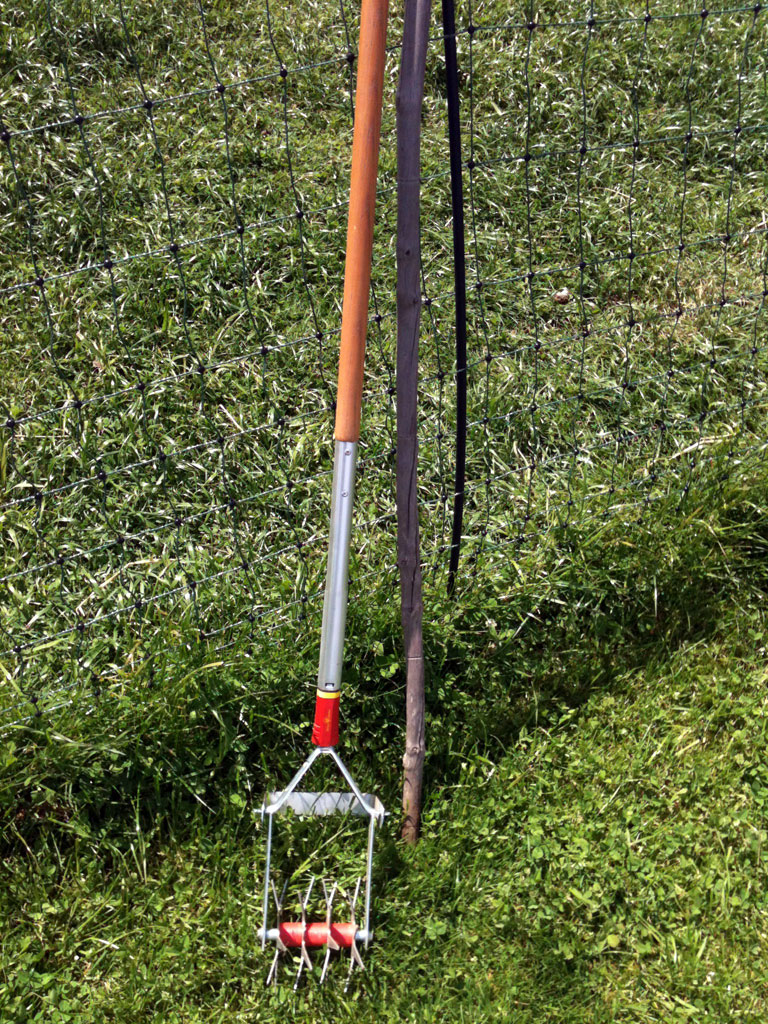
Wolf Garten Soil Miller & My Stick

So today was the turn of the leeks. All the books say ‘wait until they’re the thickness of pencils’ before transplanting to their “final positions. Well – these were the thickness of the lead in a pencil, but it was time to move them out. I blame the compost we used to start everything off indoors – nothing really burst into life – tomatoes, cucumbers, peppers, leeks. You name it, they all look quite small – I think the mix was too coarse for the roots.

Leeks are so easy to plop in the ground. First I used the Wolf Garten Soil Miller to rotovate the ground to about 4″ along the 30′ line the leeks were destined to occupy.
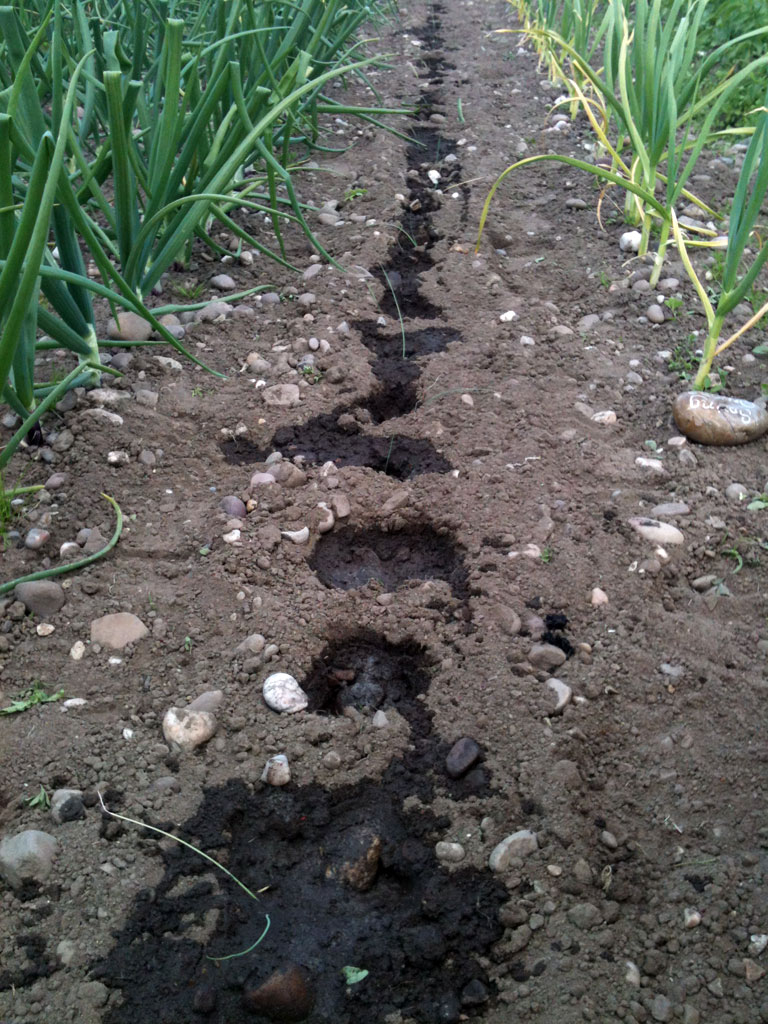
2015 June Leeks Planted

Puddled Baby Leeks

I then used my trusty stick to poke holes about 4-6″ deep, spaced at 6″ apart. Dropped a baby leek into each, puddled the hole with water from a watering can and that was that. They do look quite pathetic, but we’ll see how they go on – I’ve spare left in case they’re not hardy enough but memory tells me they’ll do okay.

2015 June Celery Celeriac Swede

Celery, Celeriac & Swede

2015 June Stick

My Stick

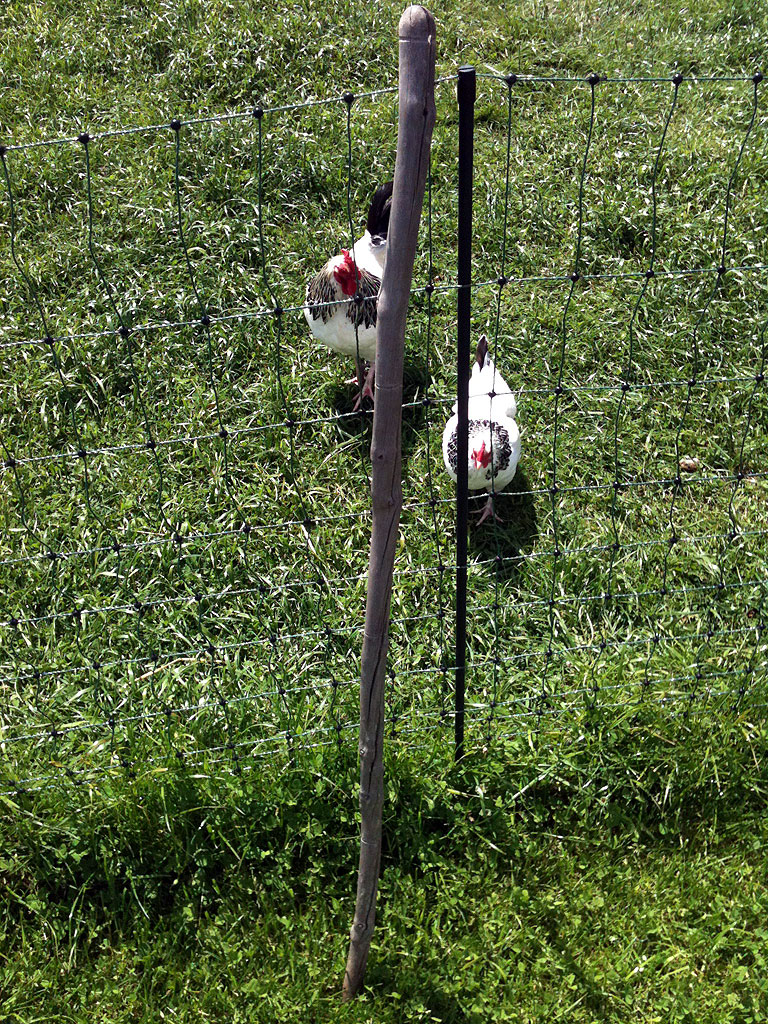
About my stick – it’s probably THE most useful item I have. I crudely fashioned it from a relatively straight piece of holly tree around 5 years ago. As it dried out it developed cracks in a spiral fashion, but they’ve never grown any bigger than the day they stopped growing. I’ve marked out one foot sections along its length, with a smaller 2″ section at the end, which makes it ideal for measuring out planting spaces and distances in a rough manner. I do like things spaced correctly, and this gives me enough peace of mind without resorting to the tape measure (I kid you not). Plus it’s handy for carrying several bags of veg over the shoulder with, warding off angry geese, rounding up chickens, and leaning on when my two existing legs have had enough 🙂 It’s just over 4′ long – which is a bit too short. My dad talks of being the last scout troop in Birmingham to wear the floppy hats, and they also carried proper 6′ staves in case they stumbled across an injured person in need and had to use them to make stretchers from their scarves and staves. I’m reasonably sure that crisis never arose in Kings Heath, but if it did, you could bet the local scouts were prepared! I digress. What it does mean is that I would like a 6′ stave – it would be a much more useful length, I could use it to vault small ditches and I’d be two foot safer from the geese on a bad day.

Then it was on to the last line empty in the onion patch. I’d left it free for celery seed, celeriac transplants and swede – another nice and easy job for the soil miller, which as you can probably tell is fast becoming my favourite tool, after my stick and my old rake.

2015 June Celeriac

Baby Celeriac

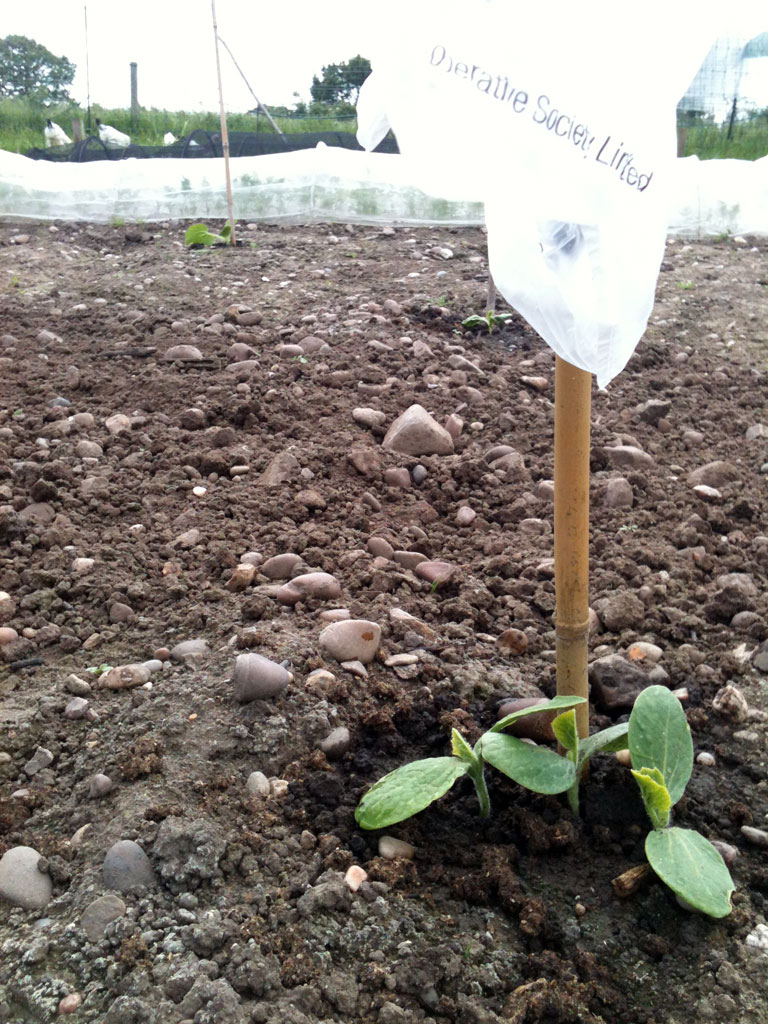
Next to the onions, a bit of time was spent reordering the squash – two custard corgettes (the UFO shaped thingummys) had failed to populate their station, whereas the two at the neighbouring station had both germinated. Sensible thing was to pull one out and transplant – they seemed happy enough about it.

Finally on to the peas and beans. Agh! I do suspect a mix of mice, slugs, pigeons and a cold start are contriving to upset me. The runner beans I’d started off under the cut-in-half plastic milk cartons had done well. They had obviously been nobbled slightly by slugs, despite having placed a couple of slug pellets into each carton. Some had no plants, most had one, some had two. As it turned out we had enough for all but one pole, so 19 out of 20 – meaning we need to plant another one, and something had nobbled 21 of the beans.
2015 Squash

Squash Congregating Under the Safety of a Plastic Bag

It could have been any of the four above culprits, as 38 of the 40 climbing French beans had been nobbled, as all were not under the cover of plastic, but laid bare to the elements. I don’t think it was mice as there was no evidence of digging. I do know that some of the broadbeans had been pulled out, pigeon work if ever there was, so they are my main culprit. But judging my general slug damage, I wouldn’t put it past them too, although there wasn’t really any sign of stumps, which slugs tend to leave. Perhaps the colder weather just prevented them from starting, and that’s why there’sno evidence. Whatever the reason, we now have 24 potted beans waiting to germinate near the house, under wire mesh. The broadbeans had met a similar fate – one row looked quite sparce until you brushed away the top cover of soil, revealing the bowed heads of a shoot about to push through. However, the other two rows had over half missing, many had been nibbled off at the top. I suspect mice in this case – pigeons tend to pull them out and disgard them in disgust. I’ve no idea how to combat mice as they can nibble through netting (there’s also a hole in the scaffold netting to the side of the beans, which is also suspicious. Anyway, I planted more beans, I’ll sprinkle more slug pellets, and I may even invest in more netting. Perhaps I should just camp out 24/7 in the bean and pea patch!

Greenhouse Update

We were only just saying that we finally feel like we’re getting into a rhythm, finally. It’s been five years now since we started growing down the patch, and as we run a five-year rotation with the vegetable beds, it seems oddly appropriate that we feel as though we (almost) know what we’re doing. In those five years we’ve dealt with droughts, floods, winds and rains, pigeons, rabbits, voles, rats and more recently fox, who took our beloved cockerel Ethelred 🙁 We’ve combatted slugs, white fly, greenfly, blackfly, sawfly, codling moth, sparrows (and their fondness for beetroot leaves). We’ve relocated ladybirds from one area to another, where we know the food is, sprayed nematodes, which were fantastic, and learned to hoe little and often – the best thing ever to do.

However, there’s always something sent to test you – current ‘big’ jobs are:

  • Fix the fruit cage that bent under the weight of snow over winter as some muppet forgot to take the netting off the roof.
  • De-head the teasels that have taken over the wild flower strip we sowed last year – I have no idea what they were thinking but the supplier mixed in so many that they’re dwarfing everything else off! Apparently if we de-head them when they’re in flower and remove the heads away completely (they can still ripen off the plant, and there are thousands on a plant), then the plant will naturally die off. We have this issue for several years ahead of ourselves at the moment – so you live and learn :/

Anyway – the greenhouses are definitely in a rhythm – things from inside the house were moved to the greenhouse after being potted on, and they look much happier for it though, as I’ve said elsewhere, I’m a bit disappointed at the size of things in general.

Greenhouse 1

2015 june tomatoes

Plum Tomatoes & Eating Tomatoes

This is our tomato greenhouse. An army of ants had made their nest under the slabs running down the centre of the greenhouse, as they had done in Greenhouse 2 last year. As we did last year, we used boiling water as a nasty but effective way of dealing with them. I suspect they’re the same nest who are sending out ants to milk the greenfly on the poor neighbouring plum tree. We stopped that with a sticky glue band around the trunk (what can’t go up can’t go down), and the removal of the nest once found was the end of that problem, for now. On to potting on the tomatoes – six cooking plants and six eating plants – though six eating is far too few for my liking. Still – we tried cramming a third row in the middle last year and it became all too unwieldy. Last year was the first time we tried cooking tomatoes (plum) and they were delicious in sauces.

Greenhouse 2

2015 june sweet peppers

Sweet Peppers

This is our cucumber greenhouse and our potting bench also lives here – a neat collapsible metal bench that was donated along with the greenhouse by some friends in the village. The potting bench becomes a nursery bench for hardier plants, and once they’ve been moved outside it becomes the final home for the plants started off indoors. Here you can see the sweet peppers, which we use stuffed or in ratatouille.

2015 june basil

Basil

The basil we dry and use all year, it’s another of those plants that we personally can’t grow enough of. Freshly picked it’s delicious in a salad, or as a dressing with the tradational balsamic vinegar dressing over mozzarella and tomatoes dish. Dried it’s great in anything, especially pasta sauces. I just like eating it raw as a breath freshener!

2015 june cucumbers

Cucumbers

Then we have our Telegraph Improved cucumbers – I’m determing to stay on top of them this year – in the past, without exception, they become unruly and all triffid-like, taking over the greenhouse to the extent you need to tip-toe around them to try and get to anything else!

2015 june globe artichokes

Globe Artichokes

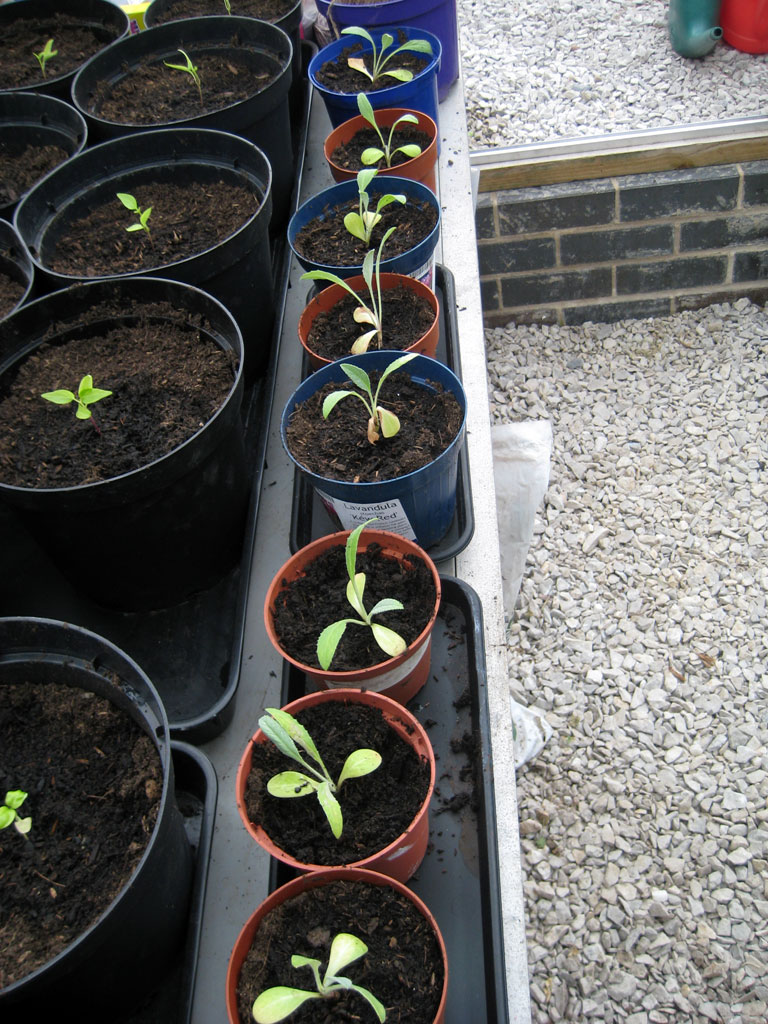
Next along are the globe artichokes – which are outside during the day to harden off, and inside again at night. They’ll eventually have a permanent home in the patch, near the sunflowers, in the future. But not where the sunflowers have already been grown – I’ve heard you shouldn’t grow them where any member of the daisy family has been rgown previously – not sure why but I’m not going to find out the hard way!

2015 june celeriac 2

Celeriac

Then there’s the coriander – these are the seeds saved from plants we first grew two years ago. We sprinkled a load into a tray, to see what would happen, and I would say we ended up with a 50:50 germination rate, which wasn’t bad at all considering they’d been kept in the seed box all that time!

2015 june flowers

Sunflowers, Sweetcorn & French Marigolds

Outside is where the previous occupants are now living, before they find their permanent homes – whilst we have the sunflowers in the patch already in place, we tend to grow twice as many items where we can, so we can pick the healthiest and largest to grow on. This means we invariably have spares – here you can see the spare sunflowers, and spare sweetcorn (at the back). In the foreground we have the marigolds which will be used a companion plant in the vegetable patch, namely near the brassicas as they deter whitefly!

2015 june lettuce

Rescued Lettuce

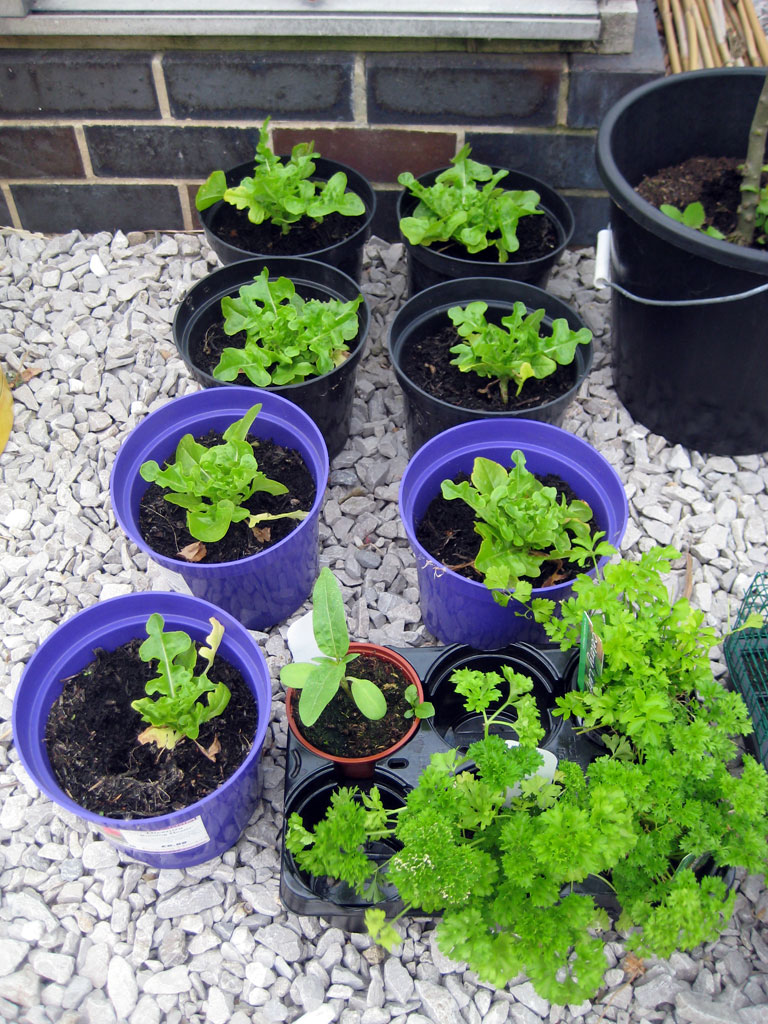
We also have a few pots of lettuce outside – rescued from one of those trays you buy from the supermarket that Suz’s mother brought to the house a few weeks ago, the sort you buy live and cut the leaves off as you need them. Rather than throw away the cut plugs, I just repotted them and now we have seven baby lettuce plants for free! The parsely we’ve bought in, and the lone sunflower was a freebie for buying so much compost from the local nursery! Coals to Newcastle springs to mind 😉

Greenhouse 3

2015 june aubergines

Aubergines

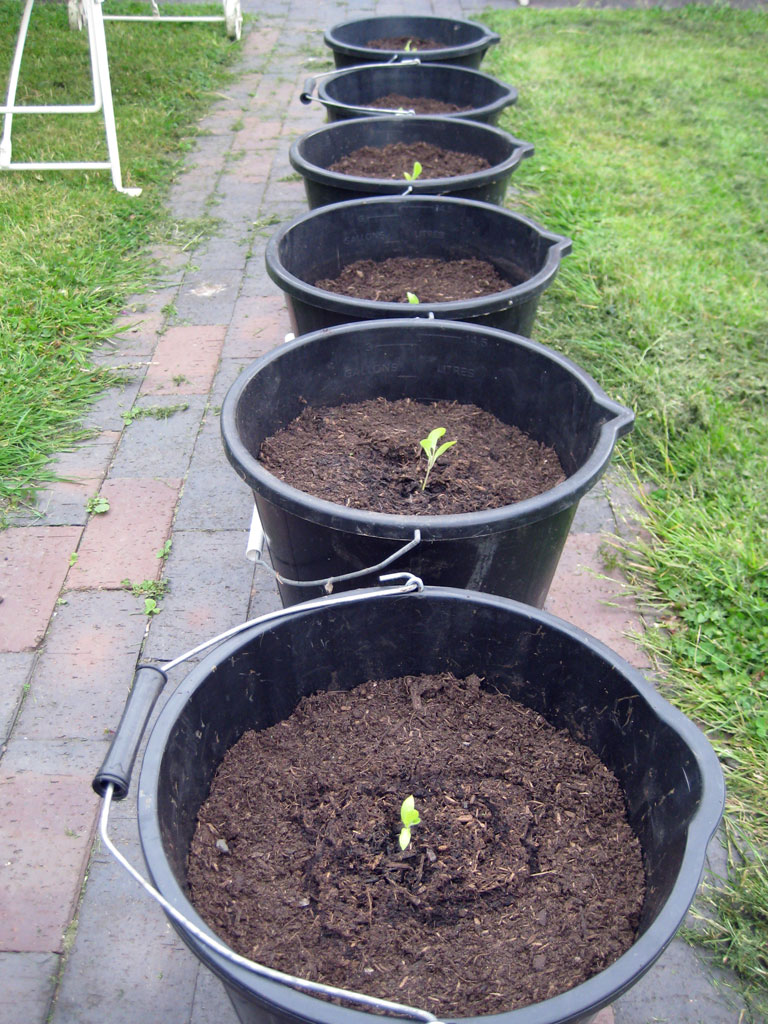
This is our new greenhouse, and is home to the aubergines. We’ve had moderate success in the past with these, and utter failure other years. This greenhouse gets full sun most of the day, so I’m hoping the warmer conditions are more conducive to a bumper crop! That reminds me of another job – I need to anchor this greenhouse down to the concrete base as we’ve moved it from where it was. Where it was is now a lilac tree and will have lavender bushes around it, to attract the bees and give us something to be wary of as we brush past it to and from the patch on the brick path! I’ve just realise that this is *not* our new greenhouse – it is in fact the garden path! I’ll add a photo of the new greenhouse once I take one 😀