Red Mite cause Chicken Holiday

Whilst visiting friends, they asked for some advice on their flock. Their coop had contracted red mite in a very bad way – and the housing was covered, but despite all attempts, the little blighters kept coming back.

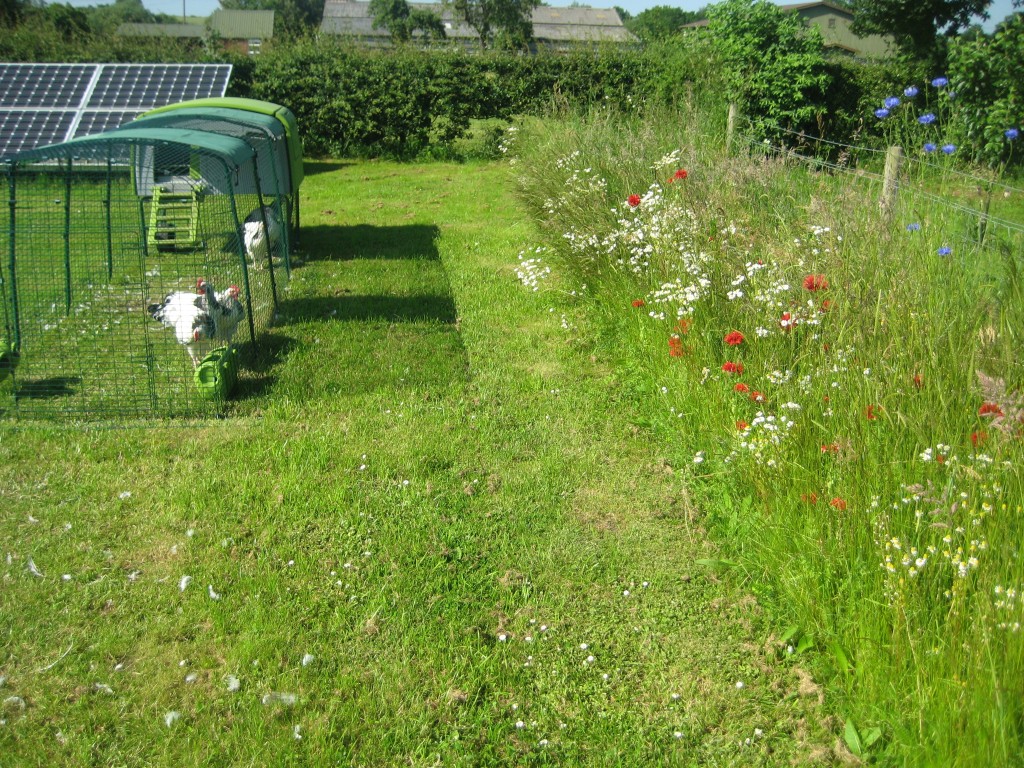
We had a quick look and promptly offered to give the chooks a holiday at Merrybower, on clean ground and in clean houses. Seeing nothing else to give us great alarm, we knew it was highly unlikely the red mites would be on the birds during daylight hours whilst outside, so we wouldn’t be transferring any to our gaff.

2015 holiday chooks 2

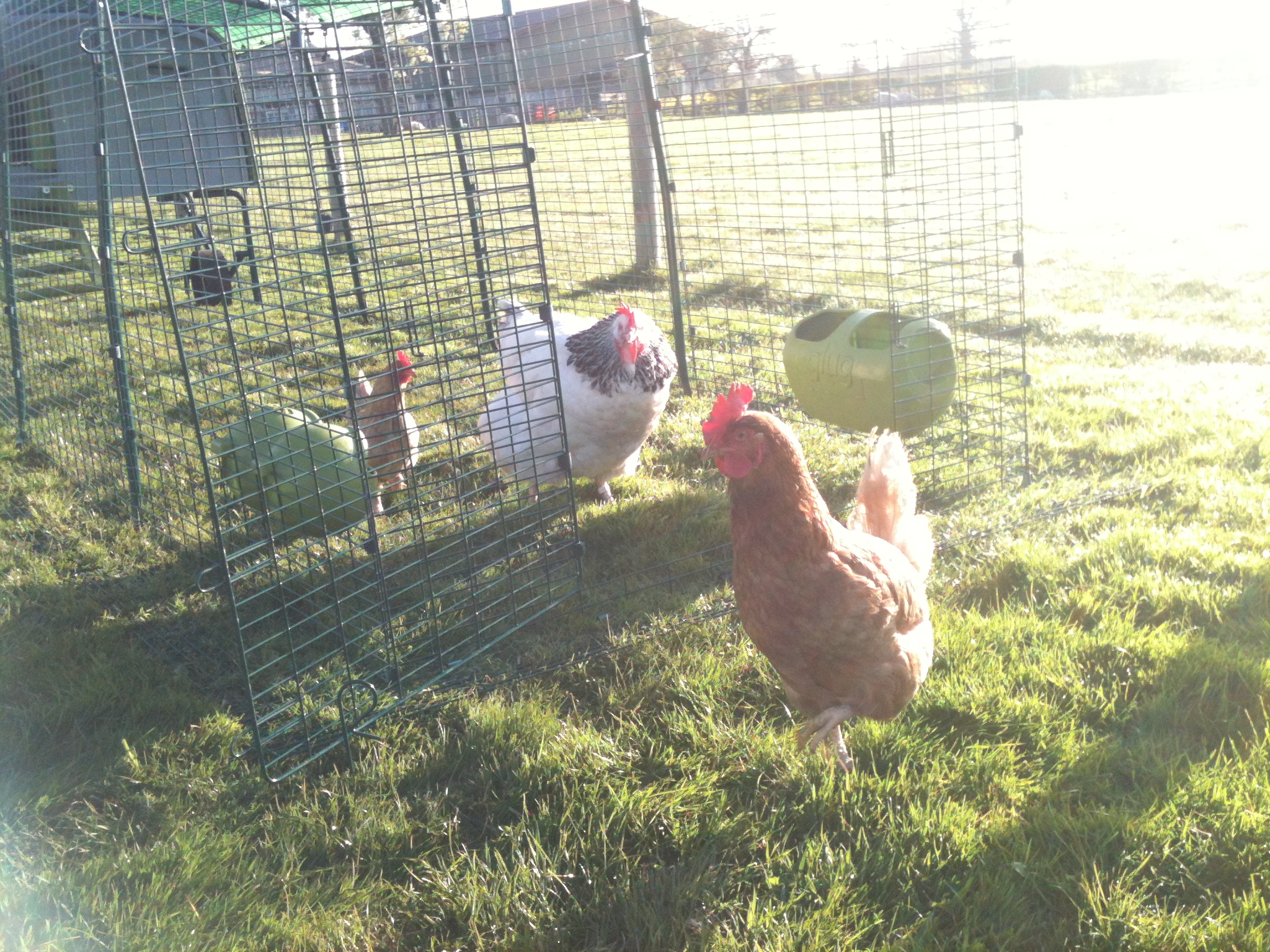
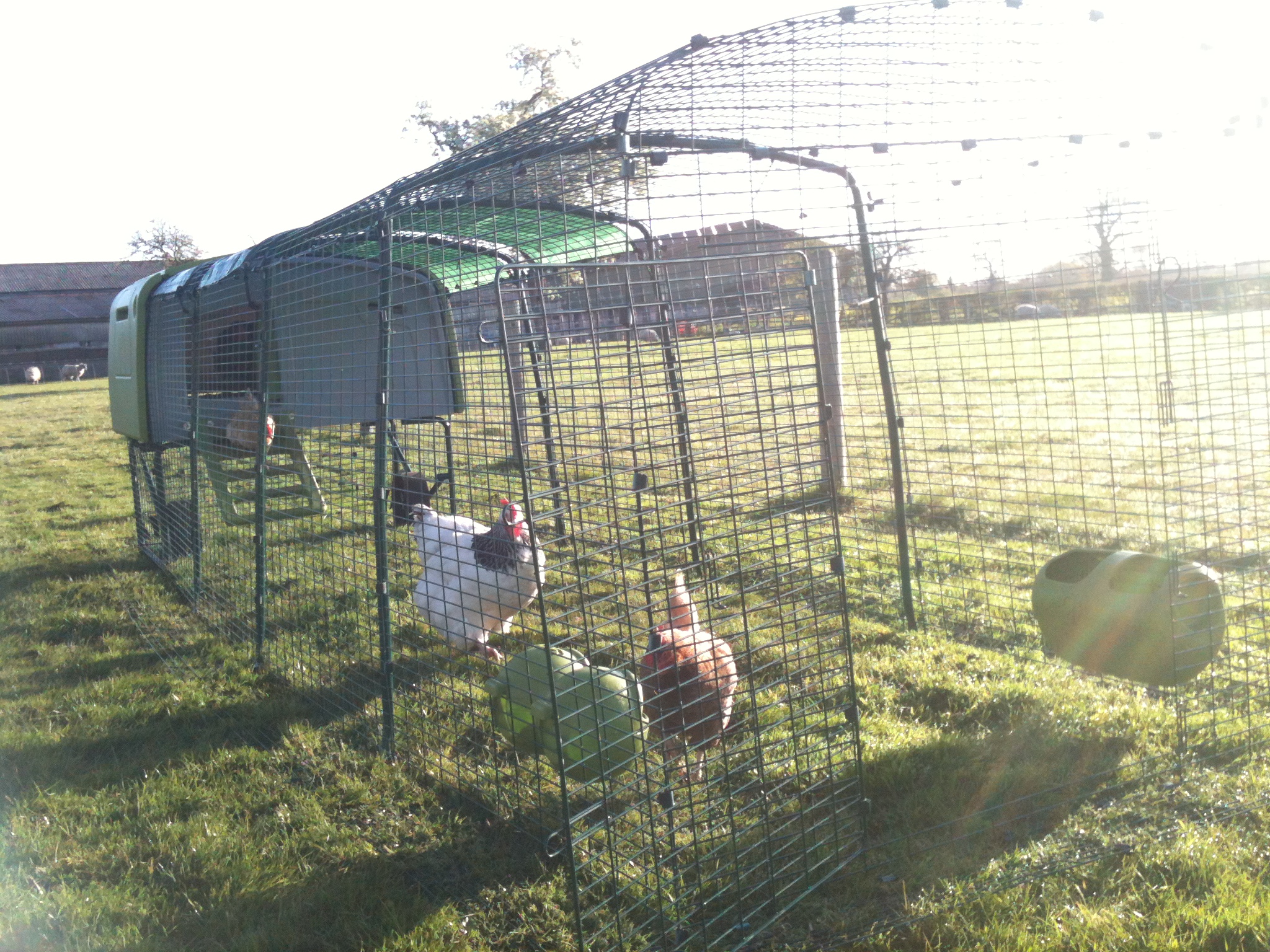
Seven Warrens (one is laying inside)

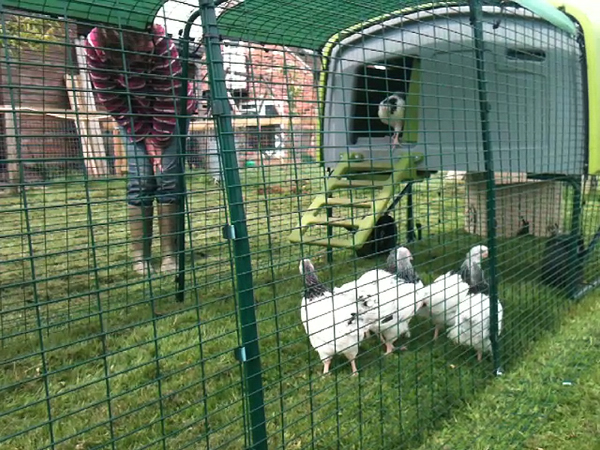
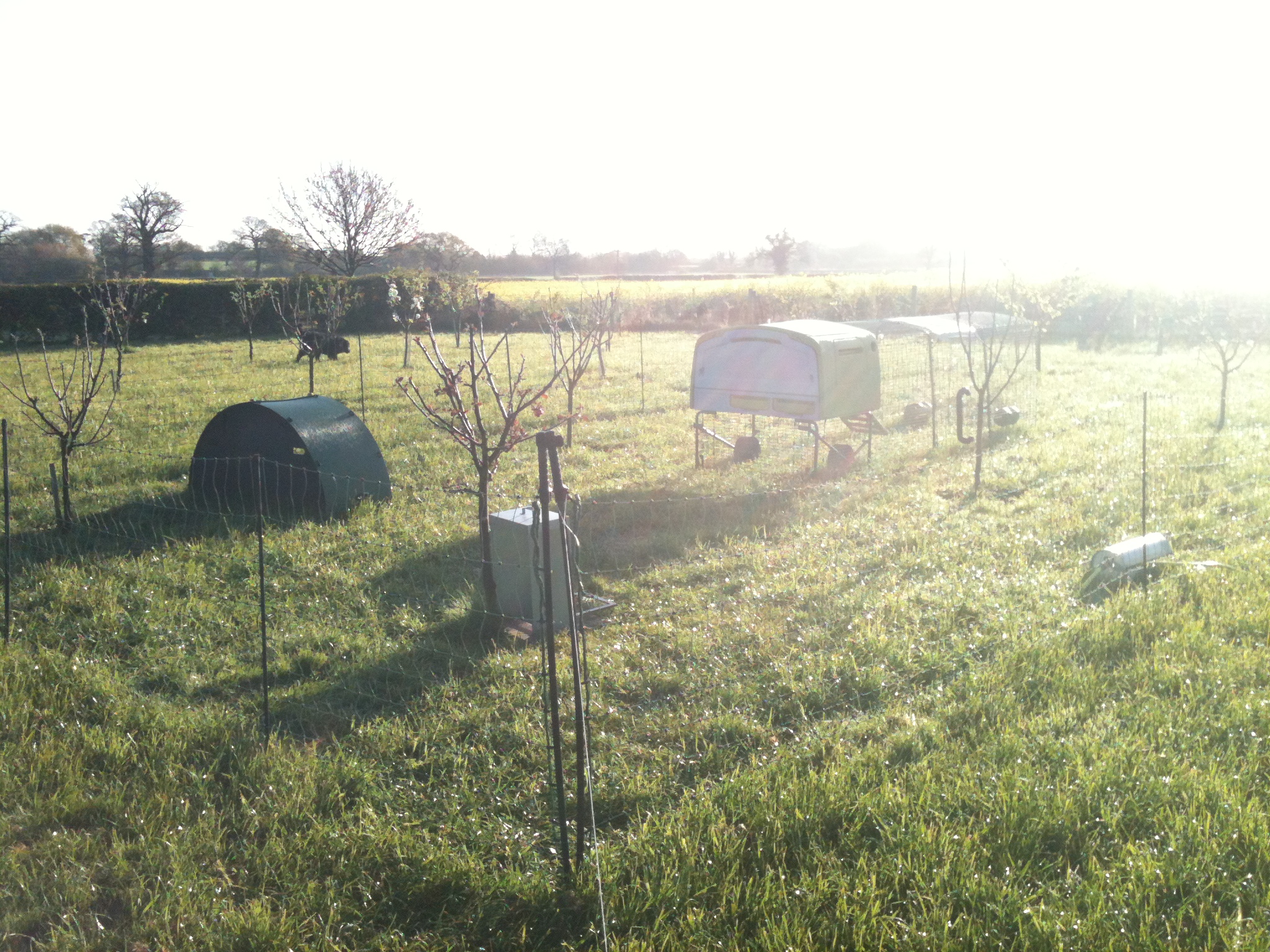
On arrival, we put six, including Colin the cock, in a spare Eglu Cube, and seven in a spare Green Frog Designs Livestock Ark, which we used for chicks last year. We started them on a seven day course of Flubenvet, which was given ready-mixed in Marriage’s Farmyard Layers Pellets with integrated Flubenvet. Whilst they were caged in their runs, this would ensure they got a good worming dose. Noticing a bird with runnyish poos, we also gave them a three day course of Tylan Soluble antibiotic – 0.5g for every litre of water, mixed fresh every 24 hours. Noticing some also had scaly leg mite, we also dropped a spot of Ivermectin on the back of the neck of all of them, and will repeat that in three weeks’ time.

We think the big difference was the food. It’s possible that they’d been put off eating the food in their old coop because of the mite association, but for whatever reason, they tucked into the Marriage’s pellets like there was no tomorrow! They’re also going through the moult, which is a tough time for any bird. To help them along with that they had our special mix of mashed potato, live yoghurt, cod liver oil and poultry spice. It stinks, but boy do they love it! And the difference a few days later is amazing – they’re more relaxed and look much perkier, despite still looking rather bedraggled with their old feathers still intact.
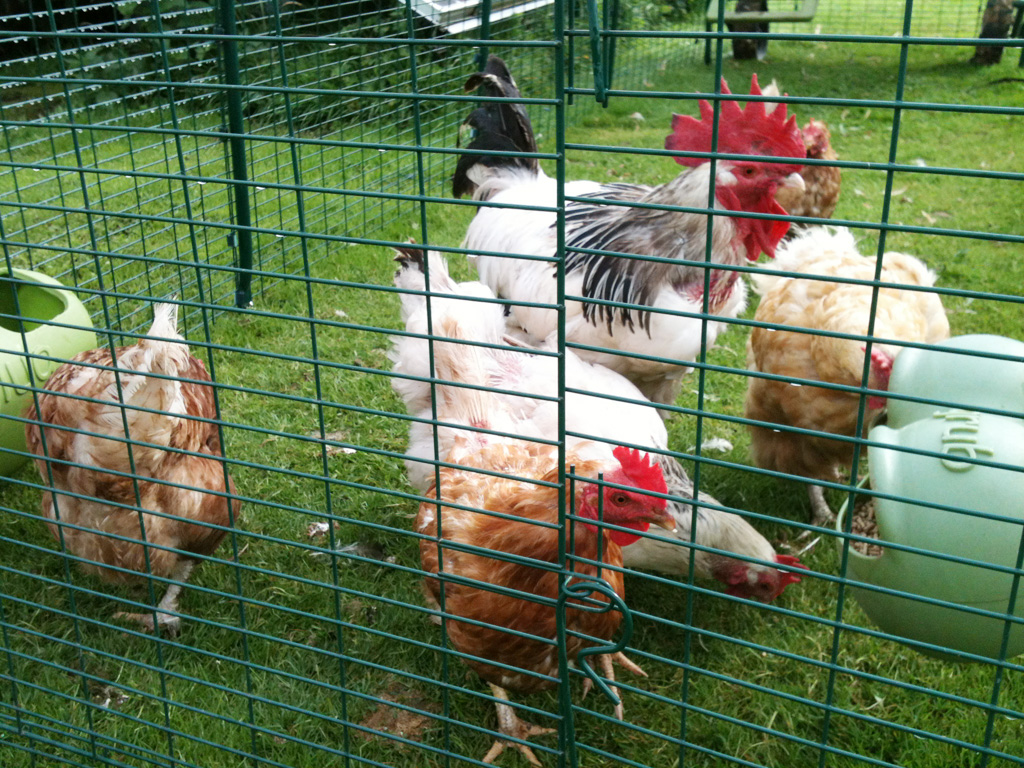
2015 holiday chooks 1

Colin, three Warrens and, we think, a Light Sussex hen and a Buff Orpington hen.

For any regulars reading this, Colin the cock is actually one of our boys bred last year, so he’s returned home! We haven’t mentioned this, but Red, his brother that we kept, was killed by a fox this spring. It was an upsetting thing for us all, made worse in that he was the last in the bloodline of our flock. But with Colin here we might be able to ‘borrow’ him for another brood next year, if all goes well. We still don’t know Colin as well as we knew Red, who was very gentle, but none of us have been pecked by Colin, even when handling him and his ladies for scaly leg mite, so it looks promising so far.

First Egg from our First Chicks!

Can you believe it’s only 18 weeks since we hatched our first large Light Sussex chicks – babies of Charles and Daisy? And today, Emma, sister of Beth and Ethelred (the unready cooked), laid her first egg! We’d been expecting it really, as we’ve had a couple of mis-starts over the last week – a couple of soft-shelled eggs dropped on the grass, but we didn’t know whose they were. I guess we now know!

It’s funny seeing the genes come into play, as Emma is definitely Daisy’s daughter – she’s larger than Beth, her colourings are pretty much the same, but even her temperament; laid back, easy going. And now she’s laid an egg after only 18 weeks! For a pure breed that’s amazing – we were expecting 20 weeks minimum – they were still on growers until a couple of days ago. As soon as we saw evidence of a soft-shelled egg we switched them to layers pellets – the books say to hold off and keep them on growers until they begin to lay, as kick-starting the egg-laying process can be detrimental to the hens’ health, but if Emma wants to lay, then who are we to argue?

By the looks of Beth’s comb colour, I would say she’s not far behind.

June Update


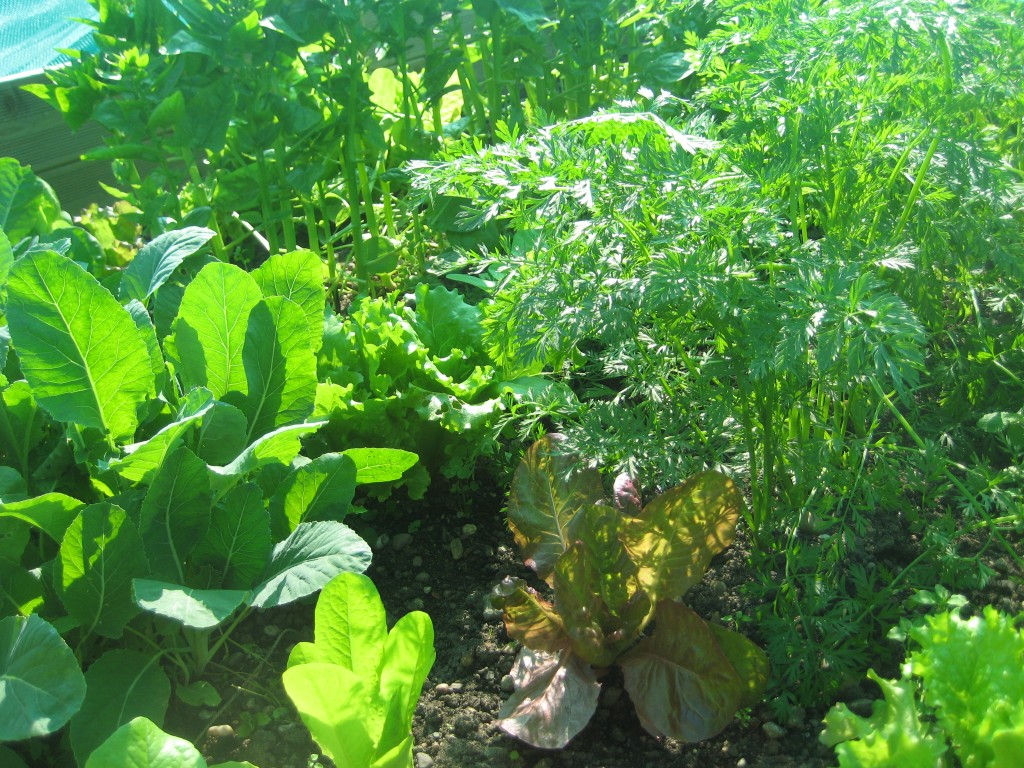
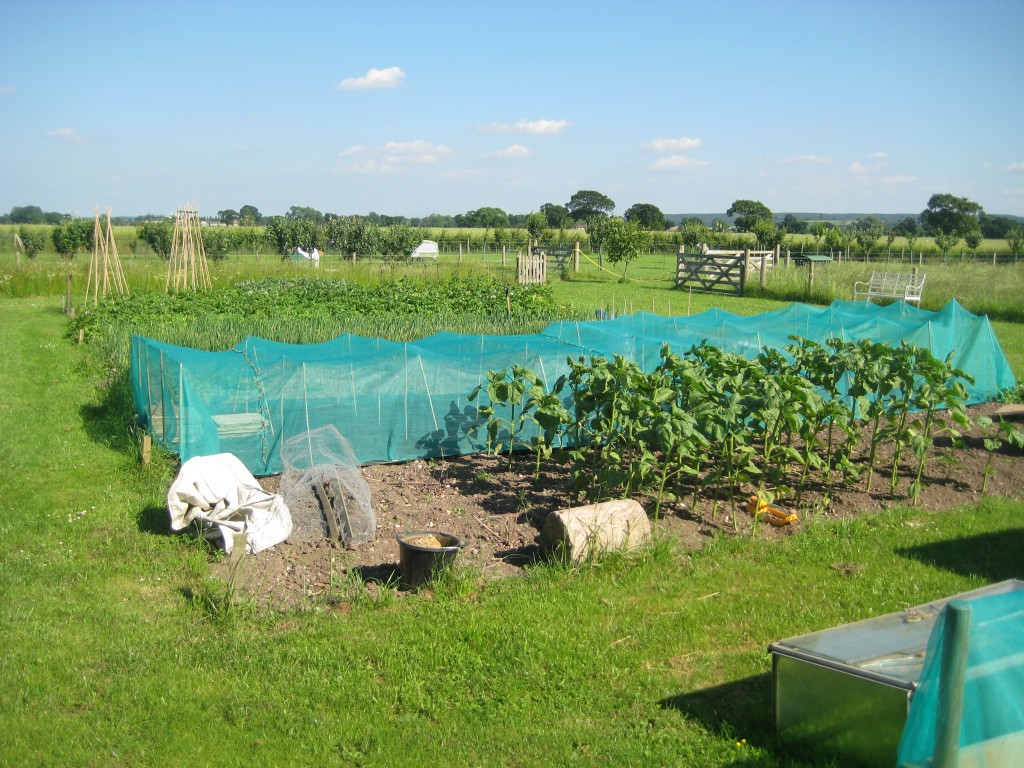
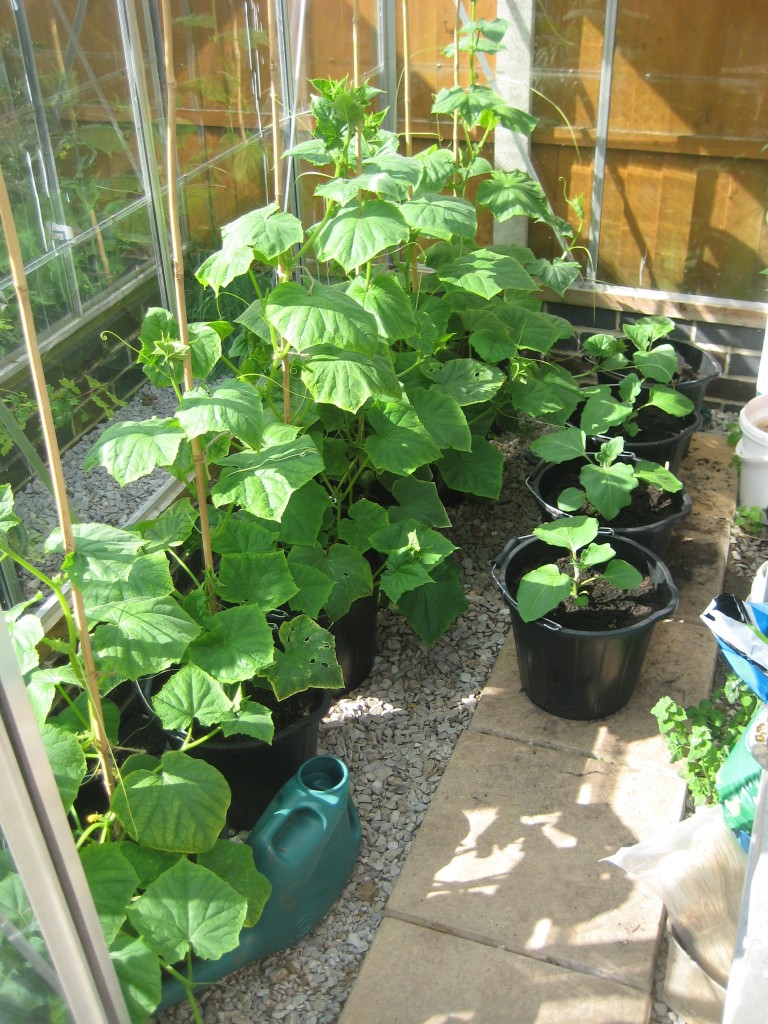
What can I say?! The weather has been absolutely fantastic! Mostly sun, the odd shower here and there, then back to sun. Everything is growing as it should be – no late frost to nobble the early starters, no waterlogging, no drought. To be honest, it’s getting a bit scary.

So, to firmly plant the goodness that has been the last month, here’s a quick update on just how well everything’s growing.


Big Chicks, Little Chicks, Large Green Box

Crikey – showing the age there.


2014 First Light Sussex batchOn to the matter in hand. Our first home-reared flock of Light Sussex large fowl are now eight weeks old and looking amazing! One cockerel has already gone to a new home, and two others have homes promised. One will likely be staying here with us, at least until it’s breeding season and we need to bring an unrelated cockerel in, so we only have to find home for one more. The two ladies will stay here at Merrybower, to live with their mother Daisy. The photographs here are from two weeks ago when they were six weeks old and spent their first days outside. We quickly added an easy ramp to the eglu ramp, to help them up into the coop. We also found out that adding a red light inside the coop helped encourage them up the ramp to sleep.

The second batch of chicks hatched two weeks ago tomorrow, and we now have twelve little chicks in the house under the heat lamp – two large Light Sussex and ten bantam Light Sussex. I have a feeling one of the large Sussex is a lady – and we’ve named her ‘Smudge’. She was stuck in her egg – the humidity was too low and she couldn’t break out. We gave her 48 hours to try herself, but no joy, so we tentatively broke the shell from around her as she was so vocal and alive, chirping constantly that she wanted out of the egg. Bit by bit we broke bits off, hoping we wouldn’t damage any blood vessels, until eventually the top was off and we had to peel the egg shell from her back and the top of her head, figuring if we didn’t try anything then she would surely die, so at least she was having a chance. I’m so happy to say that two weeks on and she’s a delight! To keep a track of which chick she was, I coloured the toes on one foot with black indelible marker – hence her name Smudge 🙂 I call her ‘her’ as she’s slightly smaller than the other large Sussex, and less ‘upright’ when confronted. With our first batch I noticed the males tended to be more ‘male’, in that they held themselves in a dominant stance, chests puffed out and heads aloft, whereas the ladies were more amiable and less likely to push  themselves in the faces of others. All that said, this batch of complete Light Sussex seems a lot more placid than the mix of breeds we had last time, but then both parents were exceedingly gentle, the cockerel in particular – gentle and unafraid of humans.

Beautiful Sunrise

It was such a beautiful sunrise, and it’s not often I let the animals out as Suz is the early bird in our family. For once I popped out first and just had to take the camera with me.

Spotty, Daisy and Gert in the Morning Sun

Spotty, Daisy and Gert in the Morning Sun

Daisy and Gert

Daisy and Gert

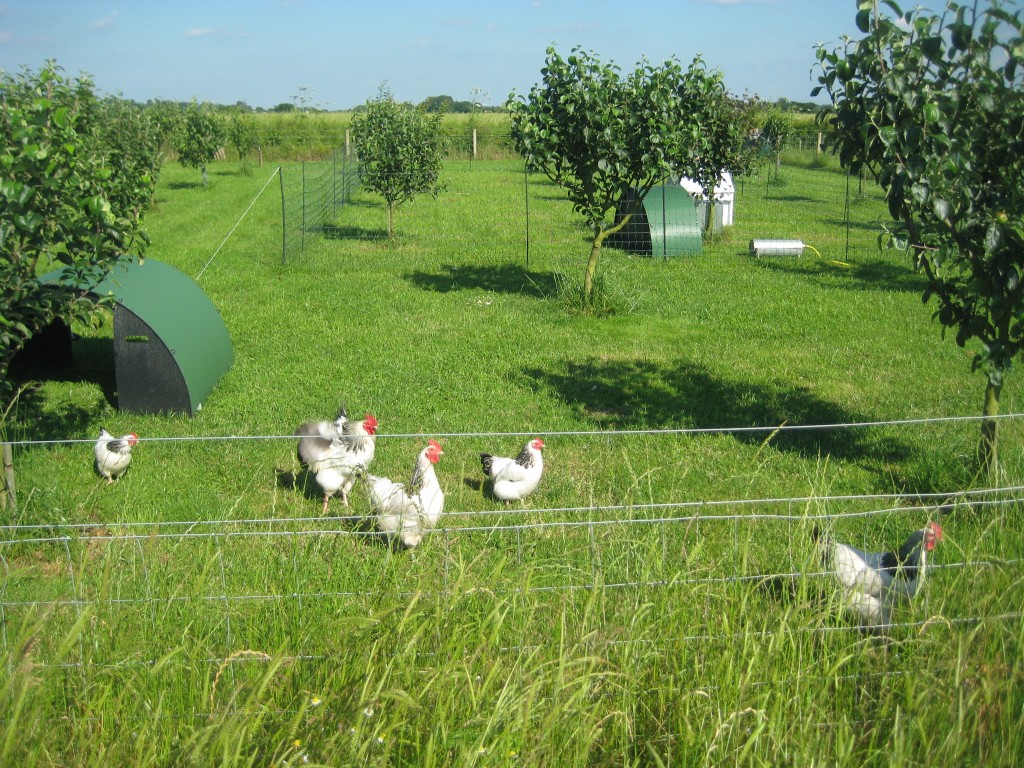
Light Sussex Bantams in the Little Orchard

Light Sussex Bantams in the Little Orchard

Barty in the Big Orchard

Barty in the Big Orchard

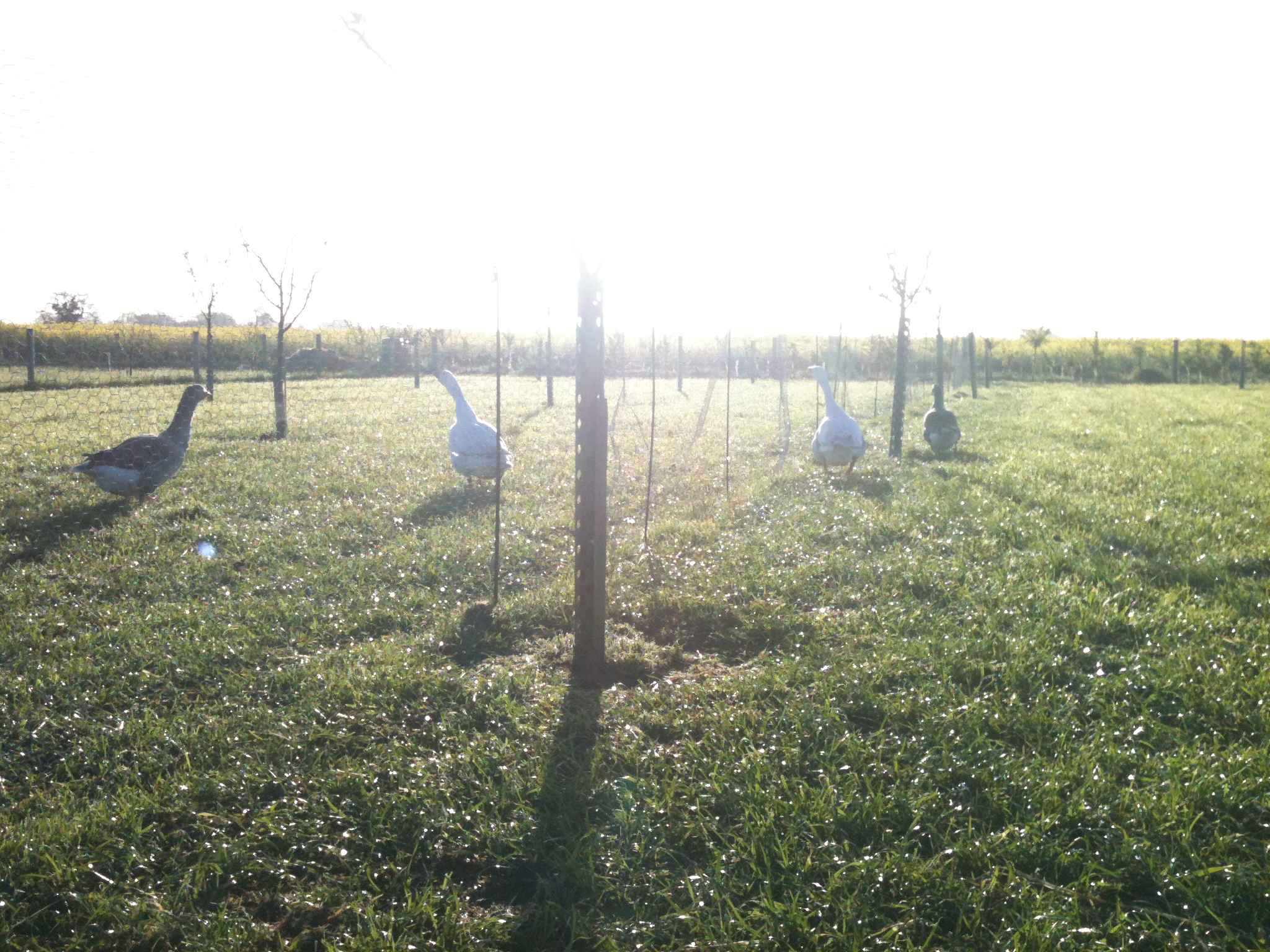
Pilgrim Geese in the Early Morning Sun

Pilgrim Geese in the Early Morning Sun

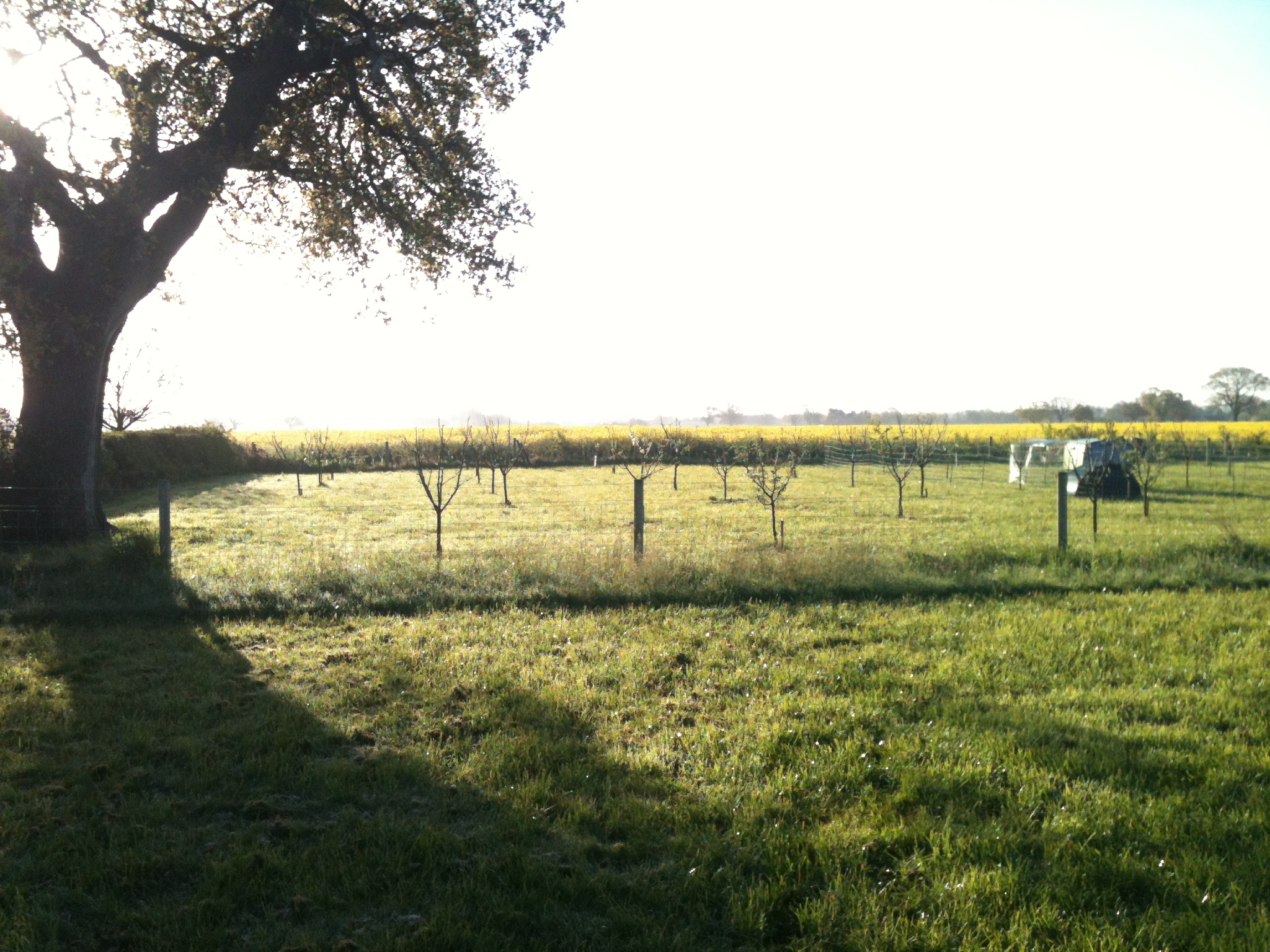
Little Orchard Sunrise

Little Orchard Sunrise

Root Crops

Another scribbled mental note – these are so useful for the following year, to get a feel for the plants that do well here. The day began with the usual dandelion beheading – another barrow full, then watering the new fruit trees in as it’s been a dry week so far. The strawberries and raspberries had some of the lovely manure donated by Ken spread around their bases, as did the rhubarb and gooseberries. The geese had their full clean out – fresh straw in the houses, ponds emptied and refilled.

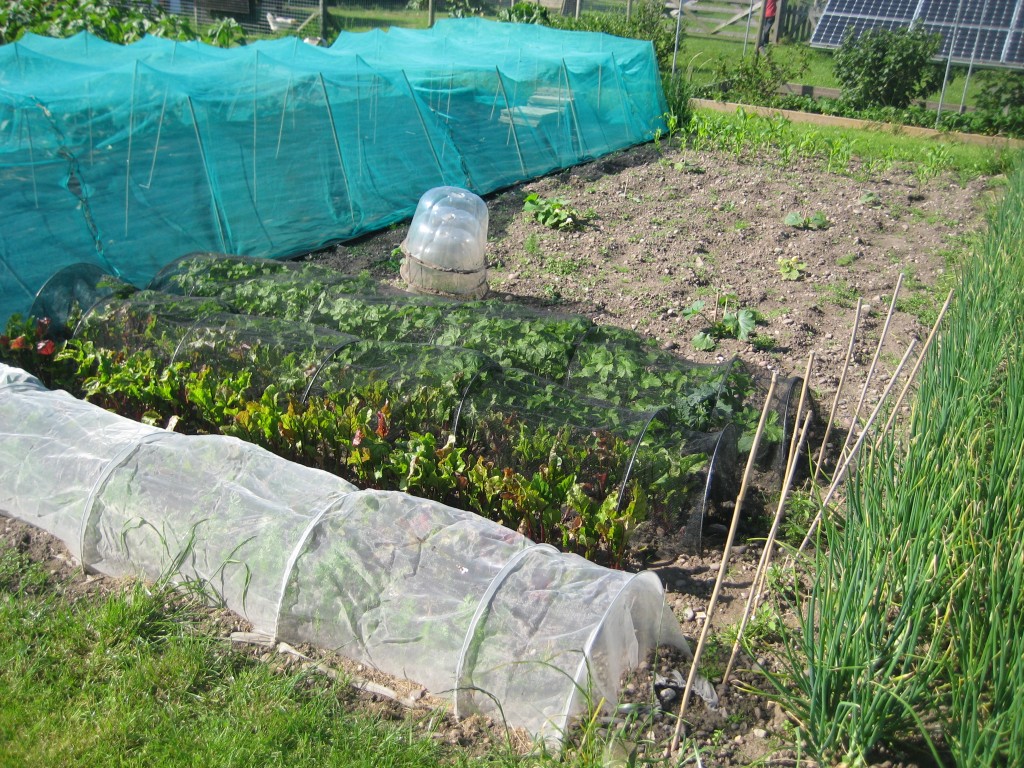
Then on to the root crops. This plot hasn’t been manured, but the squash stations will have plenty added just before they go in later in the year. For now the stations will have cloches dropped where the plants will go, to help warm the ground up. The seed that went in today were one 9′ row of Flyaway F1 carrot, three rows of Boltardy beetroot and three rows of Hollow Crown parsnip.

All root crops were netted against the dreaded pigeon, sparrows and rabbits. Or row of peas were also netted, but we need to rethink the layout of the peas and beans to make netting easier. Whatever the case, we need more netting!

The final job of the day was to water in all the seeds sown over the last two days – that was over an hour’s job as the onion patch was also beginning to look a bit parched. As were the strawberries, rhubarb, gooseberries and currant bushes. A quick check on the chicks, who have now taken up residency in the garage as the fluff and dust produced by week two was just too much to keep them in the house, and 10 o’clock saw me finally stumbling in, to a warm fire and mahoosive mug of sweet tea. Perfectamundo 🙂

Chicks a Day On…


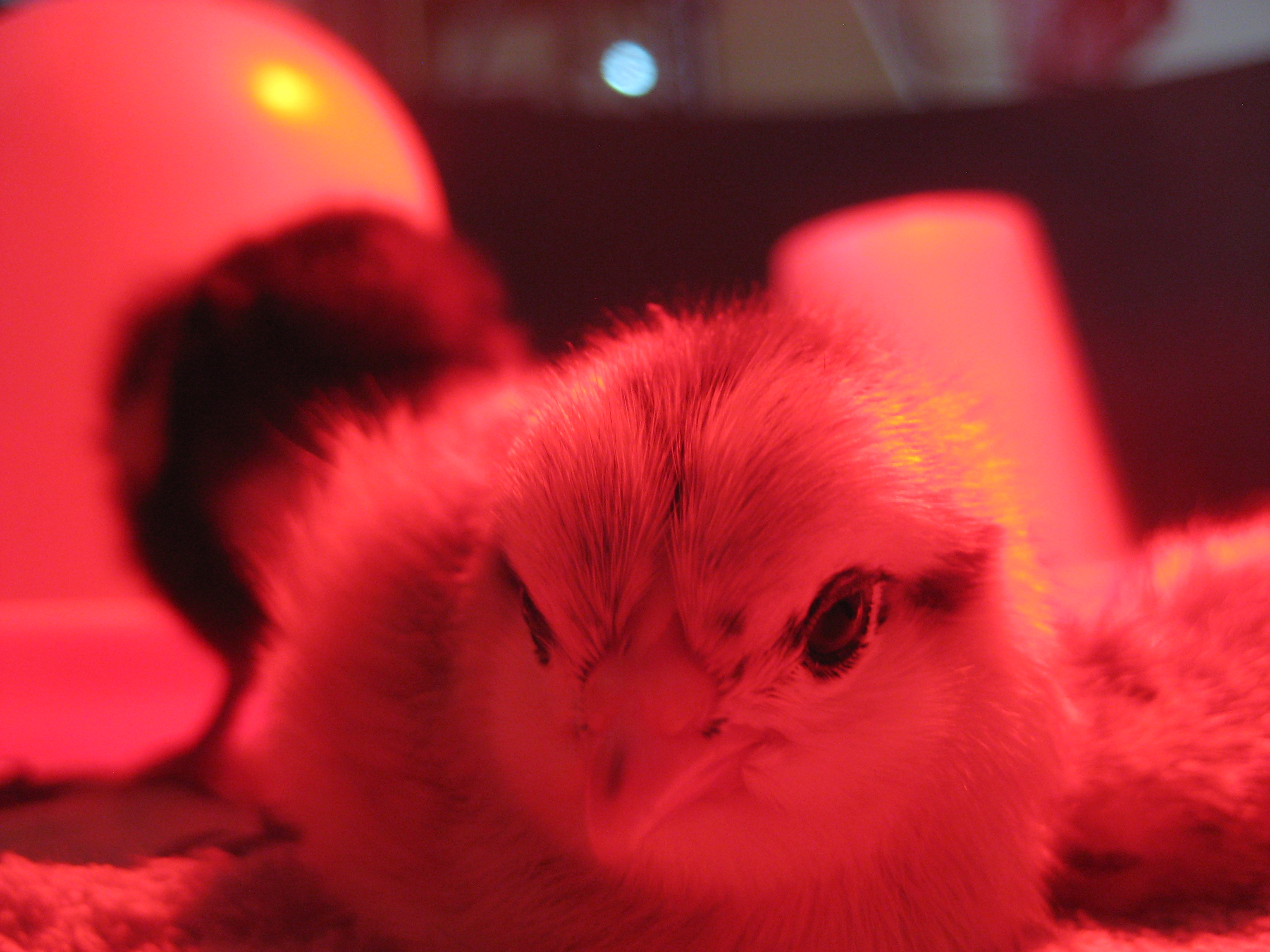
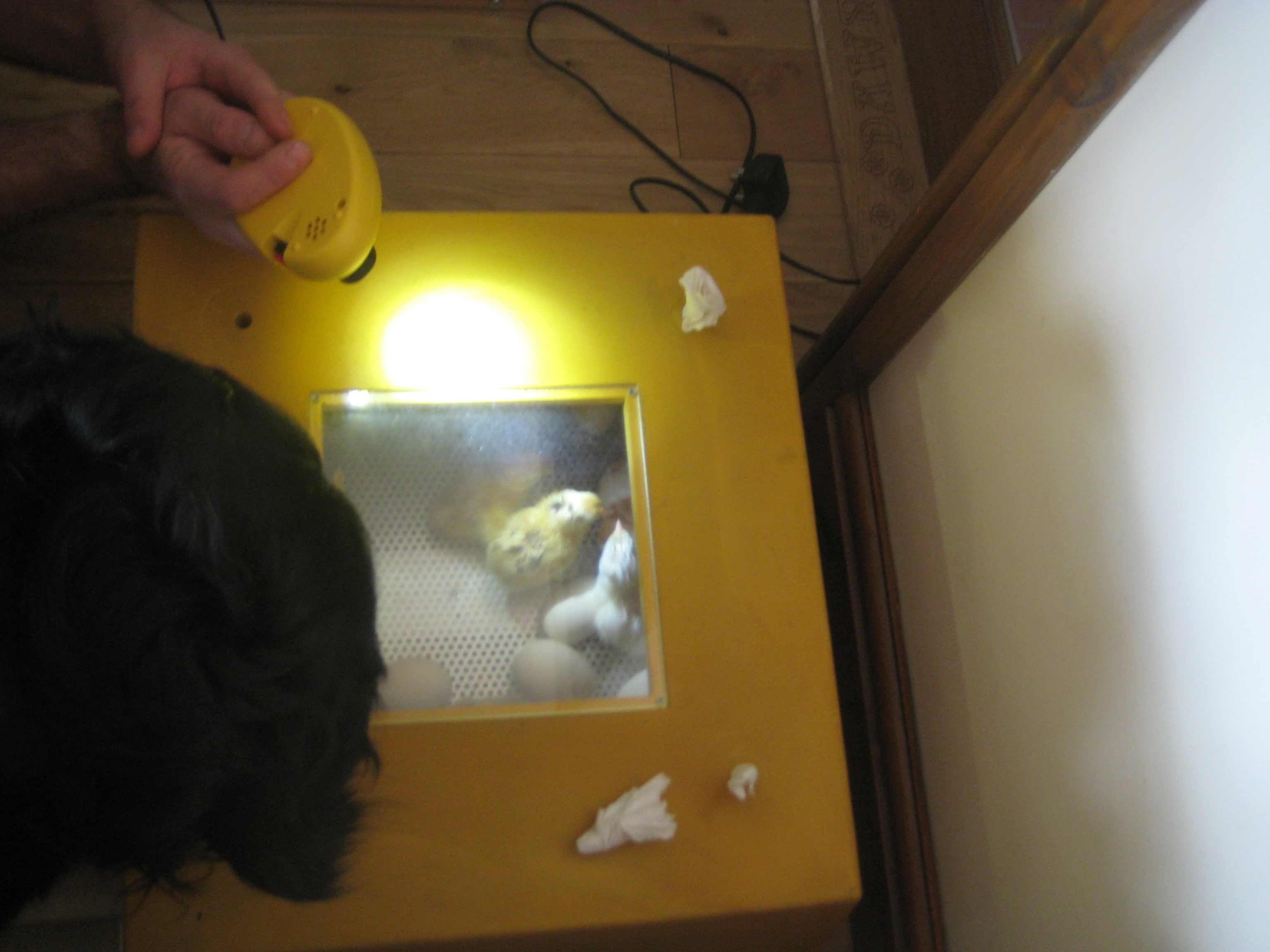
Boy do these blighters grow quickly! The images below are of them all ready in their incubators for the big world. The Light Sussex and Derbyshire Redcaps are on the left in the Polyhatch, the bantams are in the three images on the right, in their Octagon.


We’ve a 4ft plastic field trough set up inside, with newspaper and a towel inside for them to walk on (the friction of the towel helps prevent them from getting spraddle leg – a deformity caused by not enough traction on the ground in their early years. The heatlamp is attached to my camera tripod, which means we can adjust it up and down by winding the handle on the tripod – we have around a foot of vertical travel if needed. We just raise it to the point that when they all sleep they form a neat circle equidistant from the center of the trough to the outside edge of the trough. That way they’re neither too hot or too cold. Then we have a chick drinker and feeder – better than open saucers as they’re less likely to mess in them. Also some sand mixed with standard poultry grit – they love the smaller pieces and just play with the pieces too large to swallow!

They really are gorgeous, and we’ve all found ourselves mesmerised by them, eschewing every other form of entertainment for the chance to sit and watch them. The Derbyshire Redcap in my hand is the chick with the three stripes on its back and a black blob on the back of its head. The Light Sussex is the archetypal yellow fluffy chick, although you can see a size difference already!

Chicks!

2014 Hatching 3They’re here! We started incubating on the 5th March at 8pm. You should ignore the first eight hours as the eggs need to reach the correct internal temperature before cell growth begins, so I counted from the early hours of the 6th. This meant we were due on Thursday 27th, early in the morning, given the 21 days incubation period needed.

So nineteen days in we set up the Brinsea Polyhatch, a 42 egg still air incubator we were going to use only for hatching. We separated the Derbyshire Redcaps and Light Sussex from the random banties, as 2014 Hatching 1bantams can be a bit early. The Polyhatch needed a higher temperature, 39.2 Celsius, as the thermometer was about an inch above the top of the eggs, and being still air the heat wasn’t moved around evenly. We filled both water trays to get the humidity up – an important thing for the last two days as it helps prevent the chick from getting stuck to the inside of the egg shell. We also plugged two of the ventilation holes in the lid, using kitchen towel.

2014 Hatching 2Imagine our surprise then when on day nineteen I did my last check of the temperature before bedtime at 10pm, and heard a loud tweet from the Polyhatch! Looking back at me was the littlest Redcap you’ve ever seen – a bemused look on its face, surrounded by oval monoliths, like some curved version of 2001 Space Oddysey’s intro sequence. The morning after we had a Light Sussex join him (or her), and then the Bantam’s also started in the Octagon 20 Eco. By the end of day 21 we had all but two eggs hatched. The remaining two did hatch eventually, but both chicks later died – one Light Sussex and one Redcap. The Redcap had pipped three days perviously, but had failed to break the membrane beneath the shell. We helped it at the end by making a small hole in the membrane, and it managed to struggle out but was too weak to carry on. The Light Sussex had a bent leg, indicating that it had become stuck in the shell in an odd position. It also couldn’t turn itself to  break the egg shell further than the original pipping, and although we helped it out and put a splint on its foot (using a pipecleaner and micropore tape), it too failed to drink or eat.

So of the 26 eggs we set, two Redcaps and one bantam were infertile and removed before the hatching began. Of the 23 left, 21 hatched successfully – not bad for beginners 🙂

Fool Geese Bathing

We’ve separated the two pairs of geese for the breeding season. Barty is seeming much better – his wobbles have resided and he’s his cheery self (well – as cheery as a breeding season gander can be). I couldn’t resist videoing them in their new ponds (troughs) setups – but if you have a nice new pond, why on earth would you insist on fitting into your drinking water bucket? Only a goose could answer that one…