 2024 Merrybower Homestead
2024 Cider Making
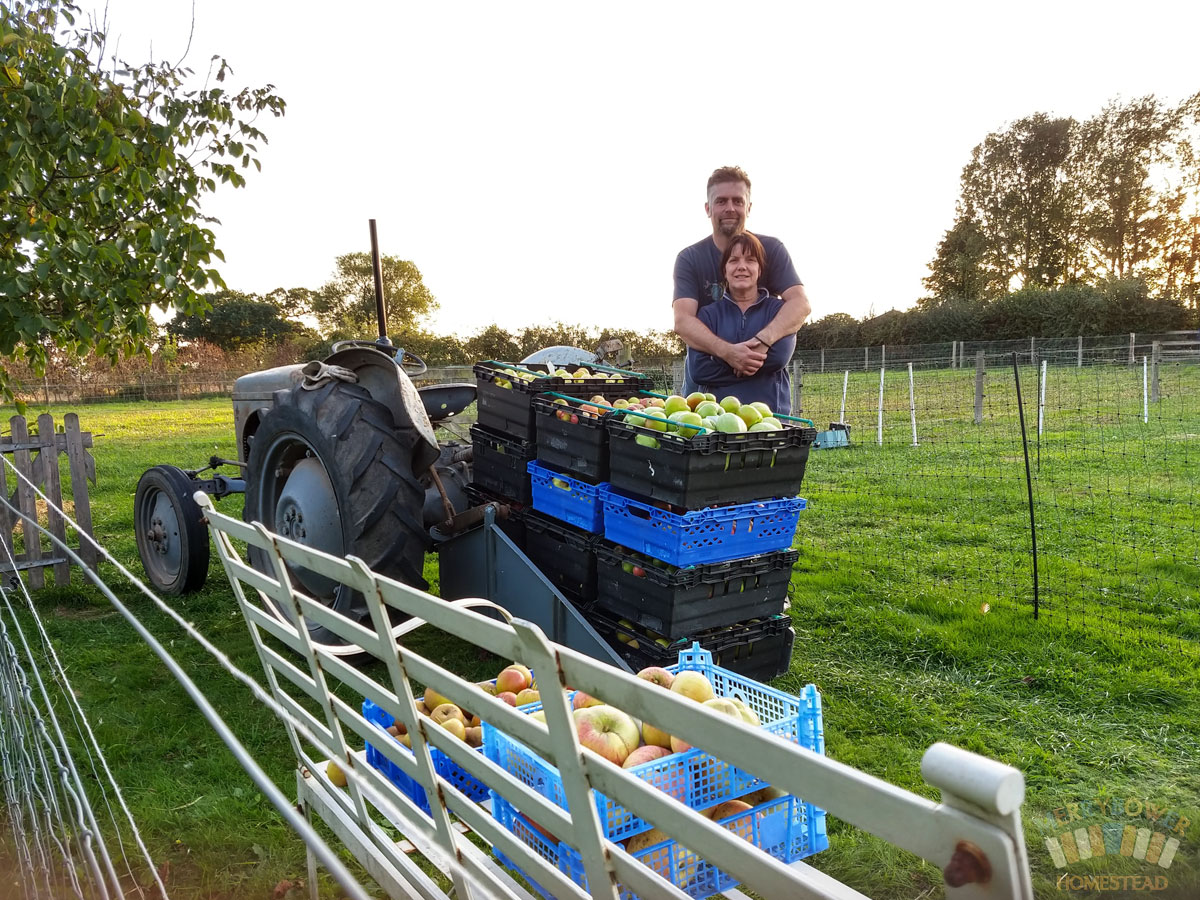
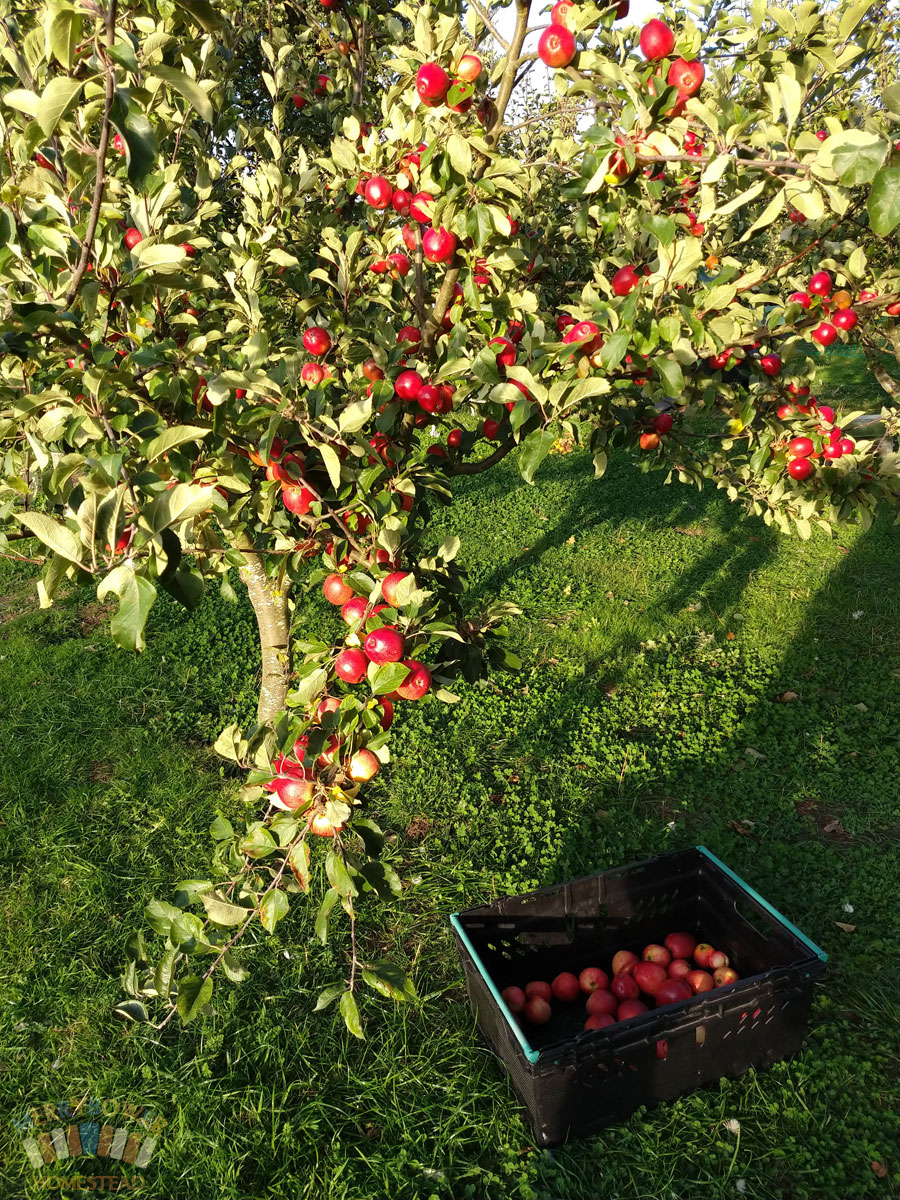
Apple Picking
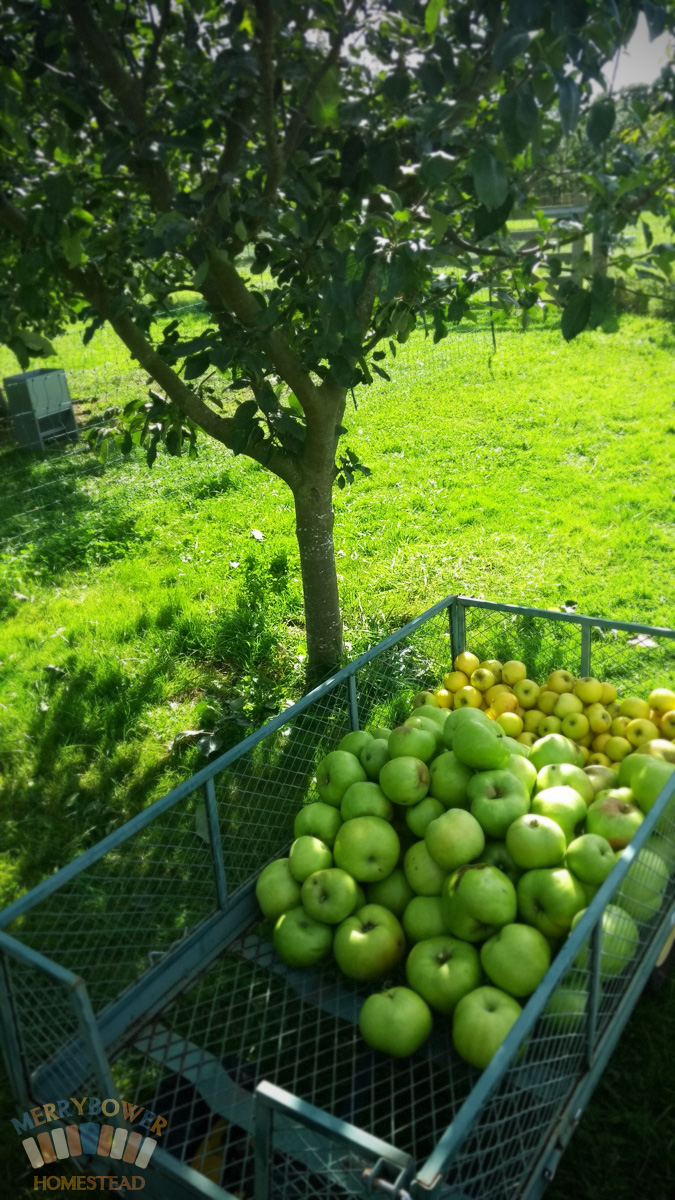
Apples Galore!
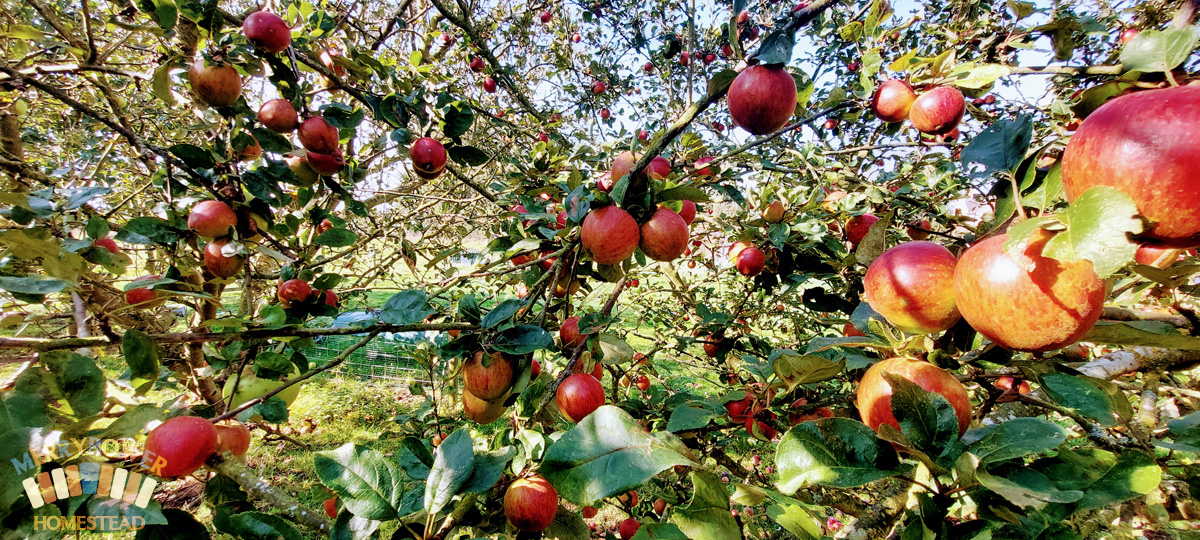
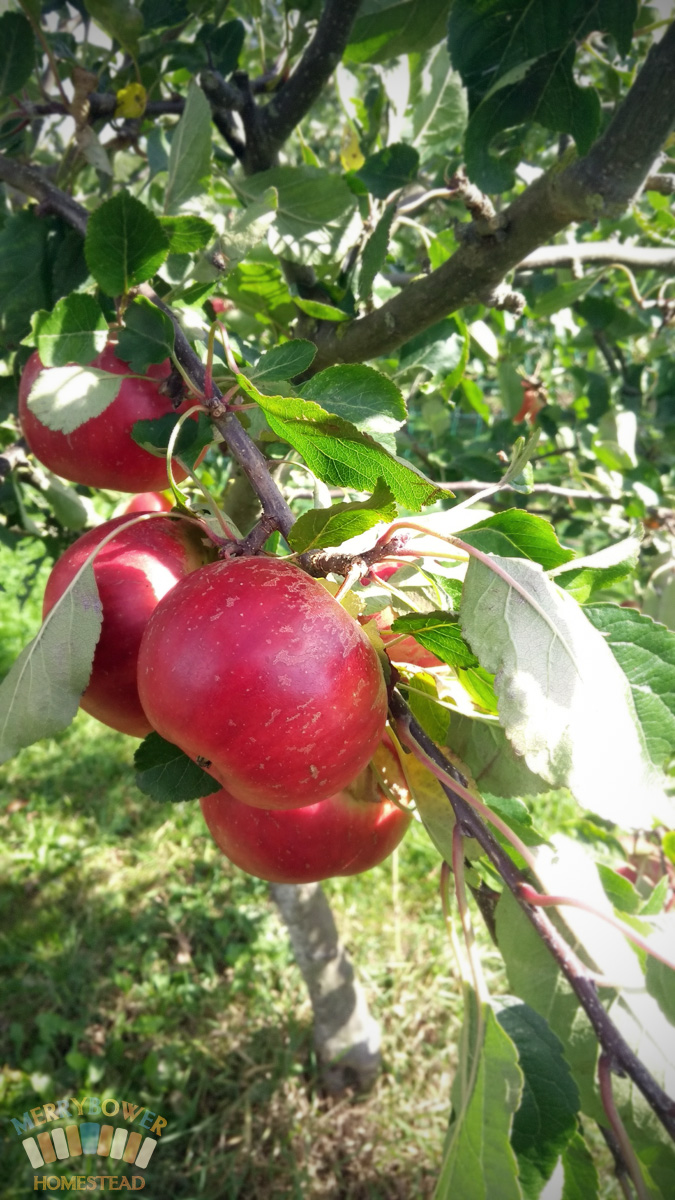
Sitting in the Dabinett tree
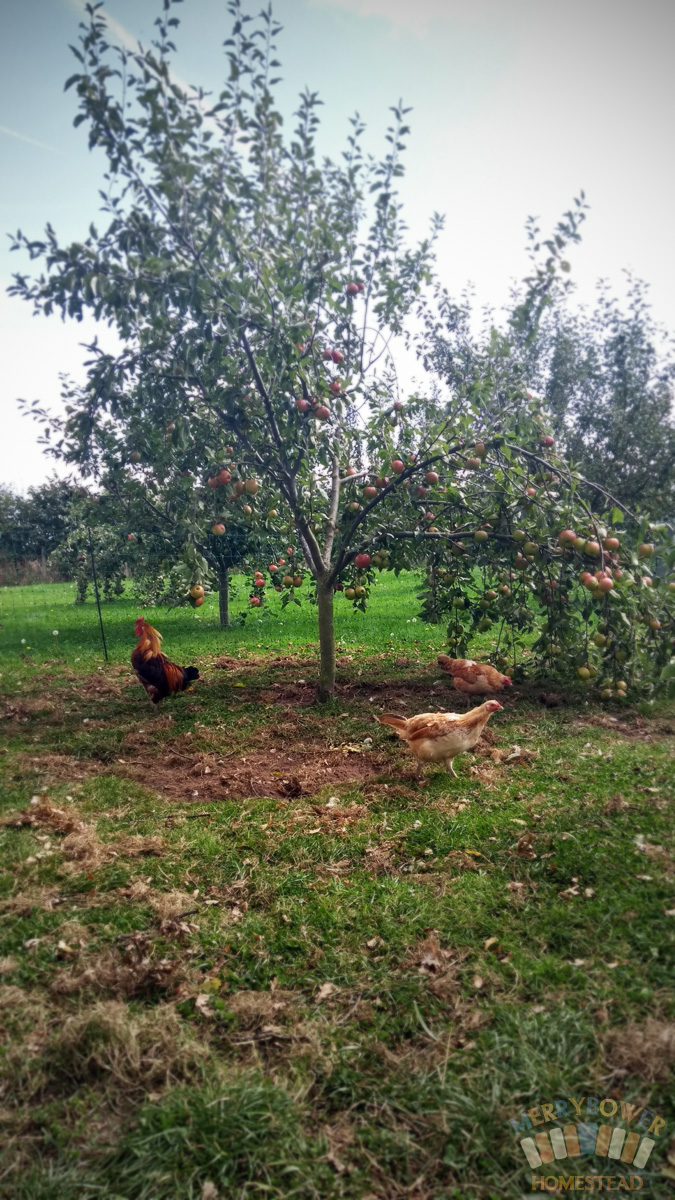
It’s that time of year! The leaves are starting to fall in the orchard, the sun sits lower in the sky, for a shorter length of time.
And the apples are starting to drop. Just one pressing is planned this year, life is so busy in other regards, but it was great to pull all the kit out, having not pressed anything last year!
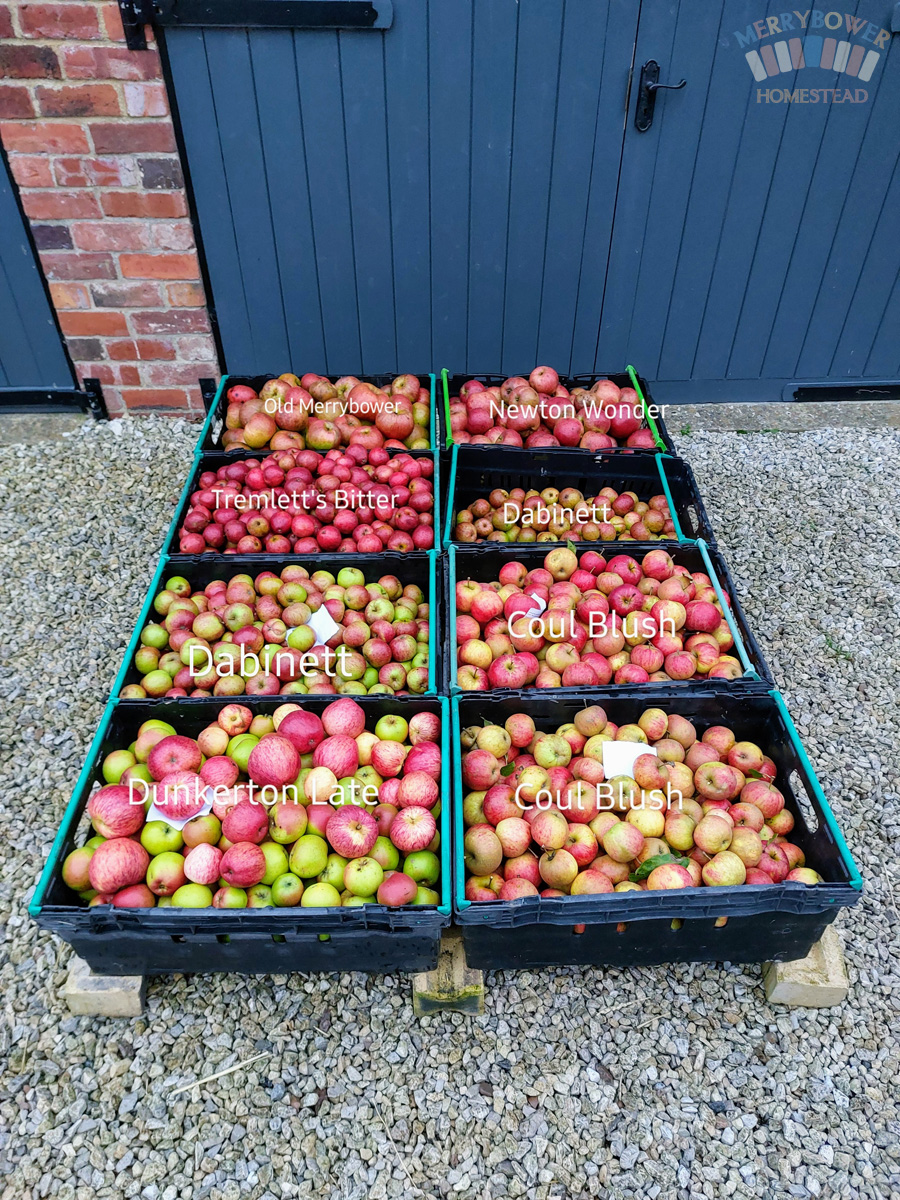
Finally three of the cider trees planted years ago are finally fruiting enough to make use of their bounty, so Dabinett and Dunkerton Late were added to the mix. Tremlett’s Bitter was also picked, but in the end it didn’t have the bite I thought the mix needed – Dabinett pipped it in that regard. All are sweet, but the Dunkerton Late (picked because it’s sweet, and it has ‘Dunk’ in the name) is just pure sweet – no bitter, no acid, just an apple-shaped blob of sugar! As usual, they were picked and left to ‘sweat’ for a couple of weeks, to give the starch time to break down.
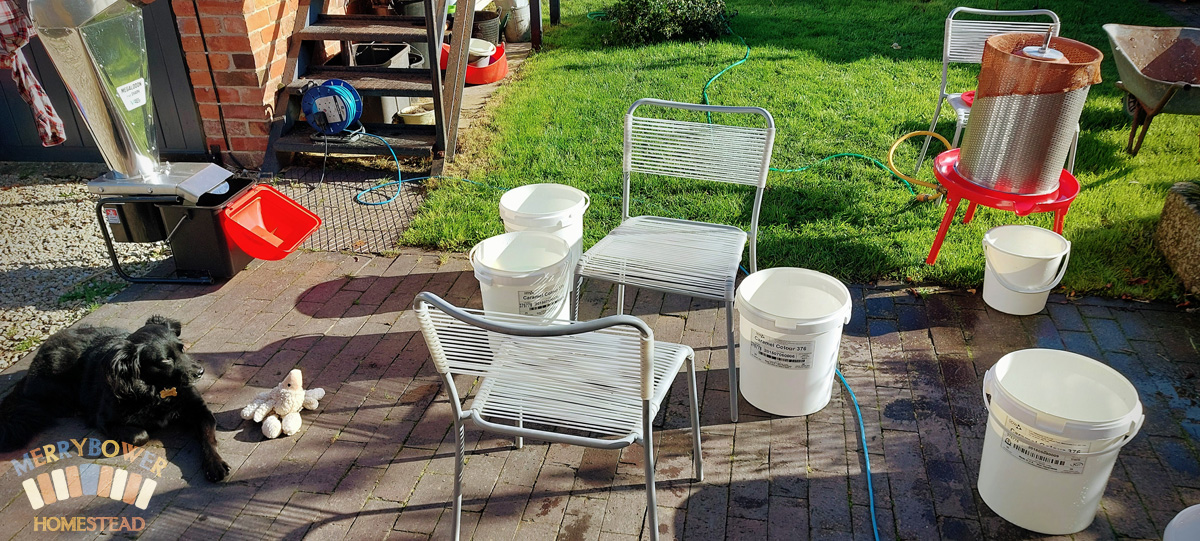
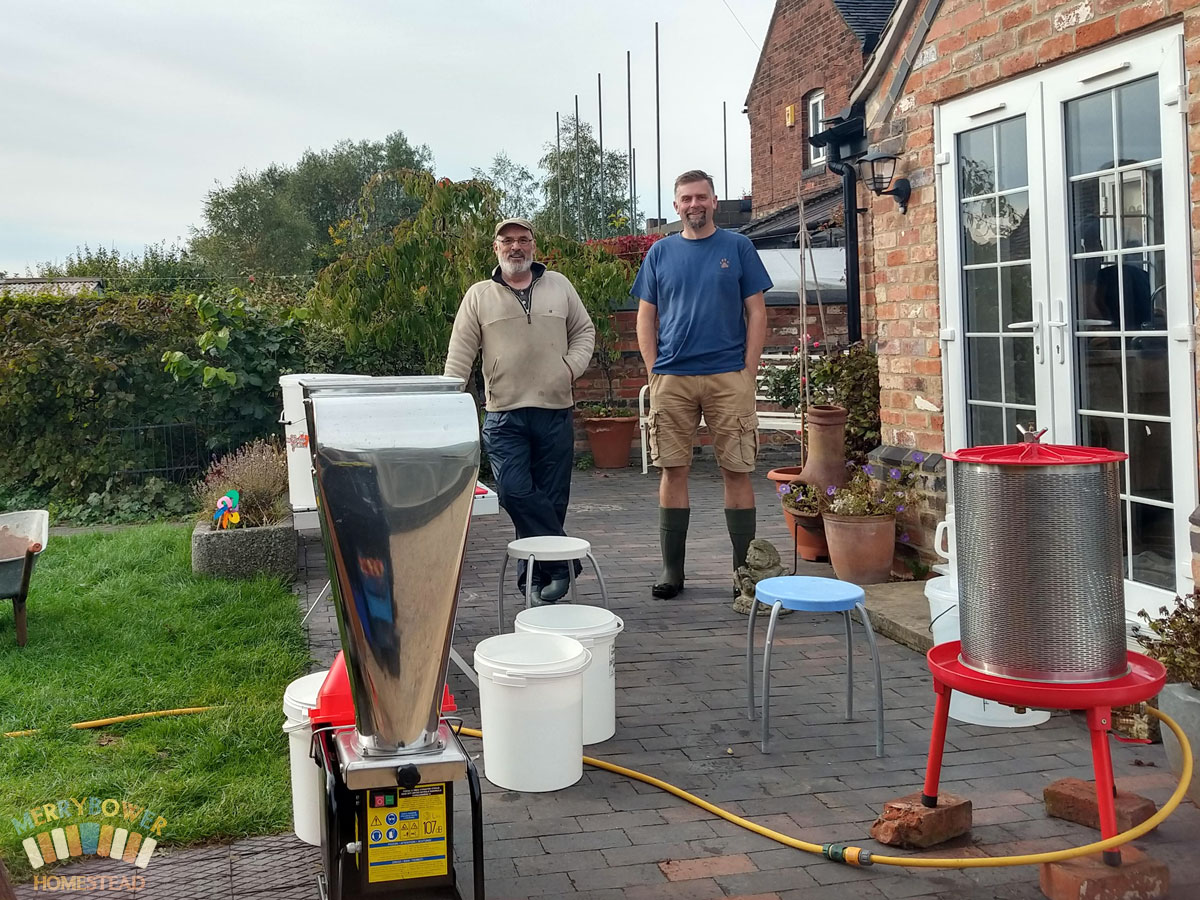
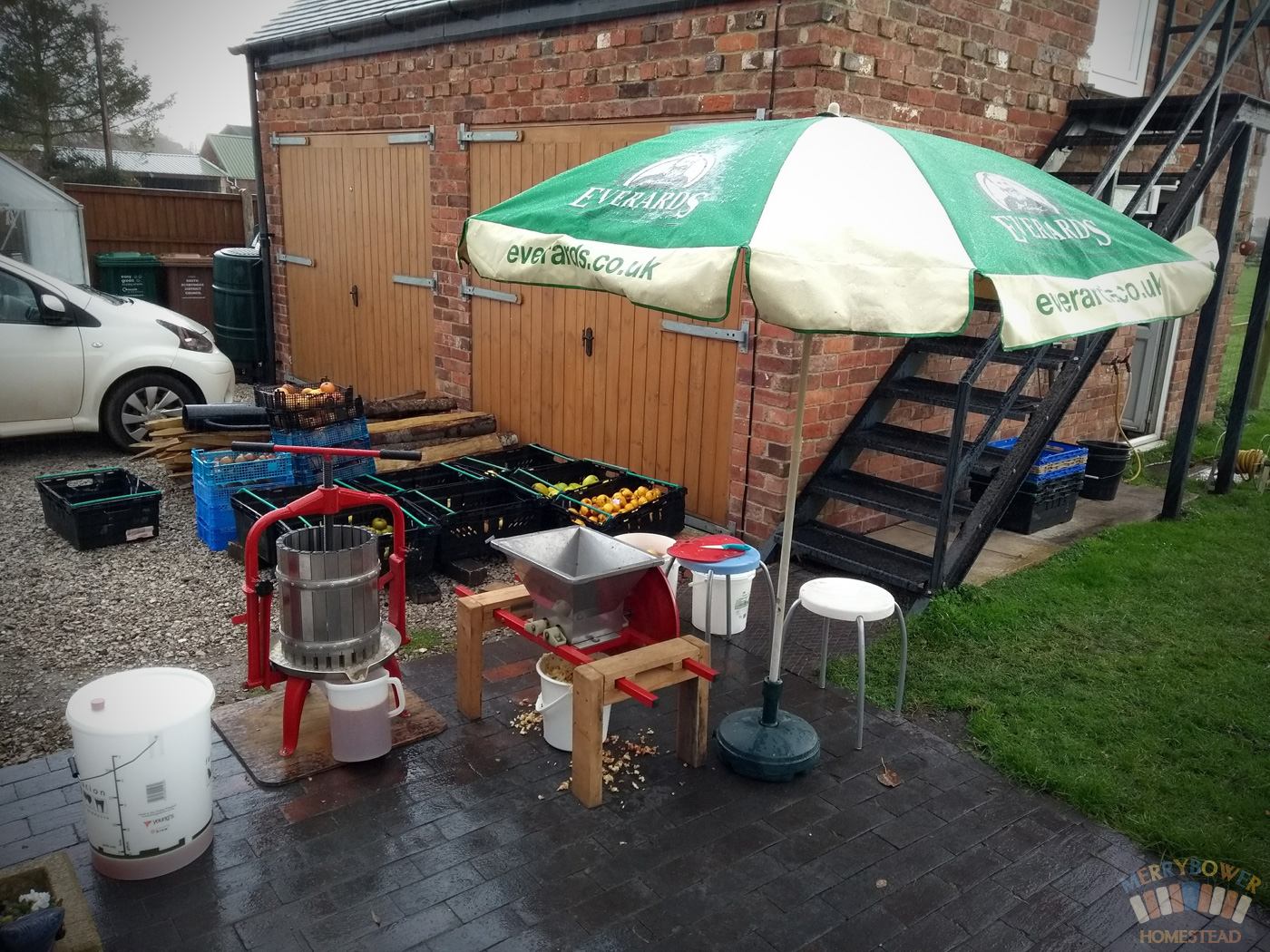
All the gear, a modicum of idea
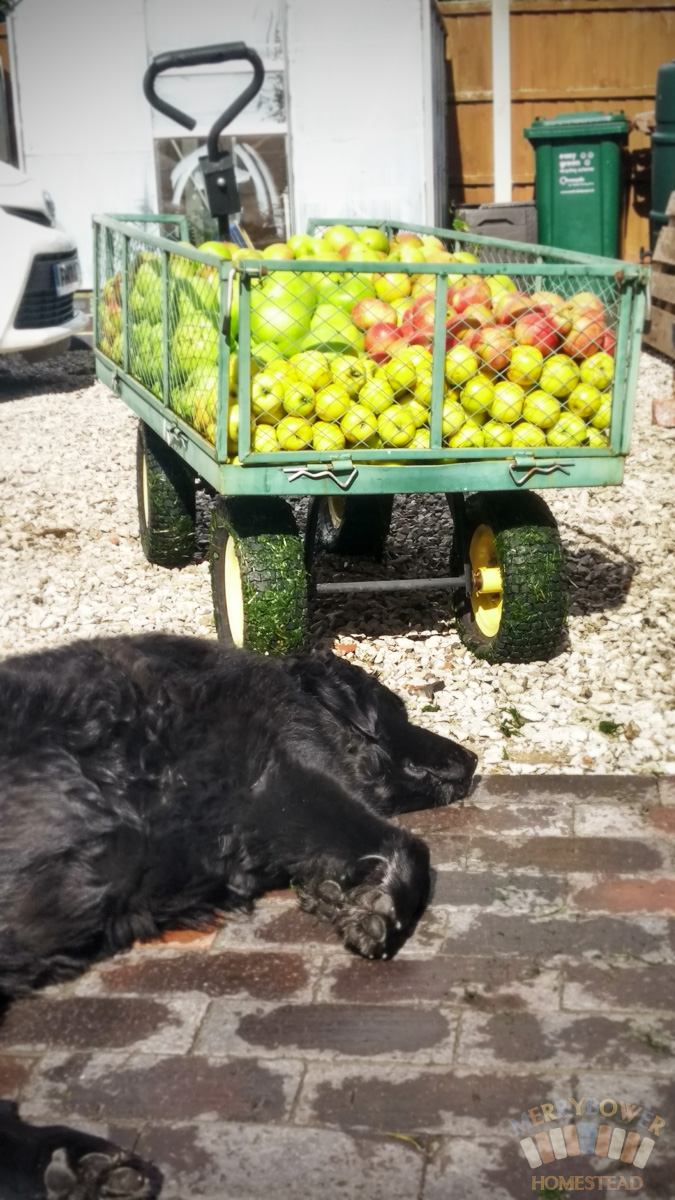
This year I was joined by Sasha, the new member of the family who stumbled across us earlier this year. I’m still not sure she was much help, but she assures me that motivational presence is a thing.
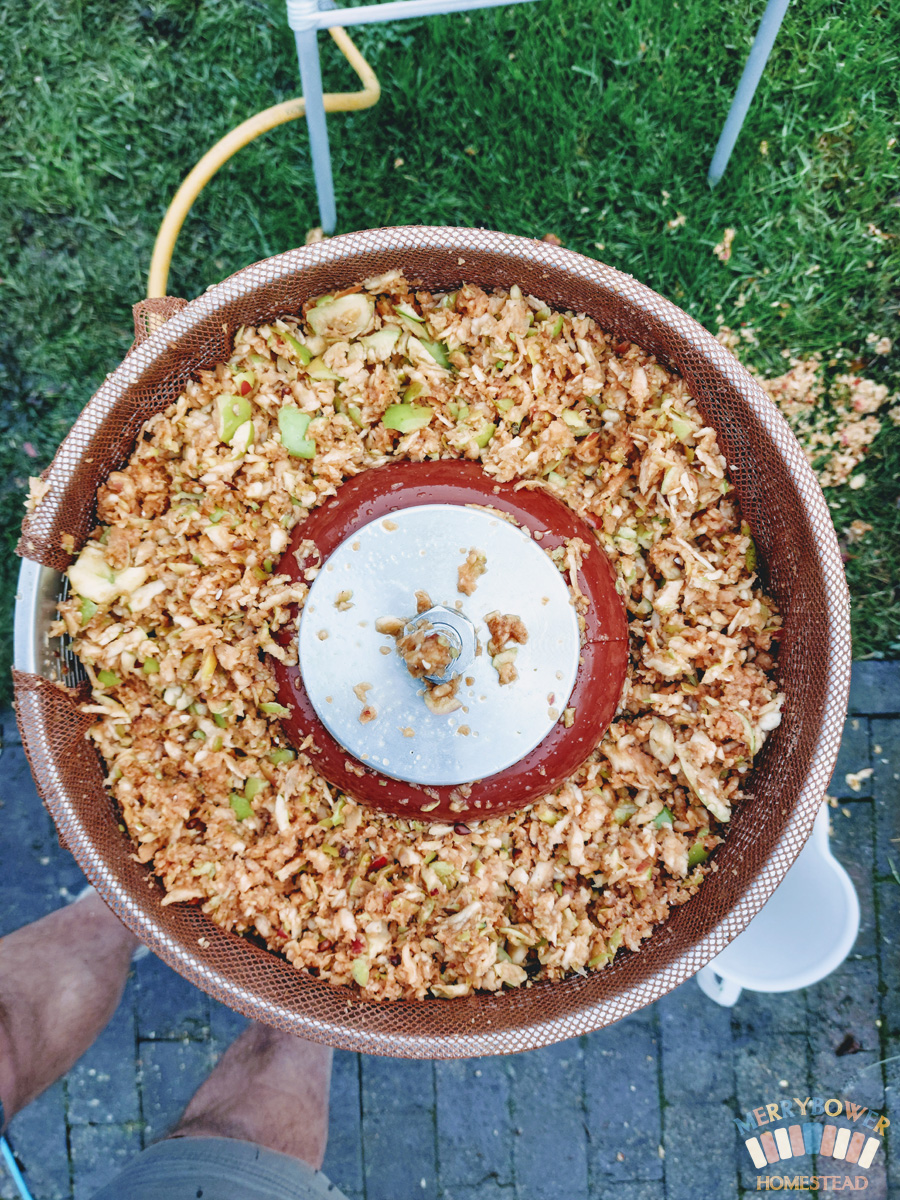
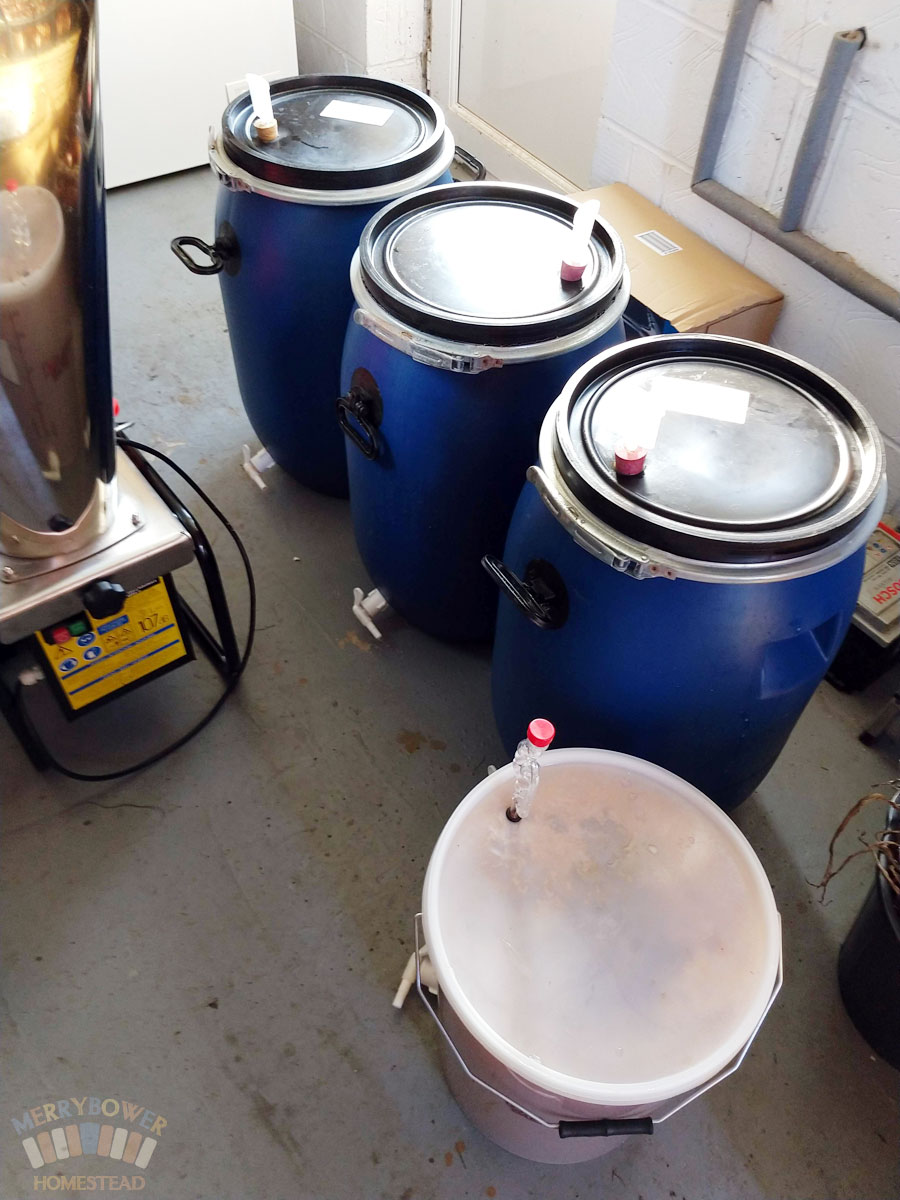
10 litres of juice-to-be
Set up time is the biggest job I feel – cleaning equipment, arranging things in the right place so you can access each stage without going arse over proverbial in the rush to finish the job. The sun was out, indeed it was a glorious day to sit and make apple juice.
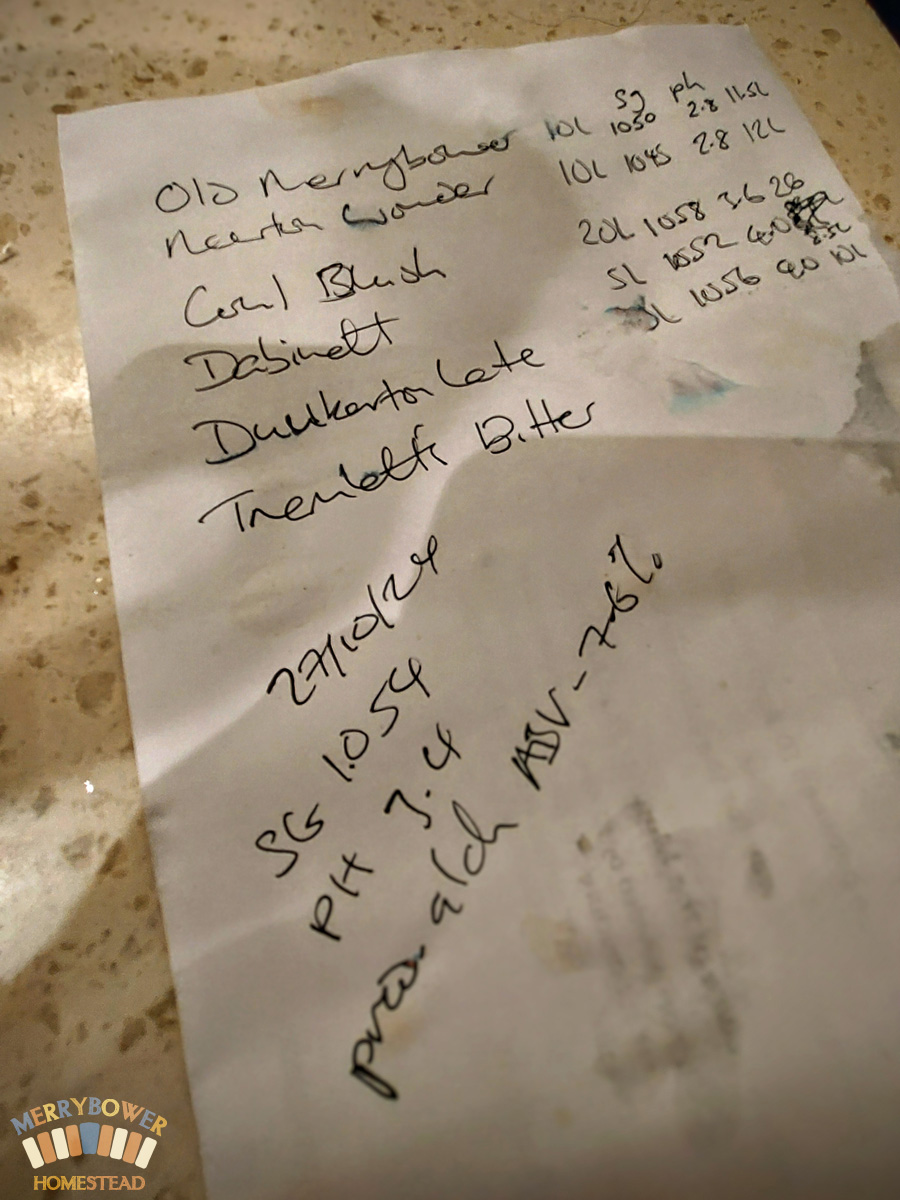
My kind of shopping list
The great thing about having a few years of doing this under the (ever expanding) belt, is that the process becomes less daunting. Outside it’s making sure the washing buckets are arranged in a neat line, the press has a wheel barrow next to it for the pomace, the scratter’s electric supply is far enough away from the liquids! Inside the house sits the notepad for the pH and Specific Gravity readings – useful for this batch, but also useful for ongoing records. I keep a spreadsheet for both readings by apple type, which makes it easier to plan a press in the future, for that ever elusive set of perfect readings.
To help with that process, I don’t press different apple types at the same time – each type is pressed individually. It also helps avoid a situation where one apple type is just unsuitable for pressing; yes, I’m looking at you Yellow Ingestrie. I’ll never forget being covered in small pieces of yellow apple flesh as it literally bursts through the holes in the press, in every direction.
Final Mix
| Variety | Attribute | Percentage Mix | Specific Gravity | pH |
|---|---|---|---|---|
| Old Merrybower | Sharp | 17% | 1.050 | 2.8 |
| Newton Wonder | Sharp | 18% | 1.045 | 2.8 |
| Dabinett | Bittersweet | 12% | 1.052 | 4.0 |
| Dunkerton Late | Sweet | 15% | 1.056 | 4.0 |
| Coul Blush | Sweet | 38% | 1.058 | 3.6 |
Old Merrybower is a variety we know nothing about, other than the tree we have has been grown from an old (150-200 years old) full standard tree that blew down in a storm about ten years ago at Merrybower Farm next door. As luck would have it, I had just learned to graft fruit trees, so I nipped out to the falled tree, one of the last survivors of the old farm orchard, and took several scions from it. The farm has a replacement tree, and we have one. It’s an acid cooker, but not as sharp as a Bramley (what is?!). Great for adding acid to the mix, for preserving properties.
Newton Wonder is our local apple variety, from Kings Newton, and is another sub-acid cooking apple that is quite edible raw later in the season. I would say it has a more complex flavour profile than the Old Merrybower, but again, acid enough as a preserver.
Dabinett is a classic cider apple – great for pressing, and is termed a ‘bittersweet’. It’s not rocket science to figure out that it’s sweet, but also has that bitter quality that gives cider it’s ‘body’ and depth of flavour. I was hoping to use Tremlett’s Bitter in the mix as well, but it didn’t quite have the body I wanted.
Dunkerton Late was earlier than I expected, but is just pure sugar in apple form. Not even particularly apple-y if I’m honest. It’s the first time I’ve used it – it was planted in the hope that it could provide sugar for all of the later cropping acid apples, as sweet dessert apples, other than russets, seem to be early/mid season croppers.
Coul Blush – I have high hopes for this one. It doesn’t have quite the depth and flavour complexity of, say, Ellison’s Orange, but it definitely got better the longer it stayed on the tree, and is quite sweet, for that all important sugar to alcohol conversion needed to kill unwanted bugs off. It’s a variety that’s used as one of the botanicals in Caorunn gin, so there must be something about its flavour that others have also seen! These were the last from the tree, so I imagine at their peak for cider-making purposes. We’ll soon see!
Juice Analysis
Honestly, the analysis can be taken with a pinch of salt – I had an educated guess at the tannin and malic acid content of Old Merrybower, Coul Blush and Dunkerton Late, as I could find no data on them. As it stands, it looks to be a slightly acidic, less full-bodied cider than the ‘ideal’, but my last full-on tannin cider was too bitter for my taste, so I’m not distraught. And 7.6% is by no means the weakest I’ve made before, so no complaints there!
| Sugar | Malic Acid | Tannin | |
|---|---|---|---|
| Ideal Cider Value | 15.00% | 0.40% | 0.20% |
| Cider 1 | 13.87% | 0.46% | 0.09% |
 2021 Merrybower Homestead