Update from our Neighbours

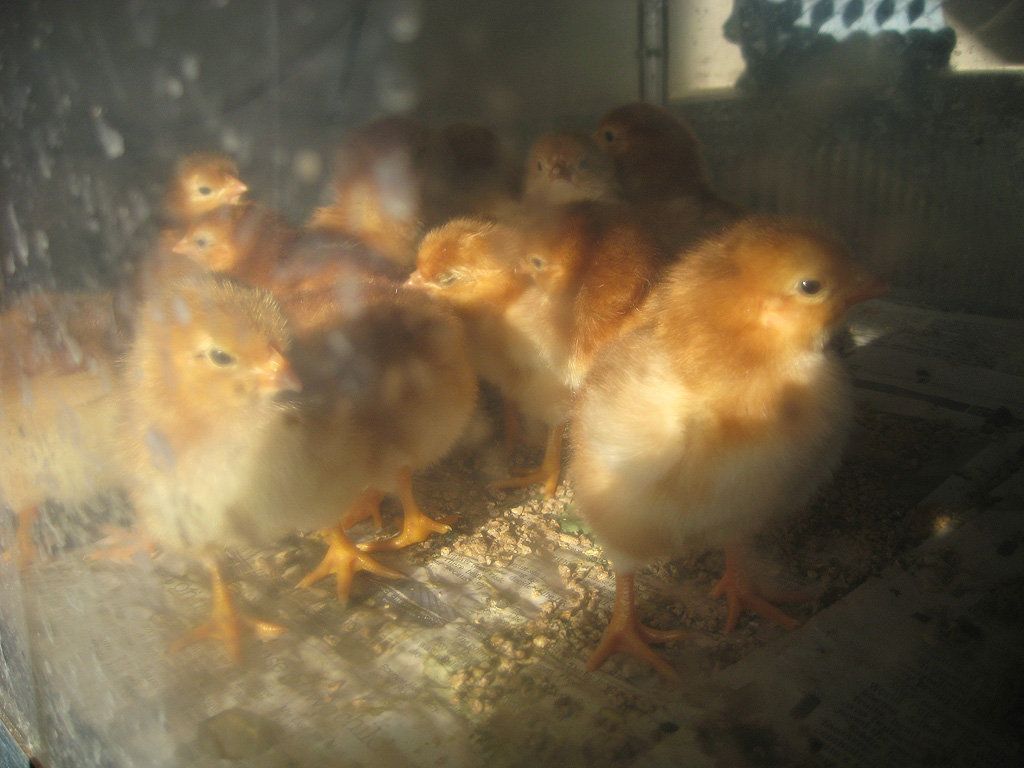
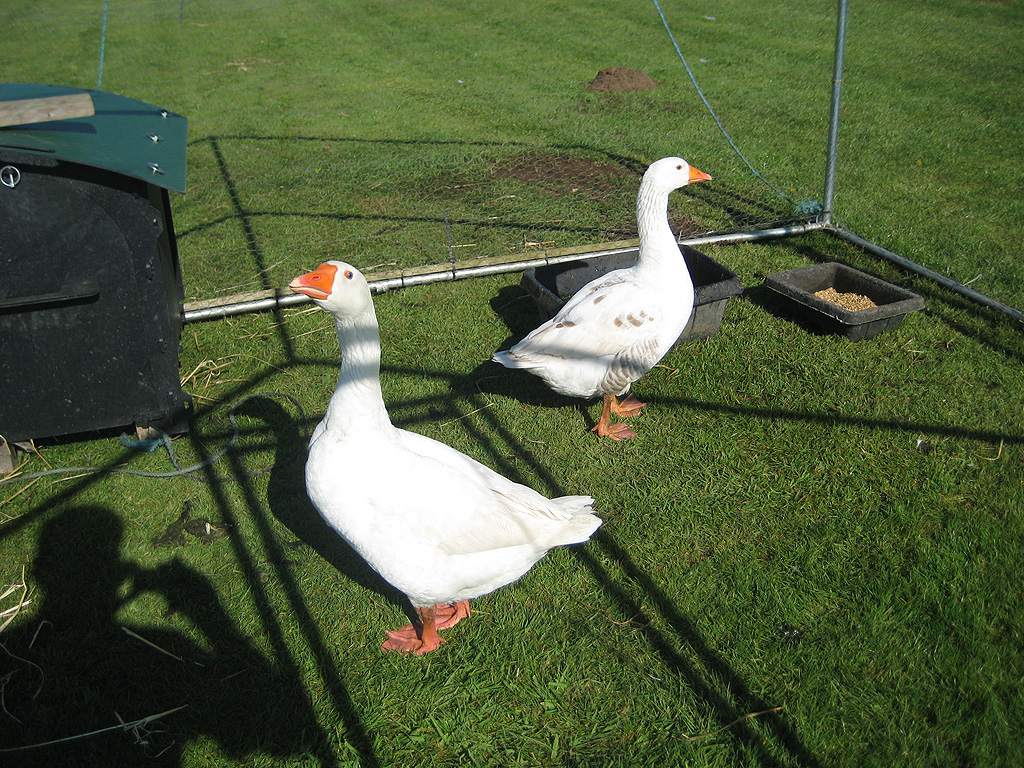
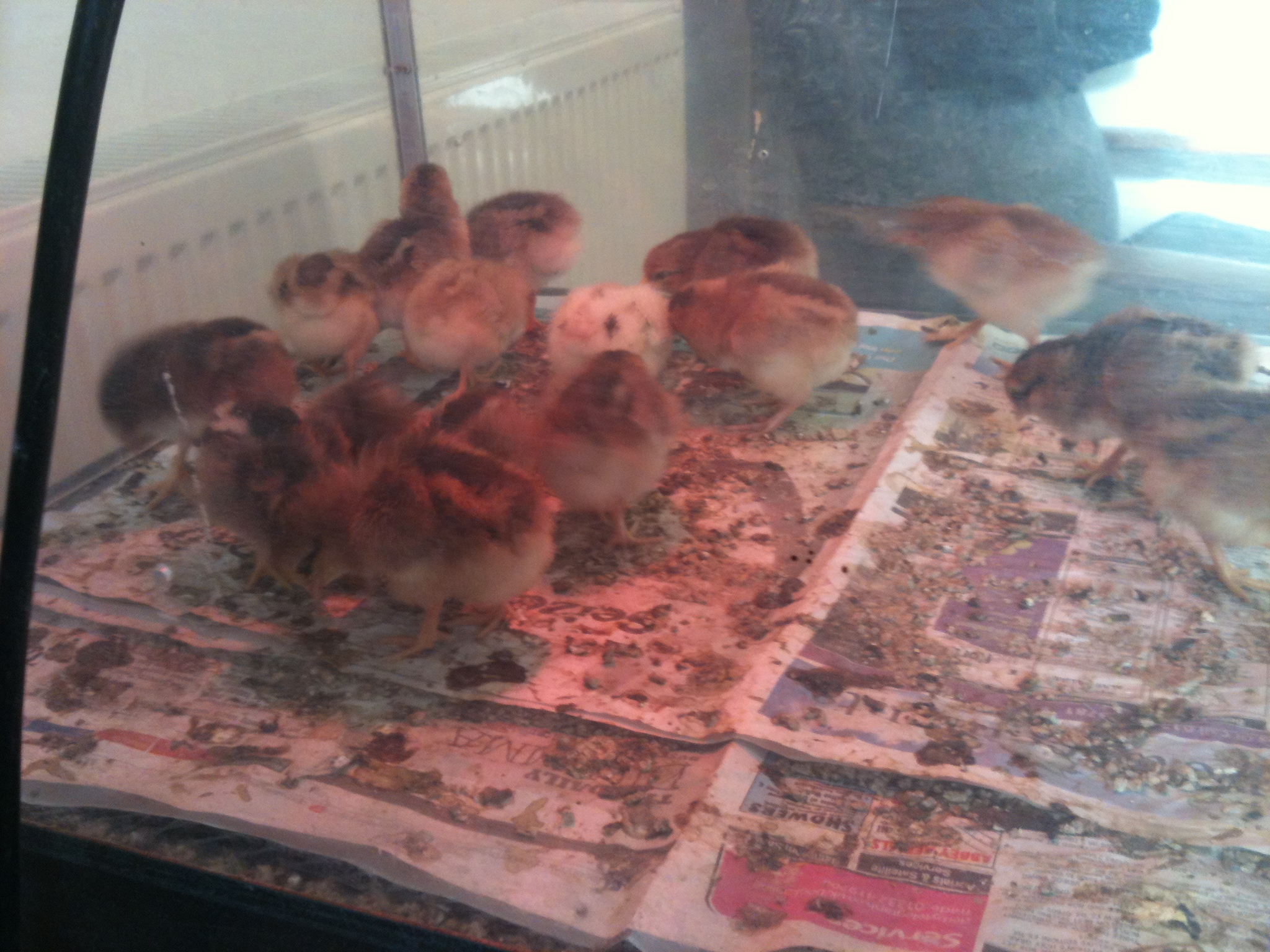
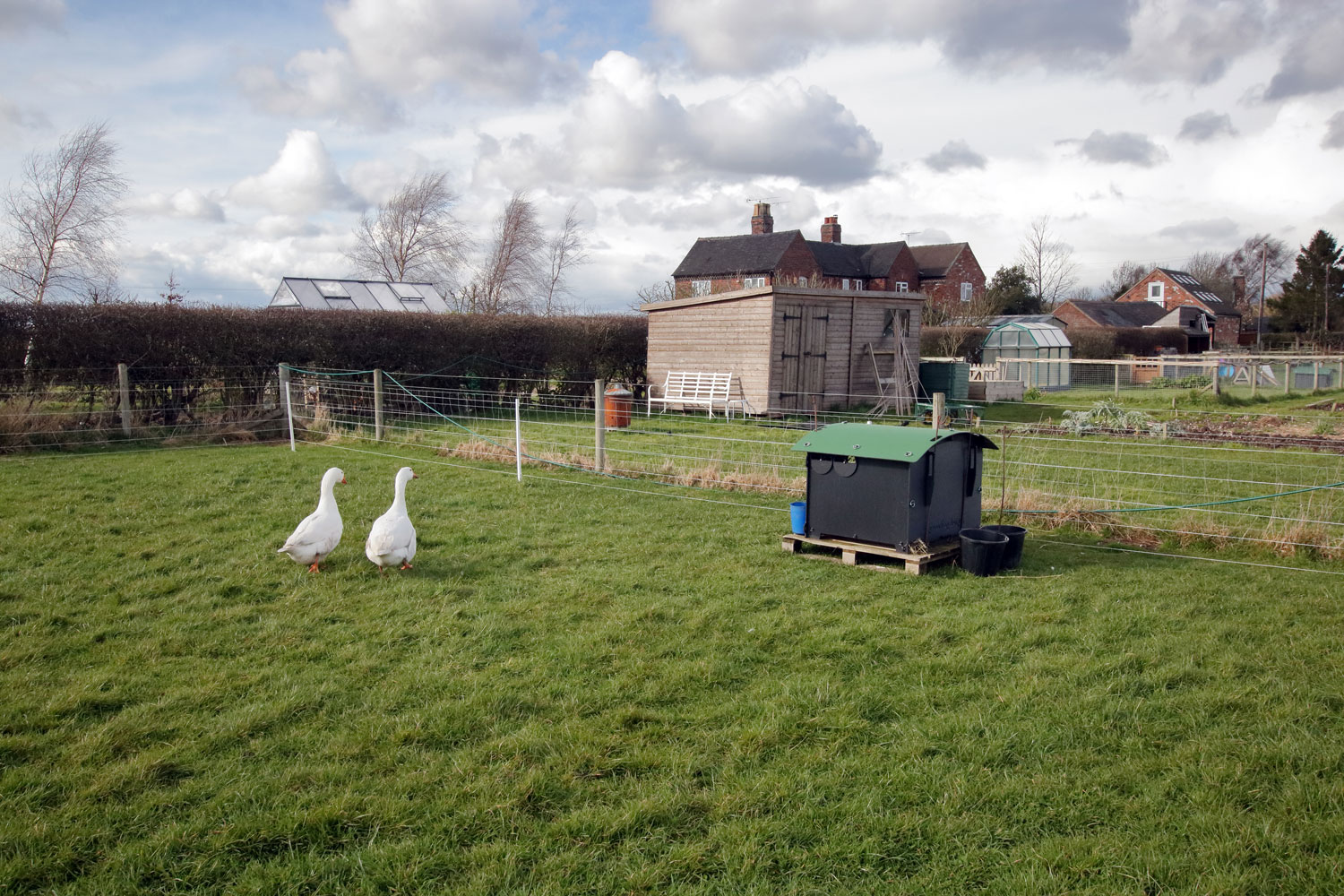
2016 rhode island red chicksI popped over to the local farm today, where Rob and Pete breed the other chickens and geese we mention on the website, and managed to grab a quick photo of the Rhode Island Red chicks, newly hatched, and the two breeding West of England geese. Rob’s also come up with an ingenious little broody shed, using their own hybrid bantam that makes a great broody mother! Less electricity, all natural, and they’re treated well. One little trick I picked up, handed down from Pete’s dad, was to line each broody box with a square of grass sod, earth and all, and place the straw over it. Apparently this helps keep the hen moist, as if it were in the wild, and the grass growing from the front give them something to nibble on!2016 west of england

Light Sussex Flock

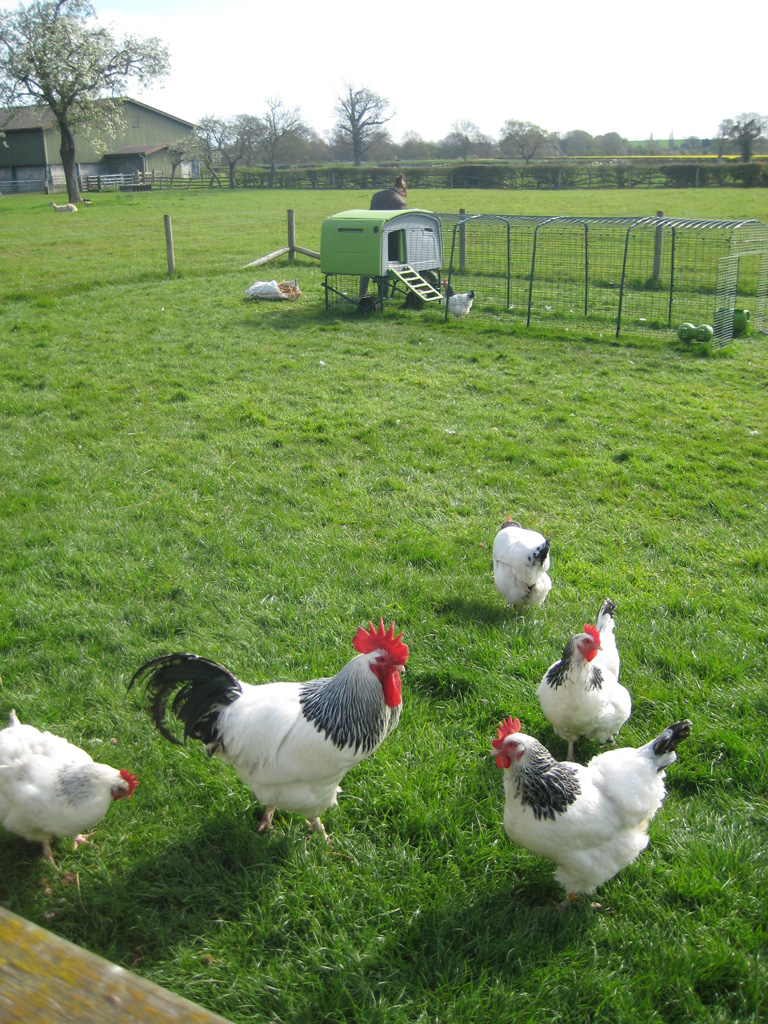
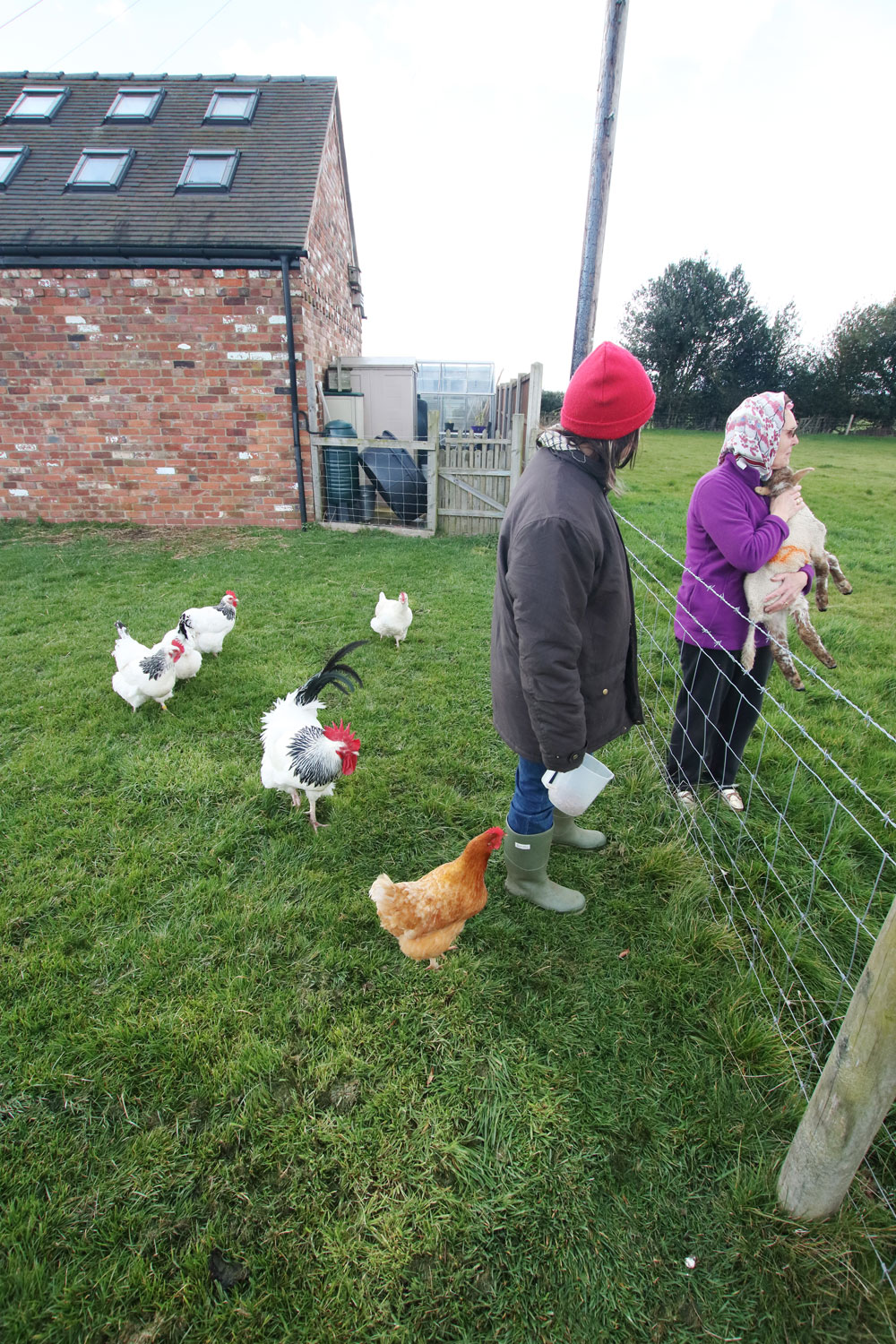
Here we have our Light Sussex flock, separated from the rest of the chickens for the breeding season. They’re brought to the  small paddock at the back of the house, so we can keep a keen eye on them all – they’re fantastic to wake up to, seeing them from the kitchen window.

Colin is a cockerel we’ve bred ourselves, as are the ladies, so at the moment they’re a closed flock although we’ll try and introduce some new blood over the next year or two. The hen with the lighter hackles is Jacqueline, an old rescue hen that is beyond laying, but is at home with the rest of them. In all honesty, she’s Colin’s favourite and the other ladies treat her as royalty, definitely the matriarch!

At this stage their eggs are being collected, ready for incubation. We’re getting between two and four a day, which is about right for the breed. The hen in the coop run, waiting patiently for Suz to finish cleaning them out, is determined to go broody but she’s not quite there yet!2016 light sussex flock

Fruit, Grass, Chickens & Walnuts

It’s one of those posts! You know, the sort of post that collects all the lost things that wouldn’t make a post in and of themselves, but I find interesting enough to want to make a note about them. So here goes!

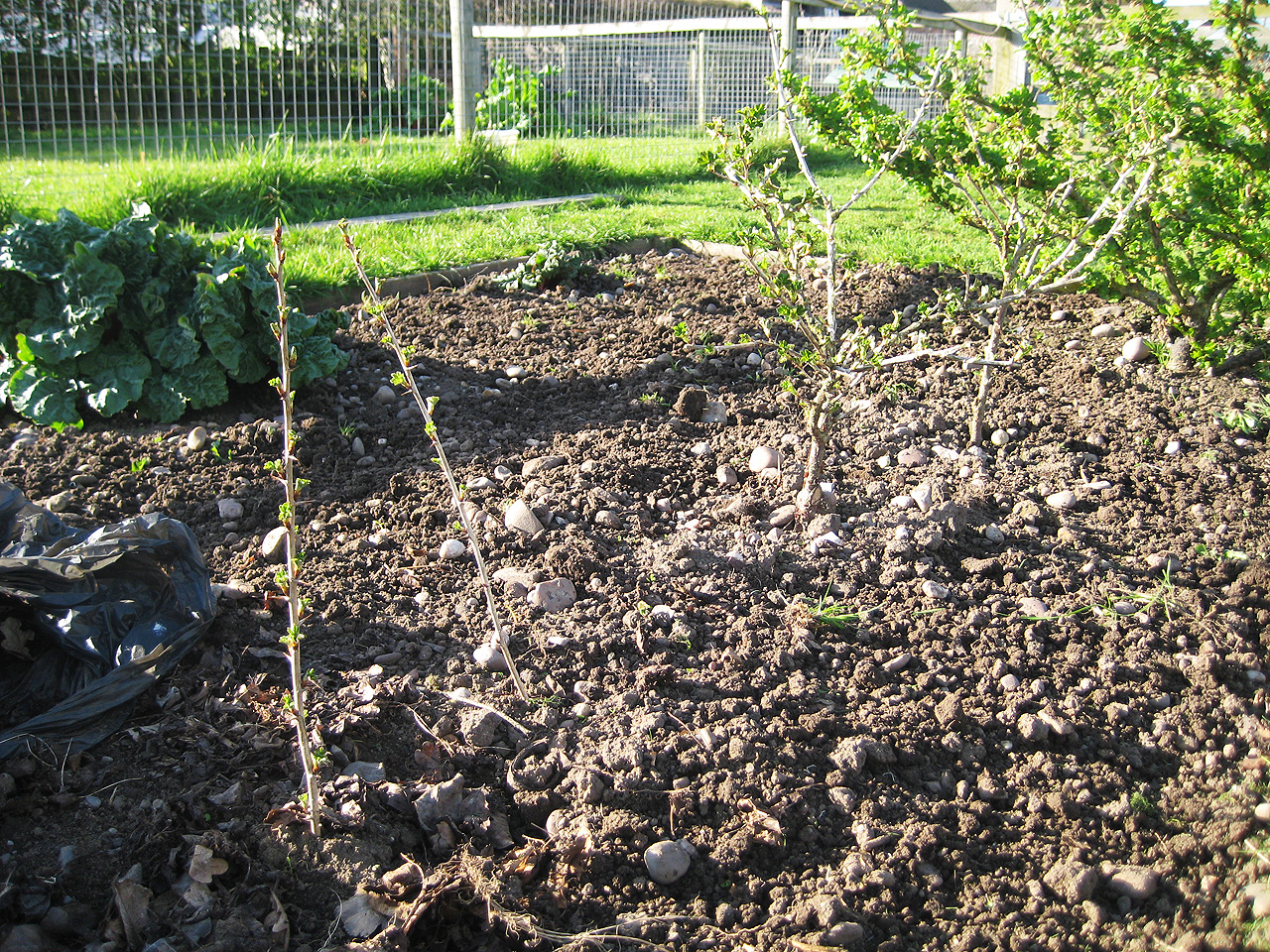
2016 gooseberriesPropogating gooseberries – it’s easy! This is one Colin, my father-in-law taught me. If you have access to a gooseberry bush, and you’d like another, just cut a 12″ twig off and stick it in the ground! Winter is the time to do it, when everything is dormant – the two green twigs on the left are simply twigs cut from a gooseberry bush on the left, and the two more developed plants on the right are branches cut from an existing bush! The reason we did this? Well – we had a bush but the pruning regime wasn’t right for us – they branched out too close to the base, and had thrown up a lot of new stems. Doing what we’ve done here we can propogate the plants, and form them to a more open bush style, which will hopefully be easier and less painful to pick from!

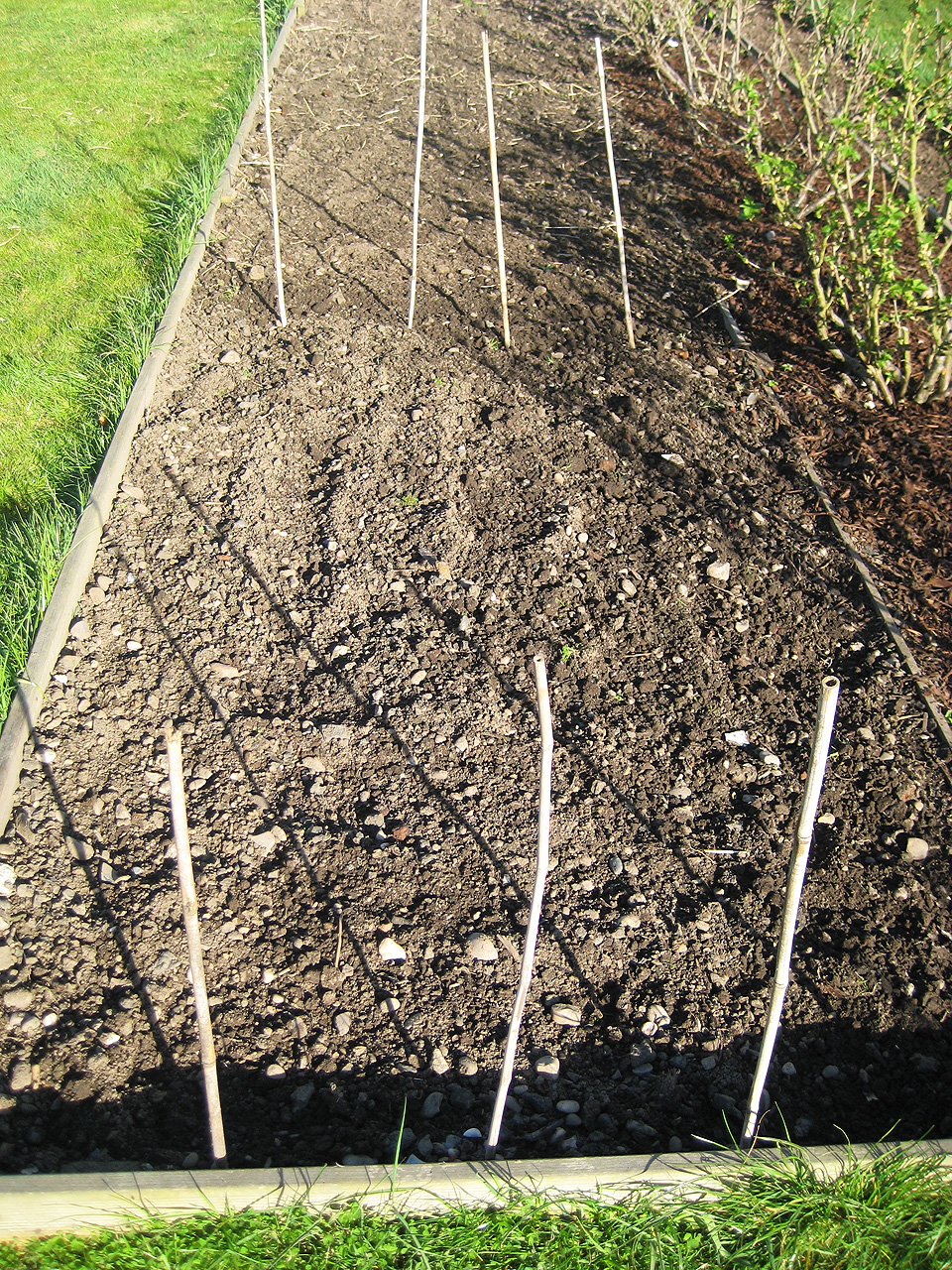
2016 fruit bedThis next image shows the cleaned soil of the main fruit bed. The currants are coming along nicely and we’re going to eventually fill the larger bed with strawberries, but this year, whilst we’re still cleaning it of the random docks and nettles that were brought in with new soil, we’re using it to grow some veg. Here you can see Smiler has laid out lines for his onions, with some yet to be filled with some of last year’s garlic we still have hanging up.

2016 new grassGrass! As you know from a recent post, we’ve grassed over half of our allotment (sniff) as we’ll hopefully be without a kitchen for a good portion of the harvest season – how’s that for timing! Two weeks ago I sowed a ryegrass/clover mix, and today this happened! First thing in the morning there was nothing, and a good day of sunshine after the rain and we’ve almost an inch of growth – fantastic! We’ll be playing cricket on it in no time 😉

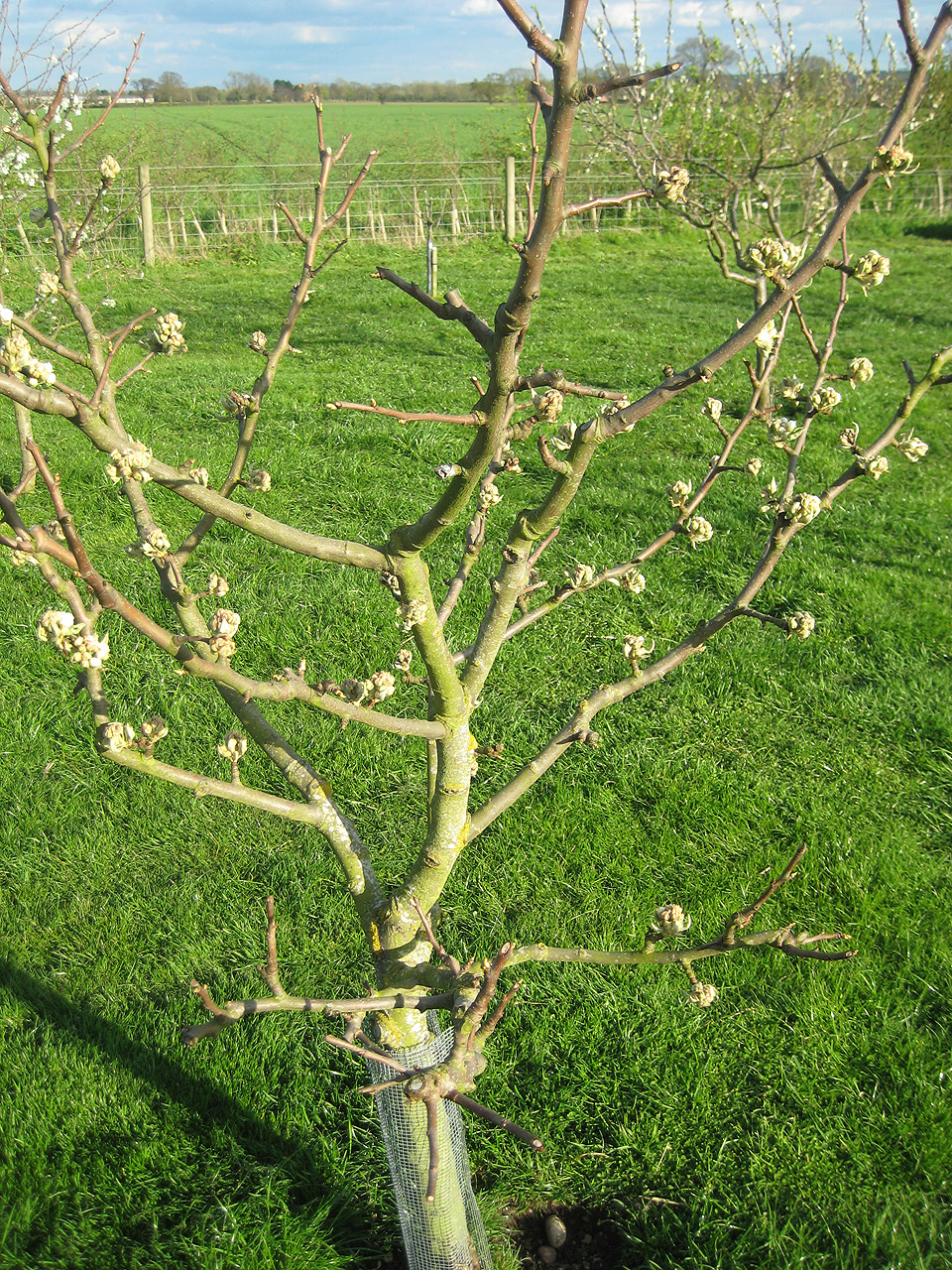
2016 pear blossom Pear blossom – it’s beautiful isn’t it?! What amazes me with pears is that their blossom clumps are huge in comparison to the other fruit types. My fear is that we’ll have a frost or two before they open, killing them off, which is what I think happened last year. The apples tend to come out later, but we seem to have more varieties of plums, pears and cherries that are early starters – bad move possibly, but makes it quite exciting to see if we’ll get any!

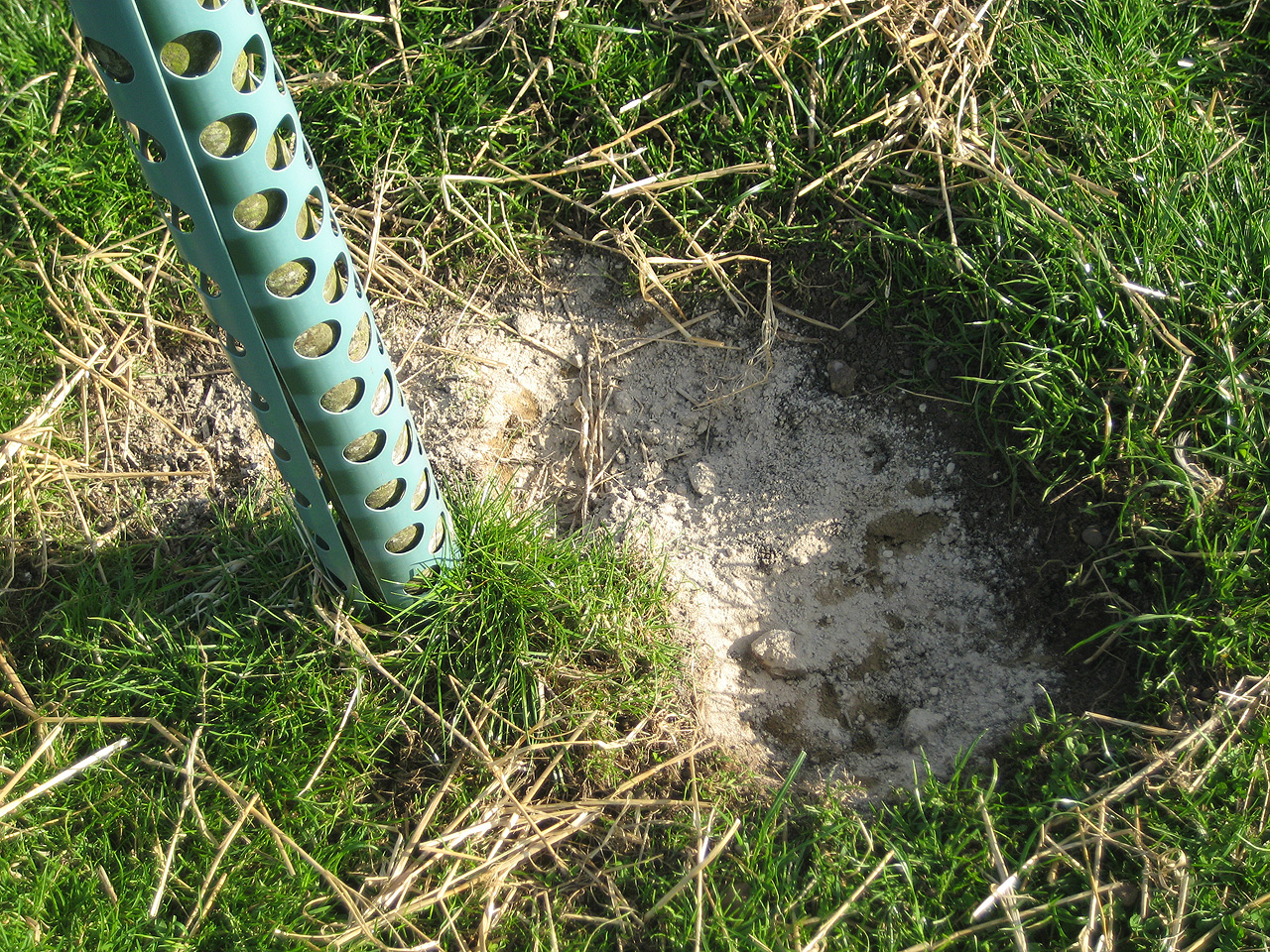
2016 chicken dirt bath 22016 chicken dirt bath 1Chickens and their lice baths. Chickens are reasonably good at keeping their lice populations down to manageable levels themselves, if given the right space. Luckily, the bare earth beneath the fruit trees is the perfect location for an impromptu dirt bath, so we sprinkle some food grade diatomaceous earth in the hollow to help the chickens with their task.

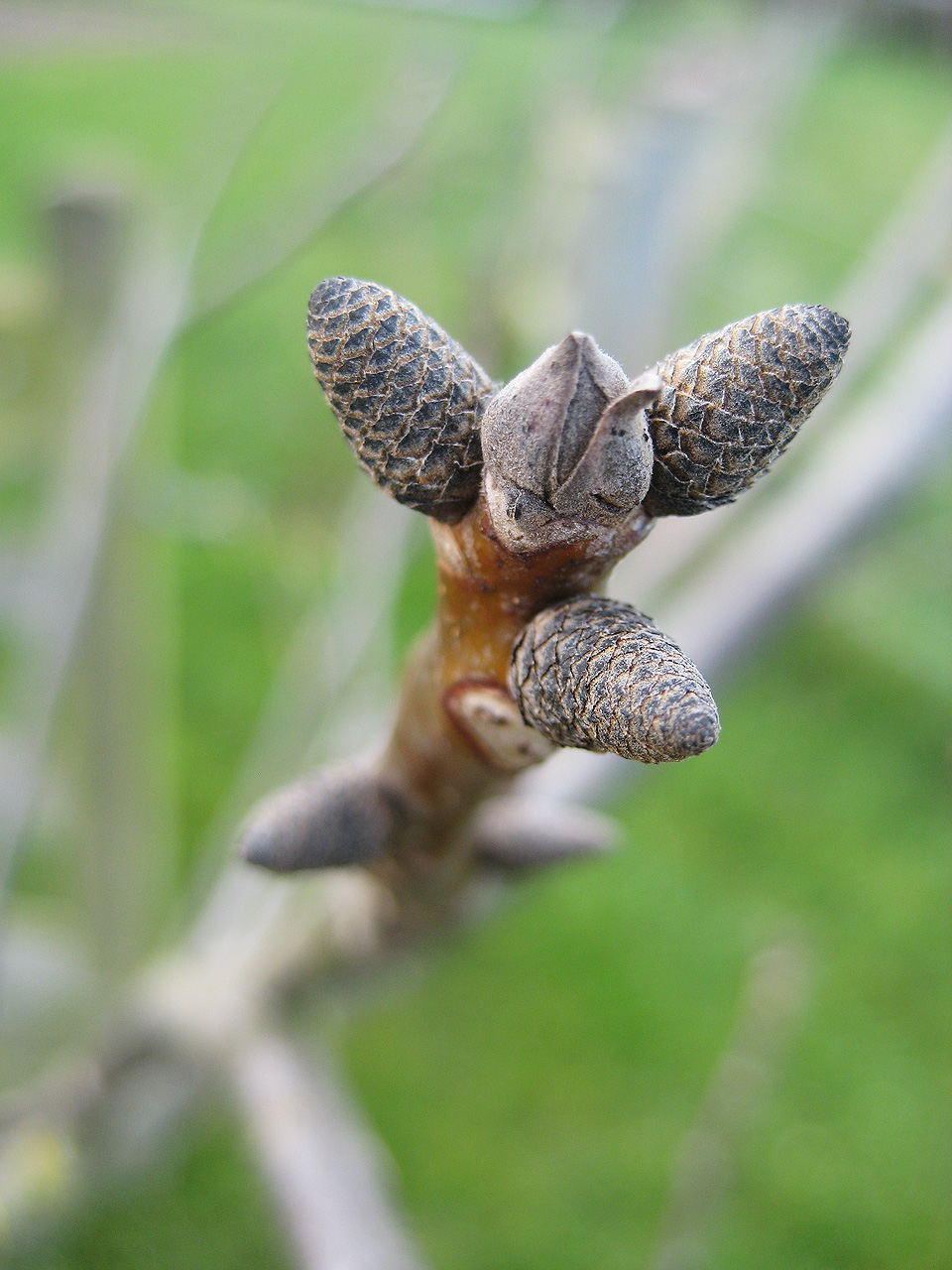
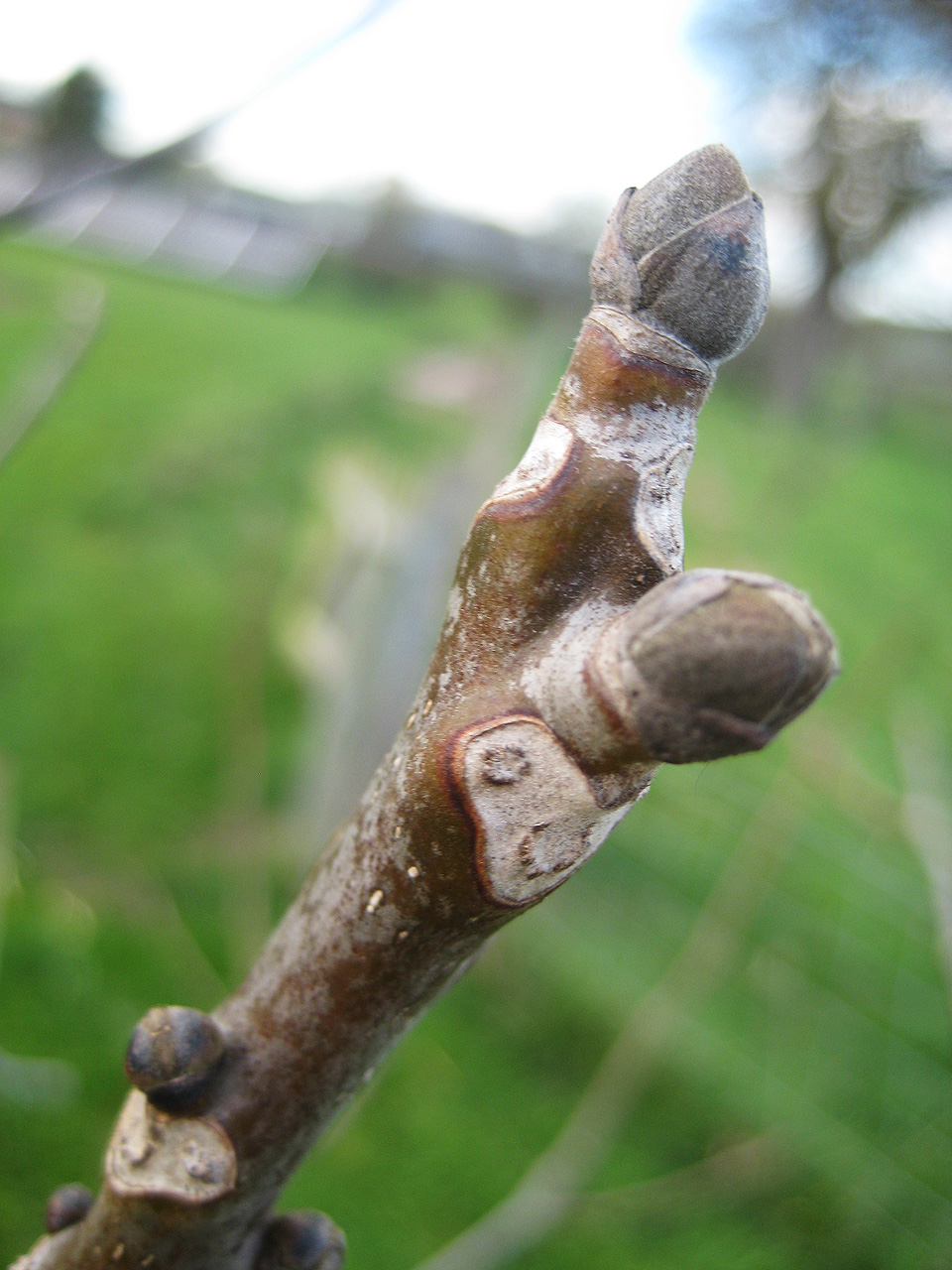
2016 walnut bud 2And finally – walnuts! These buds with the pine cone pattern will eventually form the male catkins – I have no idea what the female buds look like yet, but no doubt we’ll get some again this year. In the photograph showing ‘normal’ smooth buds, the white patches beneath the new buds is where the leaves were last year and have since fallen off and healed. I have my suspicions that the larger buds on the end might be flower buds, but we’ll have to wait and see. Now, reading up on walnut trees started to get me a bit worried – walnut trees produce a substance called juglone, which inhibits the growth of other plants, even killing them. Particularly susceptible are apple trees – yikes! Before reaching for eth chainsaw, I 2016 walnut bud 1read a bit more on the subject. Apparently the drip line is worst affected, that is any ground beneath the leaf canopy. Now, we planted Broadview, a compact cultivar, which has a 9m height growth if left unchecked, and a 6m spread, which is only 20ft or thereabouts, which is a 10ft radius around the trunk. Our closest apples trees are around 30ft from the trunk, with their roots ending up with a 10ft distance between themselves and the roots of the Walnut. So I won’t panic just yet – the MM106 apple trees might be dead by the time the walnut reaches mature size, and worst case scenario, we end up with some nice walnut wood!

Derbyshire Redcap and Brown Leghorn Chicks

Whilst we’ve only just started collecting eggs from our own flock of Light Sussex, I popped down to see Rob and Pete, and they’ve hatched their first two broods. Here you can see the Derbyshire Redcaps on the left, and the Brown Leghorn bantams on the right, all looking lovely! The Brown Leghorns will find their way into a wooden incubation coop very soon, next door to the Derbyshire Redcaps.

Derbyshire Redcap Chicks Brown Leghorn Bantams

Spring Time Shuffle & Update

The rains have subsided, the sun shows itself and we begin to shed the winter sleep from our eyes. Well, that’s not strictly true – a fortnight ago we started digging over the allotment – I tackled the last of the fruit tree pruning in the orchard whilst Suz dug over one of the vegetable beds and cleared the old strawberry patch which had started to deteriorate, having been in the ground for five years. Last Friday I dug over another vegetable bed and the rhubarbs whilst Suz pulled the remaining parsnips, carrots and beetroot, and weeded the artichokes, most of which have survived the mild winter! Jay got stuck into the first mow of the season, and Smiler prepared the raised bed. What a day! This was all on the only sunny day of the Easter weekend, but at least it gave us an excuse to take Saturday easy.

And then yesterday – the Sunday. The Little Orchard was looking quite sorry for itself – the occupation of the quarter acre by 20 chickens had taken its toll, the mole hills had become mole holes, the grass was quite short and it just looked grubby. I started to get the yearning to move them to cleaner ground a few weeks ago, but the time wasn’t right – but yesterday it was. It was a bit of a military exercise – Smiler and I got stuck into shifting electric fences – we’d done it before together and it was fun to get outside on a decent day.

2016 spring move pilgrim geeseWe managed to move the geese from the Big Orchard to the Hay Quarter, where they will have half that quarter acre. We are only making half as much hay this year, partly down to the fact that we have too many animals and need the ground, and also because we have other projects kicking from summer through to harvest that will soak time up. We are finally, hopefully, extending the kitchen, so we can get more than two people in it at a time, and will no longer have to chop apples up outside, press them on the dining table and transfer them to the kitchen to bottle! Which brings me to the other reason harvest time will be busy – apples! I expect a larger crop this year, and it would be good to give more attention to that side of things properly, without shoe-horning it in between hay making and vegetable growing. Again, with the kitchen being dismantled and the apple trees taking over, we have decided to grow only one third of the vegetables we normally do, as we won’t have anywhere to really prep or cook it this summer. We can, however, freeze a lot and eat much of it in salads, but next year we can begin again with renewed vigour, knowing we’ll have a kitchen table for the first time ever! As a plus point, moving the geese to the hay quarter will also give it    some much needed fertiliser – once the hay has been cut later in the year we’ll move them to the other half I imagine, or give them free roaming over the whole quarter acre.
2016 spring move light sussex bantamsWith the geese out of the Big Orchard, we moved the majority of the chickens in, as the geese hadn’t made much of a mess of the quatrer acre. We separated the chickens, the Light Sussex bantams were all put together, with William the Cock and his ladies having their own fenced off area. I suspect it was a bit of a relief for William – there were far too many ladies for him to control, and anarchy had reigned, with egg-eating having begun. We suspected the rescue Warrens had started it, as some are laying soft shells, but it had spread. So now he can control his five ladies, and they’re not competing for space with the huge hens.
2016 spring move june suzColin the Light Sussex cock was separated and placed with the four Light Sussex hens, and they have all moved down to the Chicken Paddock at the back of the house where we can keep an eye on them. They’re the potential parents of the next generation, so we’ll start collecting their eggs for incubation in two weeks, once he’s had time to do his business! We also put Jackie the possible-Light-Sussex-but-not-quite-sure rescue in with them, as the other hybrids were pecking her!

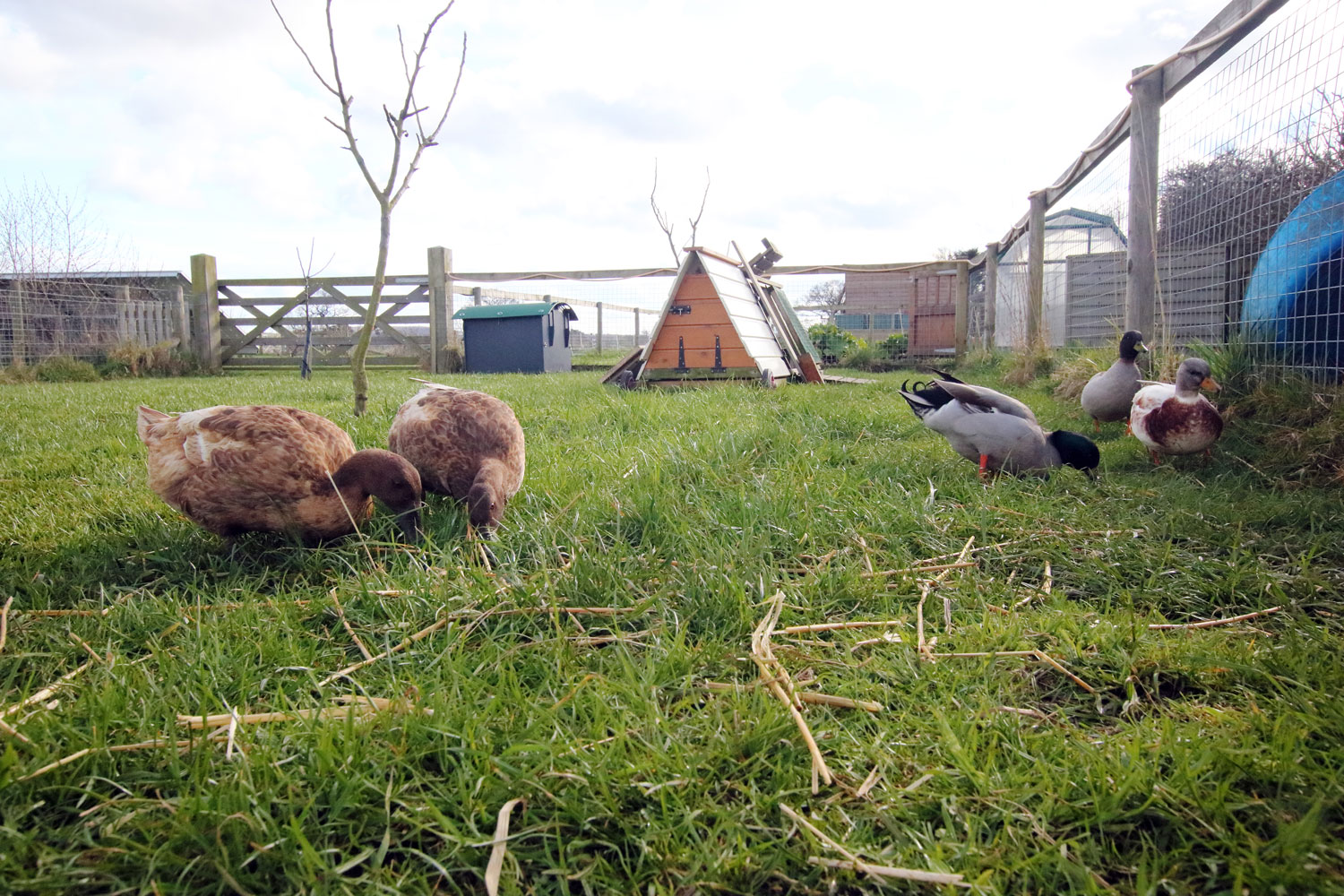
2016 spring move ducksThe ducks have all been annexed in the Banty Paddock, which has weld mesh fencing, to keep them contained! Once the vegetables in the allotment have grown to a duck-proof size, we can let them in there to clear slugs and snails, but at the moment I just don’t trust them!

2016 spring move hybridsAnd that left the remaining big hybrid hens – a motley crew if ever there was one! They are also in the Big Orchard, next to the bantams, so they’ll have some decent shade in the summer under the fruit trees.

As far as the egg-eating goes, the shuffle around seems to have helped somewhat – they’re in a new place so any egg-snaffling through boredom has been nobbled. And we’ve also trialled a roll away nest box in one of the Omlet Cubes, which seems to have worked. It was a simple affair, produced as an insert for the Chick Box. Some of the hens took to it straight away, but as one fills the double nest box of the Cube, it’s meant a queue from some ladies, or some just drop their egg down the side as they try and squeeze in. To help matters we’ve ordered two Chick Boxes, complete with the roll away nest box inserts, and we’ll place one in each of the Cubes. I think we can fit two in, but the floor space would suffer, so we’ll see how we go. I could always make a nest box holder that sits separately to the Cubes, if needed.

And that’s where we’re at! This morning we let them all out, and June came over from the farm next door to let us know they’d tried our cider and were still alive, which is a good thing, I think!

Save

Meet Tony, the Persian High Flying Tumbler

Perisan High Flying Tumber“That’s an unusual bird Rob.” I commented, on seeing this small and beautiful dove-like bird in one of their temporary aviaries.
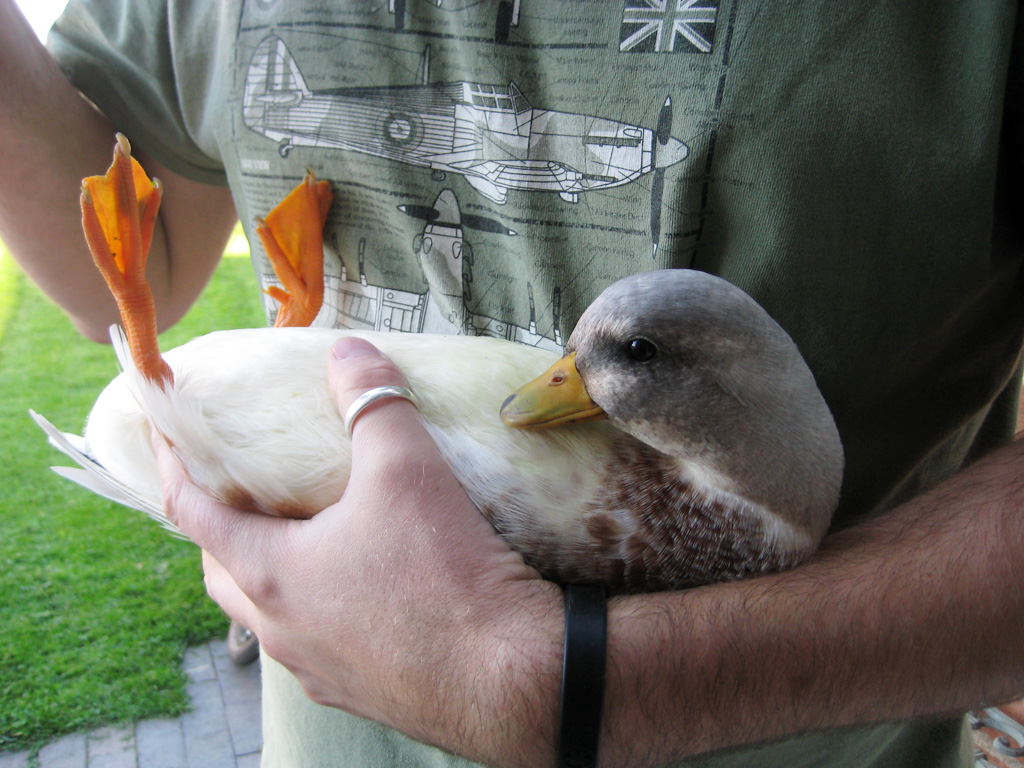
“Aye”, said Rob. “He turned up at Pete’s gate, and just sat there, looking tired. We think he’s a Tumbler.”

“A what?”

“A Tumbler. They’re a pigeon that tumbles from the sky”, he pointed out, patiently.

“Evidently…So what’re you going to do with him?”

“Ah, we thought we’d feed him up and let him go.”

“I could take him to ours and release him there if you like? It’s a bit less exposed and Suz is always feeding the wild birds, so he won’t starve if he stays!”

And that’s how ‘Tony’ the Tumbler ended up at Merrybower – in the back of the car in a pet crate, like so many of our residents.

However, once I’d confessed to having brought another animal home (it was my time after all, Suz and the children had only recently brought a runt rabbit home, promptly named her Fay, and installed her in the dining room “until she’s better”), Suz took one look at him and said “You can’t just let him go, he looks domesticated!”.

Sure enough he did seem happy to be handled, but there was no leg ring. We had no idea what he was, other than a suspected ‘Tumbler’, whatever that was. So we gave him grain and water, and he was moved into one of Suz’s own “Animal Escape Pods”, or a pet crate as the rest of the world knows them. And then we turned to the internet to see what we could discover about him, and if anyone locally knew anything about them.

It turns out that he is a Persian (Iranian) High Flying Tumbler. These are an old and rare breed of pigeon from what was once known as Persia and is now Iran. It is also written that the Persian Kings and nobility kept domesticated pigeons way back, even to the Hakhamanish Dynasty which began over 2,500 years ago, and that modern-day Tumblers are descendants of those birds, as are many other variations of the pigeon throughout the area within the Persian empire.

More specifically, Tony is a Crested Toghie Tumbler. So now we knew what he was, but what to do with him? We decided that a breeder/fancier would be the best person to let us know if they would survive in the wild, so we started to call anyone we could find offering Tumblers for sale. A kind chap in Cambridgeshire said he’d have given him a home if he were closer, and someone in London said not to let him go, but perhaps we could call the RSPCA and they could rehome him. Not a bad idea, but we kept searching. Eventually we found someone local to us who breeds and keeps Pakistani Tumblers, a very similar breed. He told us that they were just starting to fly their Tumblers, but not for very long in the weather we have. They all have heated pens, and Tony would be well looked after – if we ever wanted to visit and see his pigeons we would be more than welcome, which was very generous, and made you realise you were talking to someone very genuine and who appreciates their animals.

So Tony is now safely ensconced with his own kind, with a human slave that understands his needs – wonderful!

For more information, we found this website to be particularly useful:

High Flying Tumblers of Persia

New Duck House!

2015 new duck house

“Ooh – roomy!”

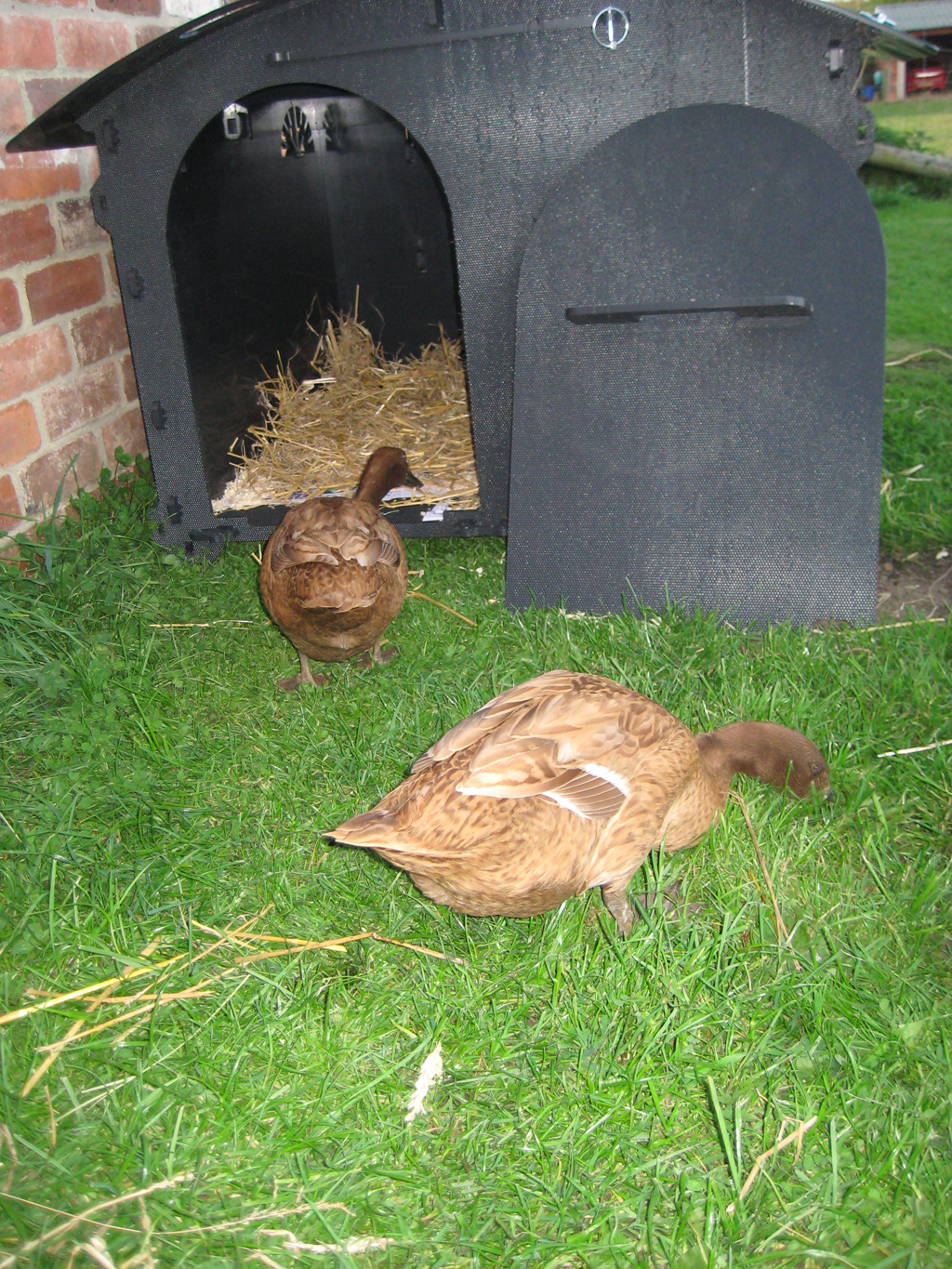
With Dotty and Lilly firmly entrenched, their new duck house finally arrived from Green Frog Designs. We’ve used one for the geese for a few years now, and know it’s a cracking bit of kit, so we’ve bought another. The expense of plastic will work out over the years through lack of maintenance needed and longevity of the material. It will probably outlast us!

Here’s Dotty checking it out for approval, before we’d even added the ramp! They’re both mixing with the boys quite well now, but we’re still going to keep them seperate during the night as the boys will become quite nasty next spring, and it won’t be fair on the girls. They’re managing two eggs a day, which is wonderful – apparently Khaki Campbells will lay around 300 eggs a year each, which is fantastic! To that end we’ve started them on layers pellets – the same we give the hens, as we know it doesn’t contain Coccidiostats – something water fowl can’t cope with. They also get some mixed corn in a bowl overnight, along with sand to help them digest their food. They also get a small bowl of mixed grit and shells, although the layers pellets should, in theory, have enough calcium in it for their egg shell production. It just feels good to give them something more natural to do with their time, foraging for stones and shells rather than giving it in pellet form.

The plan is to move them, once settled, into the veggie patch so they can get to work on those pesky pearl slugs! Yay!

2015 larry carried

Carry me, slave.

And just for the sake of it – here’s another photo of Larry relaxing!

Electric Fencing

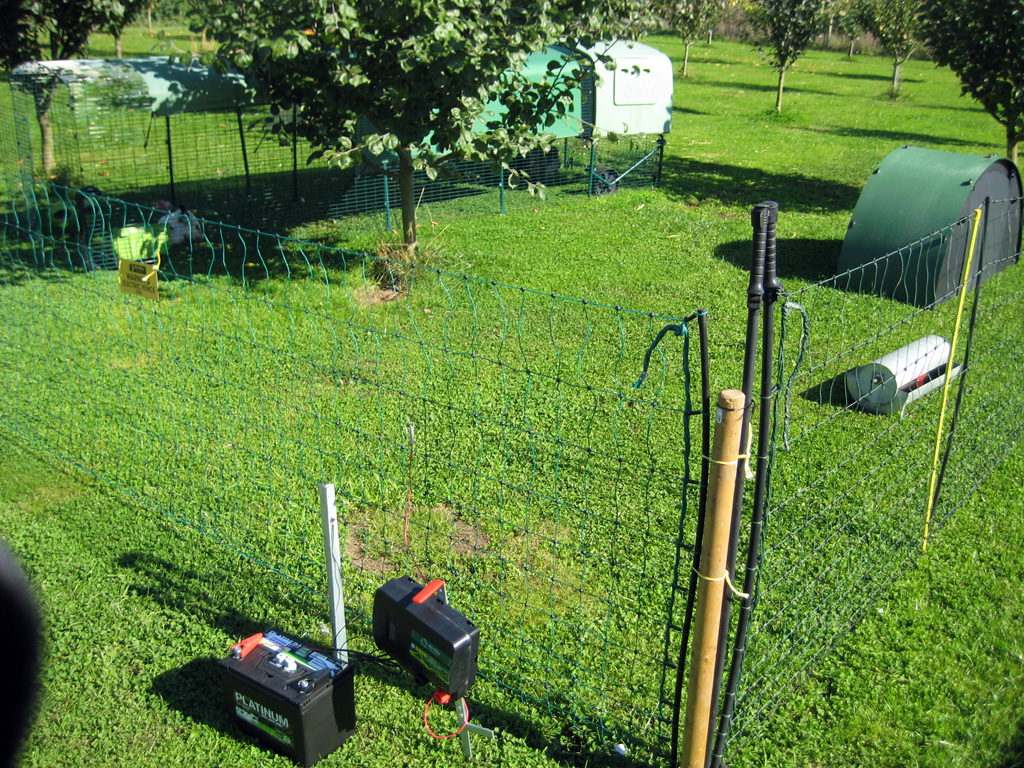
With us losing Ethelred our cock this spring to the fox, we’ve decided we can’t take any more chances, so we’ve moved to electric fencing to keep our various birds safe. In the little orchard the pen is pretty much the full extent of the quarter acre, so the impact on the chickens will be minimal. We’ve used the 110cm high poultry netting, which we’ve used as standard netting to contain the bantams for the last year, but we’ve added another 50m section to it, to produce a 25m x 25m area, powered by a 3.5 joules energiser and 75Ah leisure battery. It gives a reading of between 2,000 and 3,000kw, so it’ll do the job.

The geese, on the other hand, might not really need it, but we’ve done it to be safe. There are foxes around, and the easy pickings of dropped fruit will dry up over the next few months, so we feel it’s best they ‘learn’ our animals aren’t on the menu. Poultry netting is dangerous for geese as they tend to push their heads through fencing, and can easily get stuck in the smaller netting, dieing from electrocution 🙁 So for them we’ve erected a 5 strand fence powered by a 0.5J system, which gives a reading of around 4,000kW! We’ve also added a “hot-gate” system, so we can get in and out easily.

As we haven’t bought another cock in for the large hens, we’re going to run the two flocks together inside the chicken pen, and William the bantam can deal with them all! They’ll still have their own coops and, from experience, they’ll tend to stick to the coops they know.

Another job done ready for the winter!

Unwanted Callers at the Back Door

2015 larry silhouetted

Balancing on one leg is no mean feat (oops – I did it again!) for a tubby call duck!

See what I did there? Callers…call ducks?

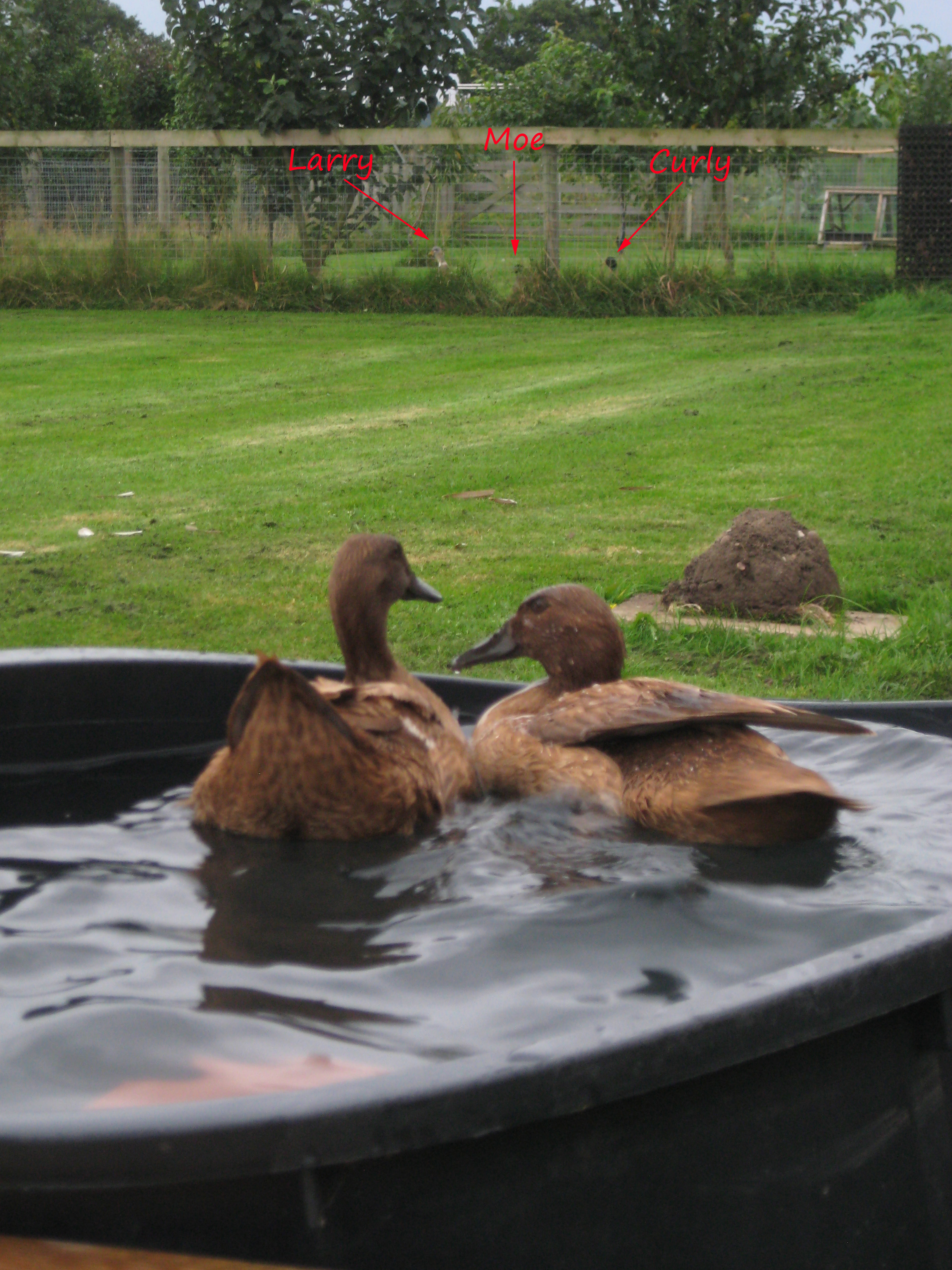
I never said the jokes would be good! Still – what a lovely thing to wake to – three call ducks bobbling around your feet as you drink your tea on the back door step. This is what comes of allowing them to mingle with the new pretty lady ducks. The lady ducks have snubbed them – probably too short for them, heightest! Mind you, Larry, Curly and Moe were more interested in the ladies’ big trough full of water, and end up sat in it all day, bobbing around like crazy kitsch fishing floats. Mingling the two sets means opening up the gate between the paddocks at the back of the house, which also means that the paddock with weld mesh fencing that keeps the mini minions in place is no longer serving its purpose, as the mini minions are in the sheep netted paddock which leads on to the garden. Sheep netting is no obstacle for a call duck, and they head straight for the back door. I suspect they’re really looking for Suz, who tends to have pockets laden with various  goodies that would disappoint you as a child, but please you as a bird – meal worms and corn being the main choices! Our children tend to pass on the travel sweets when handed around…

Khaki Campbell Ducks – Two New Merrybowerites!

Larissa, a friend of ours, whose tribe of guineapigs like our hay, sent one of those emails. It was a link to an advert, asking for a home for two Khaki Campbell ducks – Doris and Lilly. I made the mistake of sending the email on to Suz, who decided we could give them a home. I happened to be in the area on the Sunday, so in I popped with Jay, to meet them.

Their mum, Claire, introduced us to two of the most adorable ducks I’ve seen – so tame, and happy to be picked up, stroked, and plopped back down again – their beaks a perpetual smile! We were plied with tea and home-made cakes (which we forgot to pick up from the kitchen!!) and after a farewell to the ducks from their family, we brought them back to Merrybower.

2015 Doris & LillyWe’re not entirely sure where their permanent  home will be – apparently they live quite happily with chickens, but I know the mess they can make of drinking water, so we’ll have a think, but we’ll find a place for them to call their own 🙂

2015 Doris & Lilly

If you look really carefully at the photograph you can see three Call Duck boys in the background, their heads kept popping up at the sight of their pretty new neighbours – I see trouble ahead!

Apparently Khaki Campbell ducks can lay around 300 eggs a year, although I imagine this would be down to the particular strain. Having said that, we were given two presents this morning in the shape of eggs, so we must have been accepted!