Onwards & Upwards

I’m sure this is a problem most people have who grow their own from seed – where to put all the seedlings! It’s too cold outside in the greenhouse or open air, inside is the only place, but we rapidly run out of floor space! So our one East facing window is being put to good use as we’ve started to stack seeds on “The Tower”:

  • Sweetcorn (Incredible F1)
  • Coriander seeds (2-year self-harvested old  which are still viable, good to know)
  • Basil (Italiano Classico)
  • Celery (Groene Pascal)
  • Globe Artichoke (Violetto Precoce)

On the floor we have the leeks, tomatoes, cucumbers and aubergine we sowed a few weeks ago.

Root Crops are Go!

2015 Root Veg Sowing 5It’s time for hardy root crops to be sown directly into the soil. This is probably the first year, after five years of growing food in the patch, and seven years growing our own food, that I feel we’er finally getting the hang of it. Ironically it’s also the last year in our five-year crop rotation system, next year the various veg will be planted in the same place they were when we moved the veg to the patch from the house. So we’ve had four years of learning about the various bugs, pests and weather types that we can fall foul too – and hopefully know enough to keep on top of many of the more common problems life can throw at you! Of course, there’s no doubt a hidden spanner waiting to be thrown into the works when least expected! So far, with the warm weather, the shallots, onions and garlic are doing really well. One of my favourite groups of crops to grow, and not only for the fact that they really do seem to thrive on our soil – not one bad year really (touches head for luck).

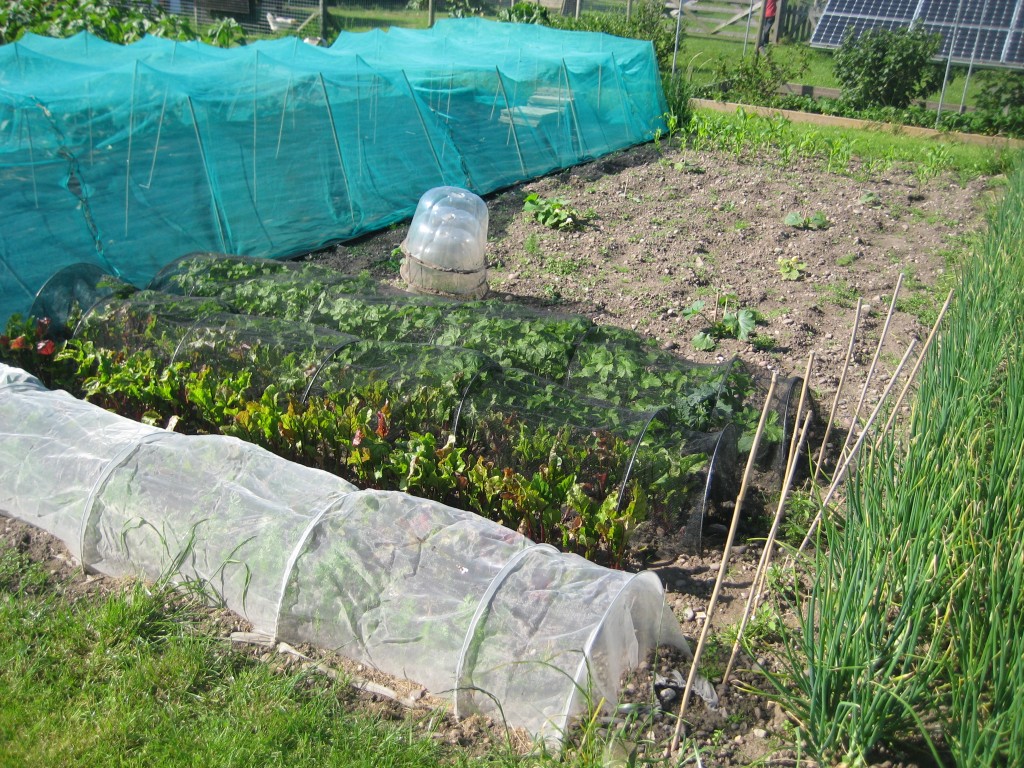
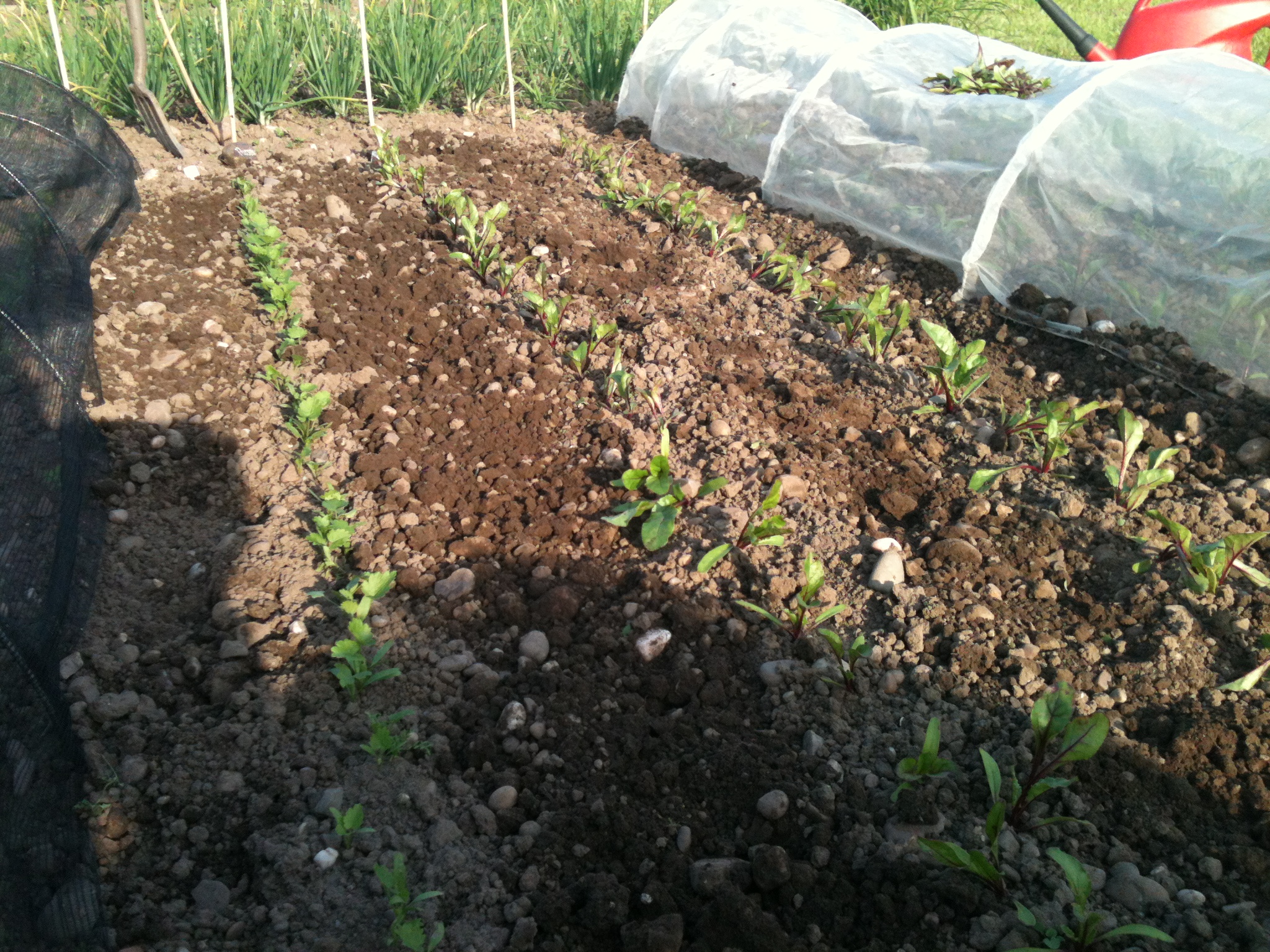
2015 Root Veg Sowing 4And then there are our roots. We like the Hollow Crown parsnips we’ve grown since the start, the Flyaway carrots are now fly free, when grown under the enviromesh, and the three rows of Boltardy beetroot, that has never bolted on us, is nice and safe under the mesh nets, from sparrows, pigeons, rabbits etc. See – we really do feel we know what we’re doing at last! Isn’t ignorance bliss 😉

2015 Root Veg Sowing 1As you can see – another thing I like is straight lines – and this rake is one of my bestest tools. It was left behind in the old outside toilet in a house I used to live in in Birmingham. It looked old then, and it feels home-made, but quality home-made. The end is heavy, perfect for raking our light soil that’s littered with pebbles. The pebbles tend to rise to the surface as you rake, and can easily be collected to one side to pick up into a bucket and carted off to fill a pothole somewhere in Derbyshire.

2015 Root Veg Sowing 3In fact, you can see a couple of trays of pebbles in one of the photographs, and that’s the fifth year of raking the ground over! It’s also useful to make the seed lines in the soil – heavy enough to tamp down a line, move on and extend the line, if held inverted. Some tools are just made for work 🙂

Finally, the whole family got stuck in to getting spuds in the ground. Again – this year was like well-oiled machinery – Suz and I dug holes, Jay and Smiler dropped the spuds in, we covered them over. It’s so much easier with all four doing it, and a lot more fun.

Greenhouse Sowing Seeds & Brassica Update

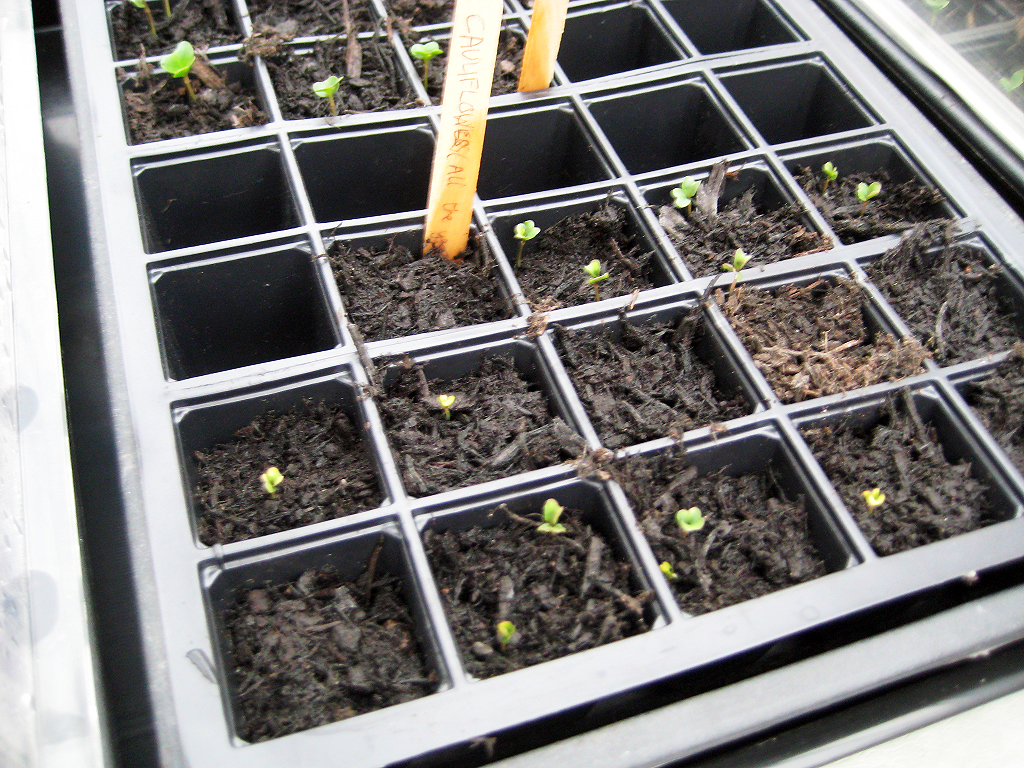
BroccoliA grubby, wet, windy weekend meant time to head to the greenhouse. At least sowing seed trays can be done under cover!

The brassicas Jay had sown the weekend before were already showing themselves – fantastic! We’d moved them from inside to the greenhouse as they can tolerate the slightly cooler temperatures outside, inside their propogators which are, in turn, inside a greenhouse.

Today was the turn of the less cold tolerant seed:

  • Marmande  and San Marzano 2 tomatoes – an eater and a cooker, enough seeds for twelve plants each, from which we’ll pick the healthiest and strongest six each (although I can never resist and usually try and find homes for the weaker ones too, as I love tomatoes!).
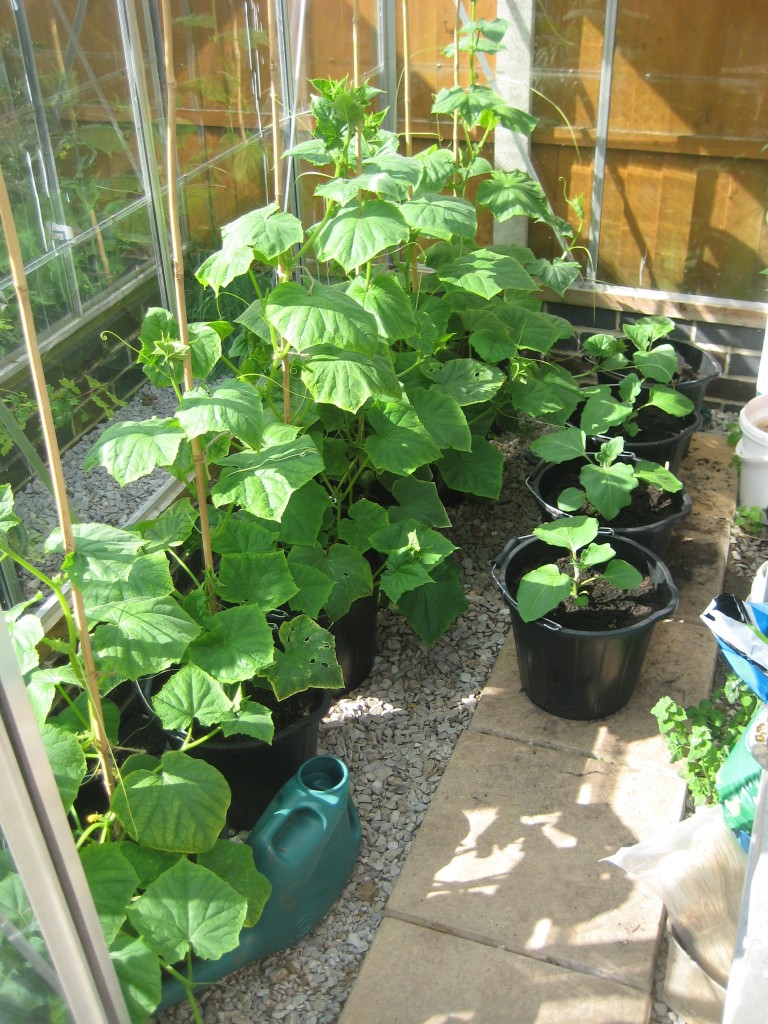
  • Telegraph Improved cucumbers – enough for six of those too.
  • (Sweet) Colour Spectrum peppers – we had the pack lying around, never tried them, but don’t like wasting seeds!
  • Black Beauty aubergine – again, six of those, to fill greenhouse no.3 🙂

As all of the above are destined for greenhouses, we start them off indoors until mid May, then move them to the greenhouses once the weather is milder. At the moment they’re tiny trays of compost sat by the windows in the dining room. In six weeks time we’ll be wading through foliage to get to the dining table, and will be glad to move them to the greenhouses!

Asparagus Planting

asparagusOur asparagus bed has not really had it easy since the start. For some odd reason, I laid out two rows of asparagus, 18″ between each plant in the row, with the rows four feet apart, which I’ve since read is a bit wide. And to top it all, the bed sits in a natural slight depression, as does a lot of the allotment. With the bad rains we had a couple of years ago, when we lost our raspberries to the high water table, we also lost a few others things – cherry trees, one rhubarb plant, and half our twelve asparagus plants. So this year, with gaps obvious, and a new tighter planting formation, we added a row of Gijnlim F1 (row 2) and a row of Connover’s Collosal (row 3). We filled in the gaps of the Pacific Purple (row 1) with more plants, and started a fifth row of Gijnlim F1 on the end. Row four, which sill had four of the 6 plants surviving we’ve left alone, and once we’ev figured out where the gaps are we’ll fill those in too!

To combat the wet seasons, rather than bury the asparagus 5″ down, we’ve onl dug down a couple of inches, added a lot of compost into the soil, and then earthed them over like spuds. So they have their 5″ of depth, only raised. I”ll then construct a border around them and fill in the deeper parts until the whole bed is 3 or 4 inches higher than the ground level, giving them more of a chance in wet weather. The only issue will be the existing plants will be deeper than the rest, but we can afford to lose those six plants once the other 20-odd come into production.

Second Weekend in the Patch

I swear someone has sped the Earth up – each year passes faster and faster! Last weekend we had our first day in the patch, tidying up odds and sods, ready for the year ahead. It’s always a good feeling, starting over again, with thoughts of how things will be done differently from previous years, or the same if they proved a good idea. The geese were extradited from the hay quarter, to let the grass grow! They seemed happy to be back in the big orchard, their summer home, but their attitudes are definitely taking a turn for the worst, with breeding season upon us. The orchard pruning was also completed, with large cuts covered in Arbrex, smaller cuts left to heal on their own. Mole hills are popping up as they get ready for the new year, and their hill earth we squirrelled away to top up the raised bed, as it’s great stuff! Compost bins were emptied, and seeds bought for the year ahead.

Today, I spent the morning on a late hedge cut, after first checking for any new nests. Suz and Smiler cleared away hedge cuttings from a hedge next door at the farm, which has been laid and looks amazing. Jay took on the mantle of chief seed sower, and popped the following into propagators for indoor germination.

  • Lyon (Prizetaker) leek
  • Monarch celeriac
  • Green Magic F1 hybrid broccoli
  • Golden Acre (Primo III) round summer/autumn cabbage
  • All the Year Round cauliflower
  • January King 3 (savoy) winter cabbage
  • Evesham Special brussels sprout

After a lunch which saw us prise open Smiler’s first ever jar of home-made pickled onions (they were fantastic, he made them from growing to pickling), Suz and Jay took it on themselves to clear some of the rubbish on the lane where we live, Smiler scattered chicken manure fertiliser around the various trees and bushes, whilst I rotovated the onion patch, ready for planting out the sets tomorrow. I also got carried away with de-twitching the couch grass that had worked its way into the onion patch, have I mentioned how much I loathe that stuff? We’ve a plastic field trough set aside for weeds this year, which we’ll fill with water and drop any weeds into. Over the year they’ll rot down into great fertiliser liquid and we don’t waste any of the nutrients tucked away in them.


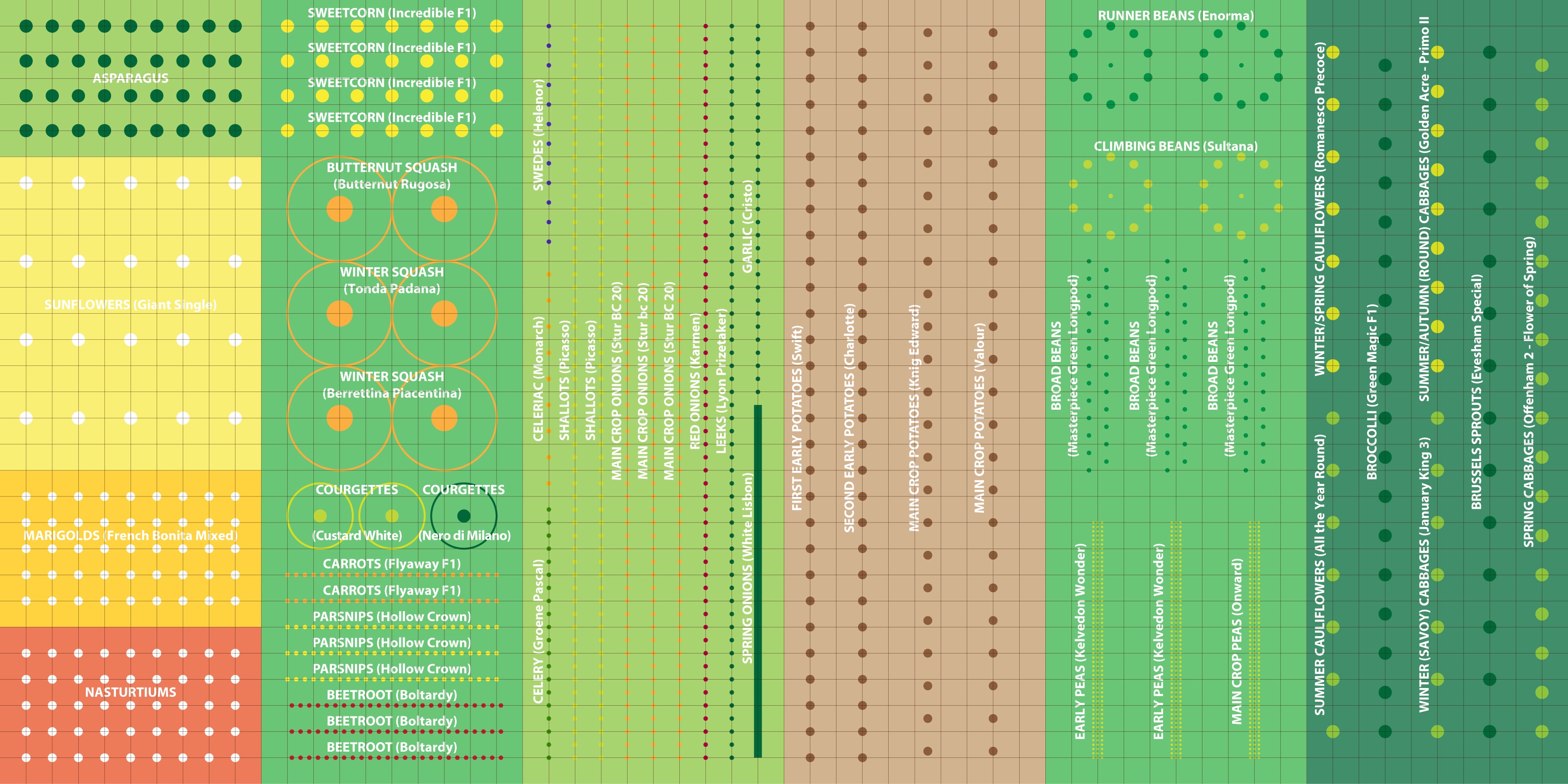
Planting Plan 2015

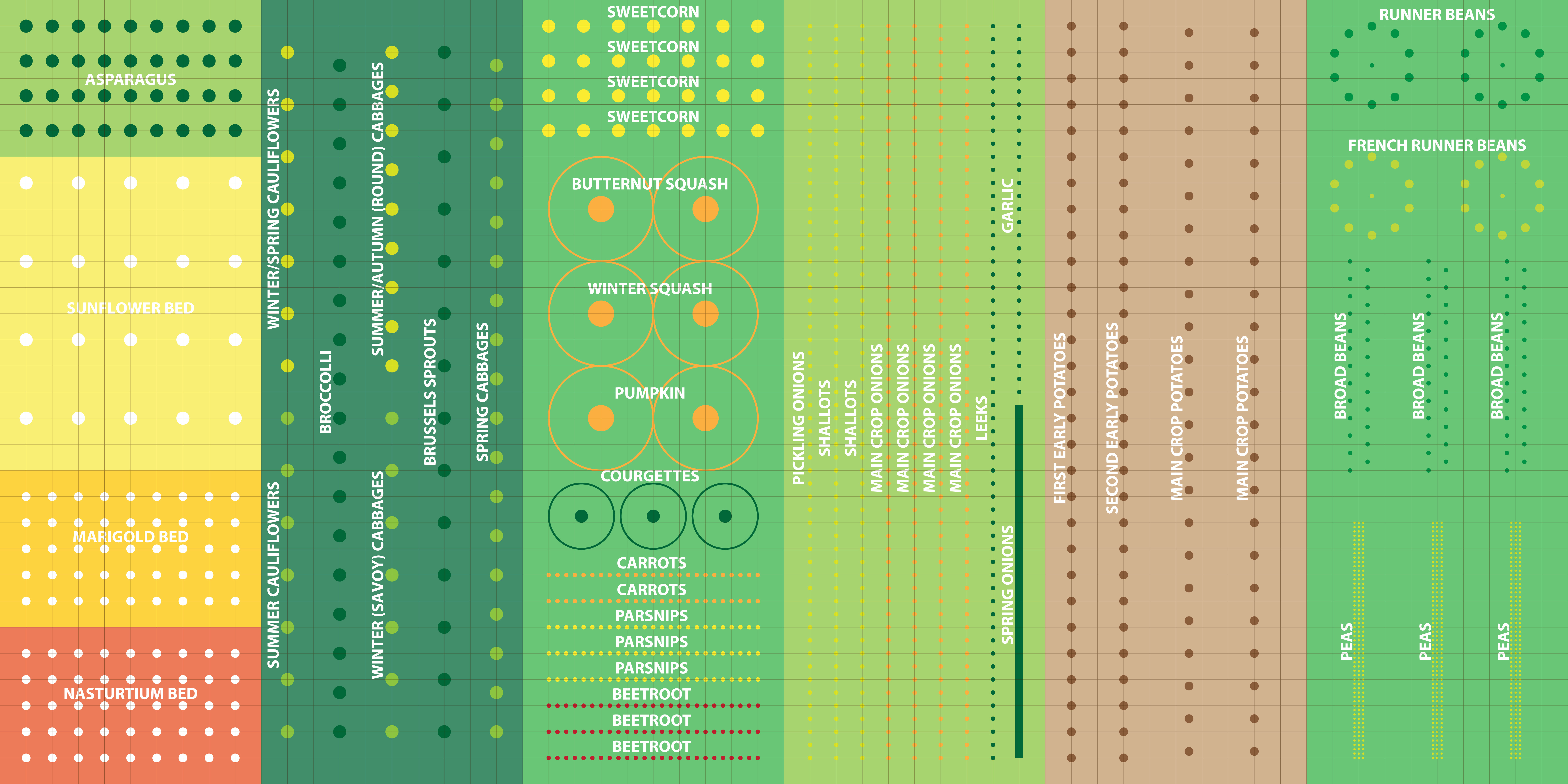
As our experience grows, our Patch planting plan gets more detailed. This year we’ve expanded to three greenhouses, and it would be rude not to make use of them all. The new raised bed last year was great, especially for the carrots which were most definitely carrot-fly-free – turns out the little critters really are too lazy to fly that extra foot off the ground for dinner! However, I’ve decided to create a more accurate and detailed planting plan, including spacings, for this year. Is there any such thing as senile OCD?

So, I give you the Merrybower Patch Planting Plans for 2015…(drum roll please):

PS the grid scale is 1ft
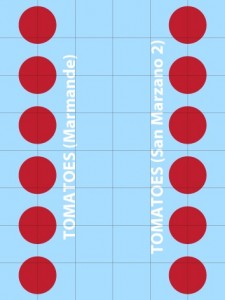
Greenhouse No.1 Plan 2015Greenhouse No.1

This sees only two tomato varieties, both from the Franchi seed collection of Italy. Marmande is one of our favourites – an ugly beef tomato with the tastiest, juiciest flesh, wrapped in a skin so delicate you can hardly tell it’s there when biting into one! We’re also trying out a different plum tomato, for cooking with. Last year’s Roma VF were great, but these San Marzano 2 are meant to be brilliant of or passata, and I have fond memories of the smell of slowly simmering tomatoes from childhood in Naples. Pure heaven!

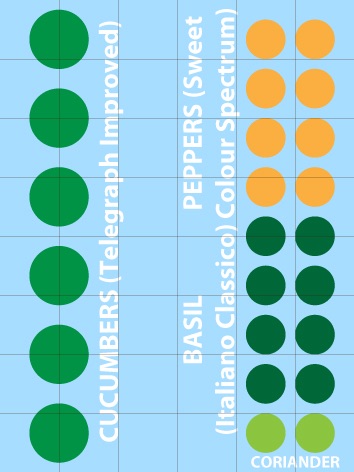
Greenhouse No.2 Plan 2015Greenhouse No.2

As this is the greenhouse with the potting bench in, we stick to cucumbers on the floor to the left, our tried and tested Telegraph Improved, and on the bench, once all seedlings have been transplanted outdoors, we’ll have sweet peppers (a non-descript variety as we’re using a lot of left-over seeds from last year this year), and a lot of basil, which we dry and use over the year. We’ll also pop a couple of coriander plants in too, as we have tonnes of seed from a couple of years ago!

Greenhouse No.3 Plan 2015Greenhouse No.3

This is a simple one – six Black Beauty aubergine plants. I’ve struggled for two years with aubergines, too cold I think is the biggest problem, and not enough growing space. Now they’ll have their own greenhouse, so they’d better not complain!

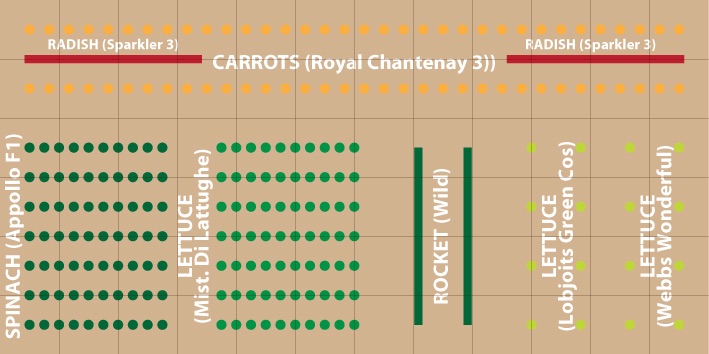
Raised Bed Plan 2015Raised Bed

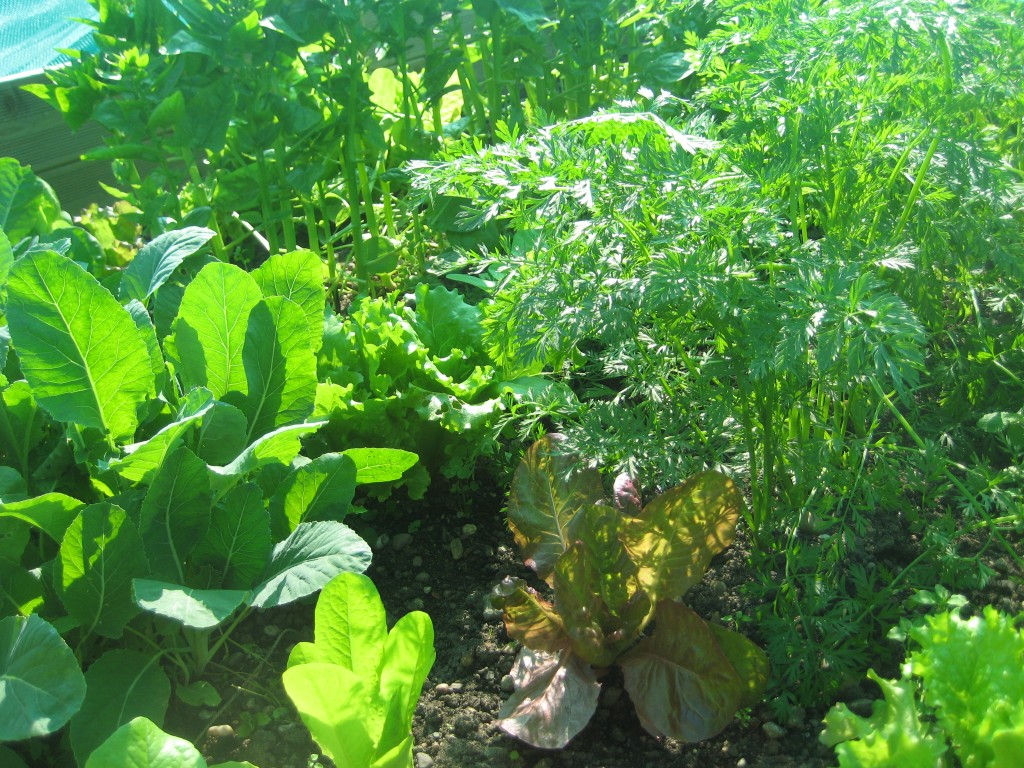
This is essentially our outdoor salad bed. As last year, we have Royal Chantenay 3 carrots, an early variety but one we were still picking in December and they were HUGE! We’ll sow thinly between the carrot rows Sparkler 3 radish – I’m not a huge fan of radish, I can’t get excited about them, but if anyone has any suggestions please do let me know! Then we have a bed of pick and come again Appollo spinach, a bed of pick and come again Mist. di Lattughe lettuce, two rows of wild rocket and a couple of rows of traditional lettuce – Lobjoits Green Cos and Webbs Wonderful.

Main Vegetable Beds

Vegetable Beds Plan 2015Then we come to our main source of back pain and delight, a bitter sweet relationship if ever there was one.

Starting from the left we have our asparagus bed, which is seeing a small expansion in the number of plants. Of the original 12 only six remain – the wet winter a couple of years ago killed some off. This year we’re building the soil level up and raising four ridges, similar to potato ridges. We’re then getting 36 plants in, spaced tighter but within recommended distances. Then we have our sunflowers – Giant Single this year, although I suspect we’ll have some self-setters from seed dropped over winter by clumsy birds! Then we have French Bonita mixed Marigolds, once matured we’ll plant these around th the allotment as companion plants. And finally we have Nasturtiums – I haven’t bothered buying any as these definitely self-seed!

Our squash/root bed sees some old and new friends this year. Incredible F1 sweetcorn has proved reliable over a few years now so deserves to be in there. As do the Butternut Rugosa and Tonda Padana, a butternut and winter squash from the he Franchi range. We finished the stored Rugosa two weeks ago, early March, and we still have one more Tonda Padana on the shelf! We’re not bothering with traditional pumpkins this year as two years on the trot have been disastrous. Instead, once again we turn to the Franchi range for some Berrettia Piacentina winter squash – lovely blue/green squash with an orange flesh. Two types of courgette this year, from the same range; the UFO-shaped Custard White and the dark Nero di Milano. I like the Franchi range as they’re heritage varieties with some fantastic flavours. Finally, the roots are old friends – Flyaway carrots, Hollow Crown parsnips (old variety with a lot of of taste), and Boltardy beetroot.

The main contingent of the allium bed are Stur BC onions, a good storer. Then we have Karmen red onions, another decent storer, Picasso shallots for pickling, Christo garlic, which we haven’t tried before, and White Lisbon spring onions. For variety we have one row divided between Groene Pascal celery, Monarch celeriac and Helenor swedes. Lastly, one row of Lyon Prizetaker leeks.

The spud patch is easy and simple this year – 1st earlies are Swift, the earliest variety. 2nd earlies are Charlotte, lovely waxy texture. Main crops are King Edwards, and Valour, the latter being a great all rounder boiler, masher, roaster, baker.

The legume patch – we’ve decided we quite like any plant that grows to meet your hands, rather than make you bend to pick it! To this end we have two wigwams a each of Enorma runner beans, and do Sultana climbing French beans.  For the broadbeans we have the familiar Masterpiece Green Longpod, and peas we have two rows of Kelvedon Wonder, an early sweet variety, and one row of Onward main crop.

Finally the brassicas. Funky pointy Romanesco Precoce winter/spring cauliflowers, reliable All the Year Round summer cauliflowers, Green Magic F1 broccolli, Evesham Special brussels sprout, January King 3 winter savoy cabbage, Golden Acre Primo III summer/autumn cabbage and Offenham 2 – Flower of Spring spring cabbage.

That’s about it! We just have to plant them now!

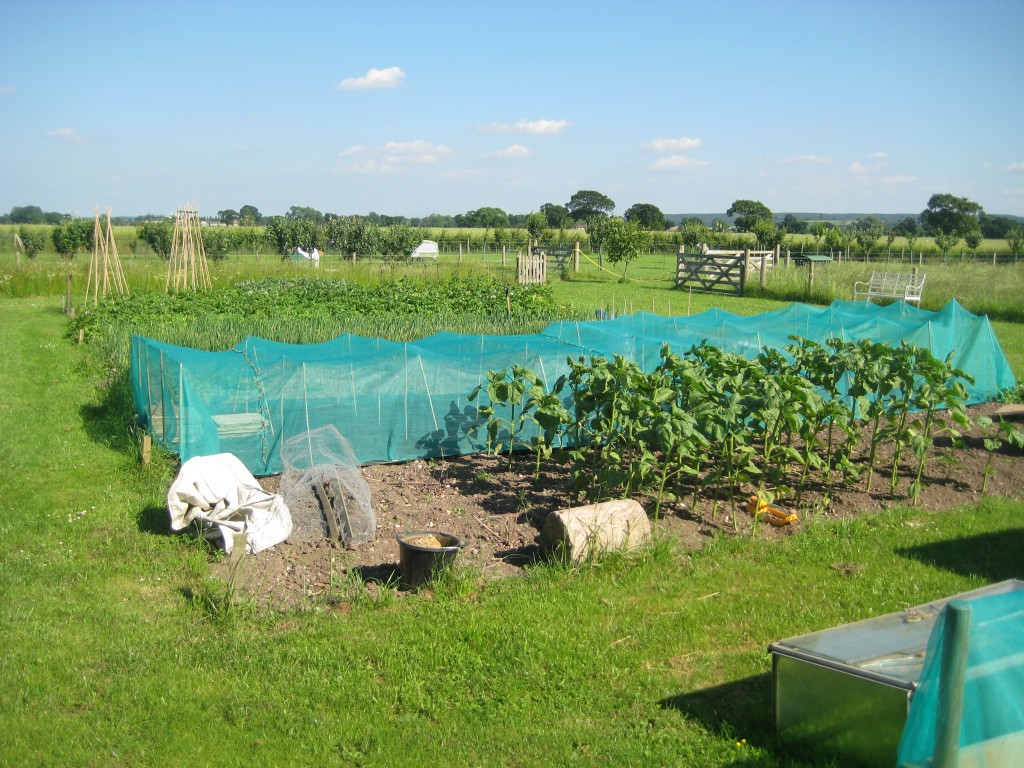
Patch 2014 Panorama

So far the year has been fantastic. The hay is almost ready to get in – we just need one more day of no rain and we’ll be bagging it up tomorrow. Fingers crossed we miss the showers! The air smells damp, but I’m optimistic…

[photonav url=’https://merrybower.co.uk/wp-content/uploads/2014/06/2014-patch-panoramic-low-res.jpg’ mode=’drag360′ popup=’none’ animate=’1′ container_width=’450′ container_height=’450′]

Replacement Beans

The slugs have managed to decimate the French climbing beans and runner beans – only five out of forty stations surviving their onslaught! Luckily we have backup at the cottage. Chatting to a friend today, he mentioned he drinks half a can of cheap bitter (they prefer bitter to lager apparently, being British slugs I guess), lie the can on its side and they’ll climb up and in through the hole. So much easier than filling sunken pint pots, and you can add the slugs and old beer to the compost, and recycle the can. Nice, I’m off to drink several half cans of cheap bitter!

20140623-112901.jpg

20140623-112941.jpg

June Update


What can I say?! The weather has been absolutely fantastic! Mostly sun, the odd shower here and there, then back to sun. Everything is growing as it should be – no late frost to nobble the early starters, no waterlogging, no drought. To be honest, it’s getting a bit scary.

So, to firmly plant the goodness that has been the last month, here’s a quick update on just how well everything’s growing.


Family Day in the Patch

2014 Allotment Quarter Layout Update

Updated 2014 patch plan with final planting distances. Grid size is 1 foot.

Every year the weekends surrounding the last frost date (about mid-May for us) are one of the busiest. And every year Suz’s parents pop on down to help out with weeding, digging, hoeing and sowing. This year is no exception, with the exception that the weather has been glorious and everything has got off to a good start. We had a minor hiccup a few days ago with a slight frost, which seems to have nobbled the peas and the newer leaves on the orchard trees, but the potatoes survived it and it’s going to be a good harvest at this rate.

The potatoes were mounded up, lovely and regimented. The french climbing beans (Sultana) and runner beans (Enorma) were sown at the bottom of the wigwam canes – 8 or 10 canes, two per cane, and we’ll thin the weaker plant out later in the year. A few additional Scorpio and De Monica broad beans were sown to fill the gaps, and more Onward peas were sown as they were hit pretty hard by what I can only assume was the frost. They never germinated, but we have them netted and slug-pelleted (organic pellets) so it’s the only conclusion I can draw.

2014 Root CropsThe onion patch was de-weeded – a painstaking process – but so worth it when you see the neat lines of onions and shallots. The carrots were thinned to 1-1.5″ spacing, and will be thinned again in a few weeks. The beetroot were thinned to 4″ and will stay at that, and the parsnip weren’t touched as they didn’t seem big enough yet. Then went in some corgette (Nero di Milano zucchino), two per station, straight in the ground after it had been 2014 Squash Patchrotovated nicely. Cloche protection over those – to be safe, and then under the mini poly tunnels we planted out the pumpkins which had been growing on nicely in the dining room for a month or so.

Talking of which – alongside the pumpkins, inside we also had:

  • Tomatoes (Roma VF plums, Marmande beef and Shirley)
  • Cucumbers (Telegraph Improved)
  • Sweetcorn (Incredible F1)
  • Sweet peppers (Antohi Romanian, Golden Bell and Friggitello)
  • Hot peppers (Jalapeno, Hungarian Hot Wax and Red Cherry)
  • Aubergine (Black Beauty)
  • Butternut squash (Butternut Rugosa)
  • Leek
  • Basil (Italiano Classico)

Onwards with the outdoor work – the sweetcorn mentioned above were planted out and watered in, and the flower bed was coming along nicely, having been sown a fortnight ago with sunflowers, marigolds and nasturtiums. Unfortunately, we hadn’t realised the tenacity of sunflower and nasturtium seeds in particular. The sunflowers that were planted this year were obvious to make out, as were the unintended sunflowers that were the result of dropped seeds from last year! It was quite painful to hoe them out, but they would drown out everything else, and we really did need to weed the flower bed. A couple of rows of nasturtiums were also equally easy to define, but the no-mans’ land that stretched between the sunflower and nasturtium bed was awash with everything that nature, and we, had allowed to grow there in the past; sunflowers, nasturtiums, chickweed, wild pansies, shepherds purse – all the favourites plus those I couldn’t identify. So with heavy heart I hoed the land there and will wait a few days before re-sowing the marigolds. Lesson learned – next year the marigolds will be sown in plug trays and potted out in their final positions.

On to the soft fruit – all were looking great with the exception of one black currant bush and one gooseberry bush, which had succumbed to greenfly on their newer growth. I have some organic spray which I used sparingly on both, but I have noticed the ladybird population looks quite healthy, so dropped a few on to the infected plants to munch their way through the green nasties. No sense spending money on a spray when nature will do the work for you.

The fruit trees are all looking decent – again, some greenfly here and there but nothing too onerous yet. I counted approximately 300-400 apples on one small cider tree! I know the June-drop will see many lost, but it’s a sign of how decent the weather has been so far.

2014 Small Orchard QuarterOh, and we lost the colony of bees Christian had brought around a few months ago. At the time he was unsure whether there was a queen at home, and it turns out there wasn’t. But on Friday he brought a new colony around. Again, not a large colony and maybe without a queen, but it’s a second attempt. Whilst I was planting the sweetcorn out, I heard  a buzz nearby, and looked around for the culprit. Nothing, and yet it was getting louder and louder. I had my wide-brimmed hat on, and couldn’t see past the horizon, which was my mistake. I looked up and around six feet above my head was a swarm of bees – stretching about twelve feet in diameter! Needless to say – a couple of expletives passed my lips, the hapless sweetcorn I was holding was cast aside and I legged it to the first gate. The last time I was pestered by a bee I made the mistake of thinking I had run far enough, only to be hit on the head by it at this very gate, and then the next, and only lost it after running 200 yards back to the house. This time I just opened the gate and ran, only stopping to check behind me half way to the next gate. I needn’t have run – the swarm wasn’t interested in me – it was still hovering over the sweetcorn, possibly mildly interested in the adjacent strawberry flowers, but then it just moved off at a fair whack, heading south over the vegetable patch, then the hay quarter (much to the consternation of the geese) and into the rape seed field. What an experience! I have never witnessed a swarm before, and I have to admit I was quite nervous of it, but you just can not help but be in awe at the scale of it! Worried that it may have been our new colony, I went back to check on the hive, but they were still happily plodding in and out of the entrance. Only the day before Christian has said he’d been inundated with swarms this year, due to the clement weather, and was physically shattered.

As the day waned, into the greenhouse to tend those plants already in position – the Roma VF, Marmande and Shirly tomatoes, plus duplicates of those inside the house (the cucumbers etc). I edged my bets and placed half of everything from the house into the greenhouse a couple of weeks ago, to see how they fare. So far not bad at all, though the indoor plants have really taken off in the last few days, and will need potting on very soon.