Another good day in the patch. We all trooped down, the sun decided to make an appearance, and for a short while you could almost convince yourself that winter was over. The first and second early potatoes (Epicure and Kestrel) were dropped into their waiting 6″ deep holes – spaced 12″ apart in rows 18″ from each other. As they start to show in a few weeks we’ll mound the earth over the tips to protect them from any frosts we might get.
An awful lot of hoeing was also done – after last year suffering some consequence of perhaps not enough, I’m determined to keep on top of the weeds at this time of year. So the potato patch was hoed thoroughly before planting the seed potatoes, the legume patch got a good seeing to as well, as did the brassica patch.
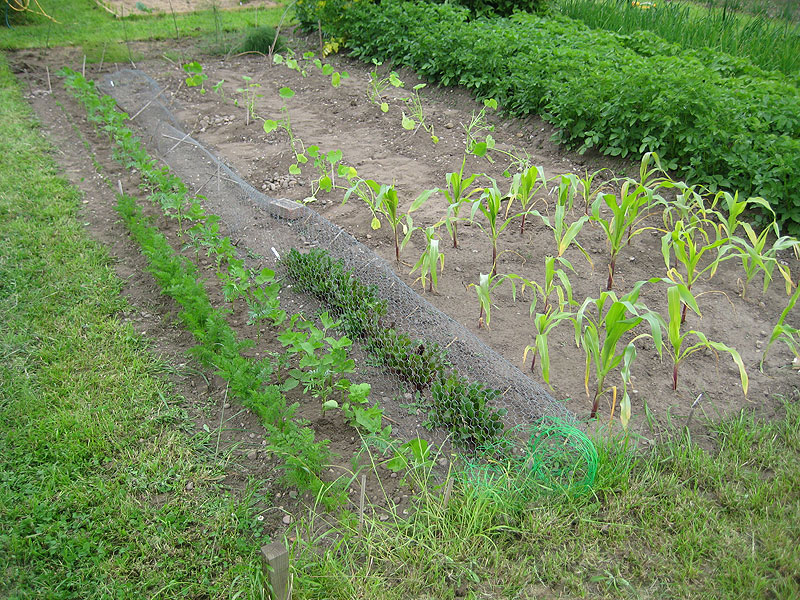
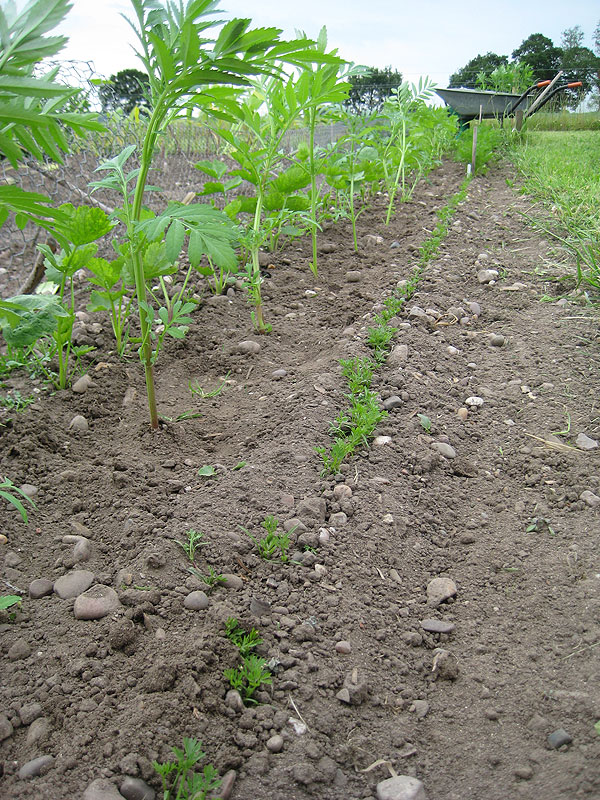
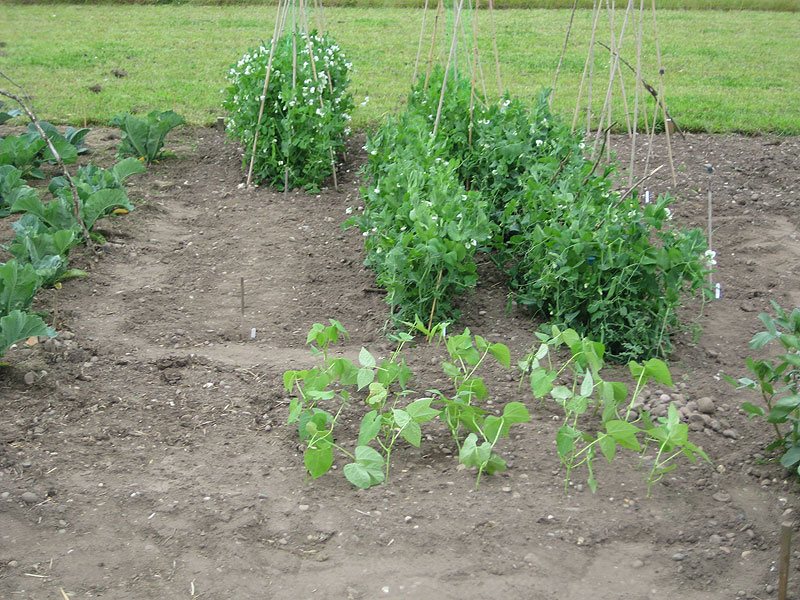
The Jerusalem Artichokes are already popping their heads above the parapet, but whilst they’re still quite short, we sowed some lettuce between the rows – Balmoral (a type of iceberg variety) and a Salad Lettuce, pick as it grows type. The radish in the parsnip row are already growing, and the snap peas, peas and broad beans are starting to show.
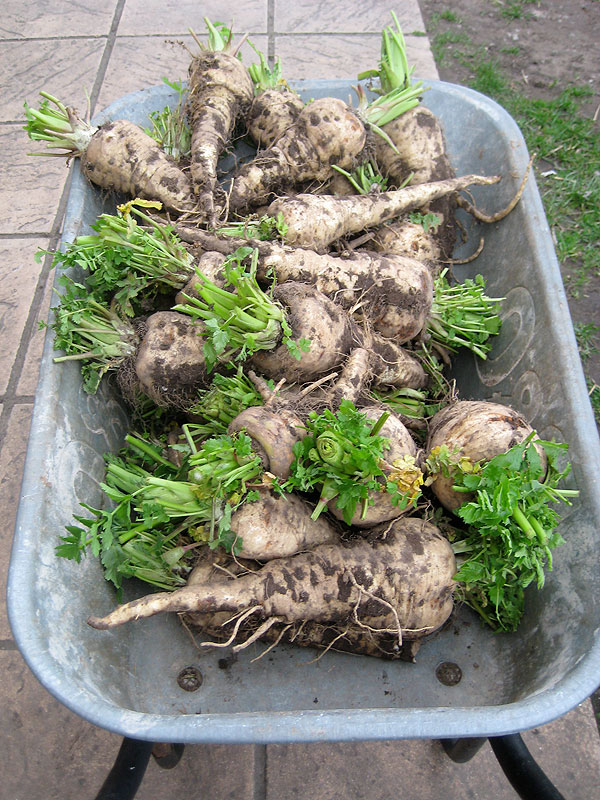
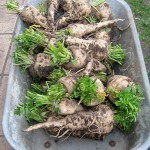 Whilst Jay was planting the potatoes that have been on her windowsill for the last 6 weeks, Suz and Smiler dug the remaining parsnips up from last year’s crop. They managed to fill a barrow full with about 15 parsnisps – they are giants! We had 2 between four of us for our evening meal in a parsnip soup, which also used our own leeks, onions and garlic, and cheese and yoghurt added. It tasted fantastic, really welcome after working outside all day.
Some twitch was also dug out from around two of the orchard trees. They look like isolated events, but the fact that twitch was present means it was in the field before we sowed the grass, so a beady eye is needed.
The last thing to do was to sow into large 6″ pots the chilli seeds. We’ve used the remainder of last year’s packets – Peperone Dolce di Bergamo and Pimientos de Padron. Again, these are in the mini greenhouse for now but will be moved to the main greenhouse soon. The sweetcorn that was in the mini greenhouse have been moved to Jay and Smiler’s windowsills now that their potatoes have gone into the ground.
Jay also grabbed her wild flower books to try and find out what sort of flowers were showing themselves in the headland where we’d sown the wildflower mix. It turns out that the flowers present are nothing to do with  the mix, but were already in the soil. We have:
Shepherd’s Purse (Capsella bursa-pastoris) – is not native to the UK, but comes from Eastern Europe and Asia Minor. In Shanghai it is commonly used as food, where they stir-fry it with rice cakes and other ingredients, or as part of the filling in wontons. Herbally, it is primarily used to stop vaginal bleeding, an action which may be attributable to the common parasitic  fungus found with it.
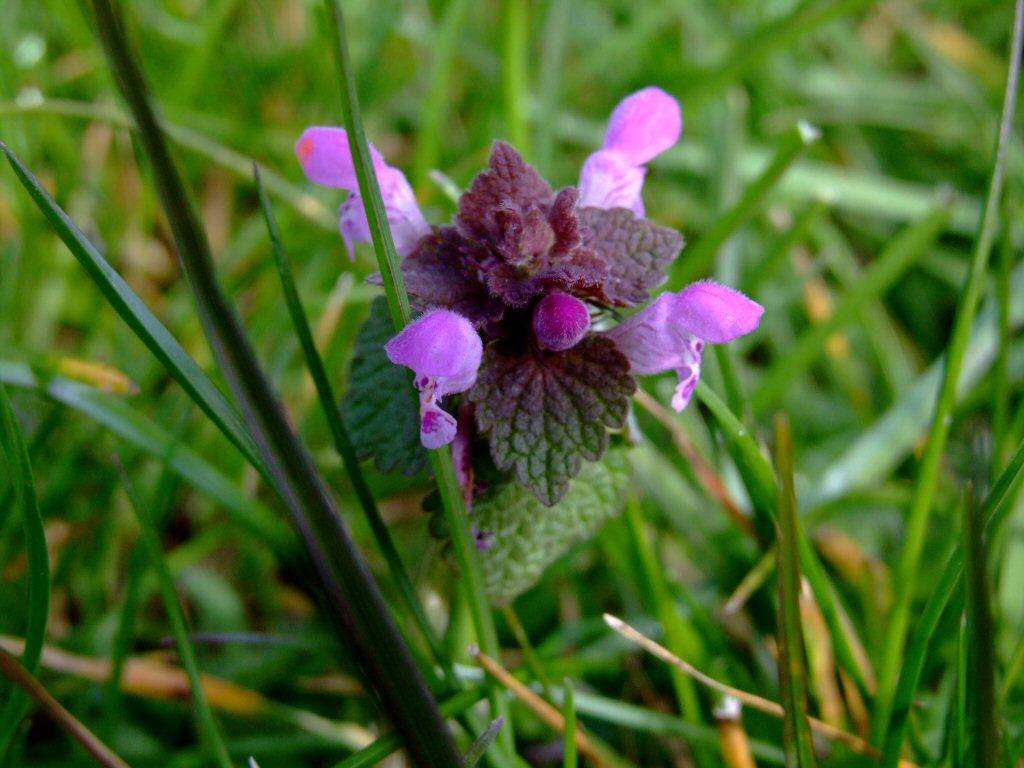
Red Deadnettle (Lamium purpureum) – a prominent source of pollen for bees in March/April when bees need the pollen as protein to build up their nest. Young plants have  edible tops and leaves, good in salads or in stirfry as a spring vegetable.
Germander Speedwell (Veronica chamaedrys) – a good source of nectar for solitary bees, it is a common flower in woodland, hedgerows and gardens and in the past was used in herbal 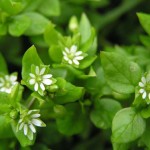 medicine to treat coughs and catarrh, and as blood tonic.
Common Chickweed (Stellaria media) – is edible and nutritious, and is used as a leaf vegetable, often raw in salads. It is an annual plant, native to Europe, and often eaten by chickens (hence the name). It is also called chickenwort, craches, maruns and winterweed.
Wild Pansy (Viola tricolor) – also known as Heartsease, is common to Europe, and grows as an annual or short-lived perrenial. In the past it has been recommended as a treatment for epilepsy, asthma and eczema, and has also been used in the treatment of chest complaints such as bronchitis and whooping cough. It is also a diuretic, leading to its use in treating rheumatism and cystitis.
Heartsease was a staple in medieval gardens, and was once believed to be a potent love charm. Its flowers are an old remedy for heart disease, and an infusion of the herb was reputedly the cure for a broken heart. Heartsease contains salicylates and rutin, both of which are anti-inflammatories, and may explain the herb’s ability to calm skin inflammation.

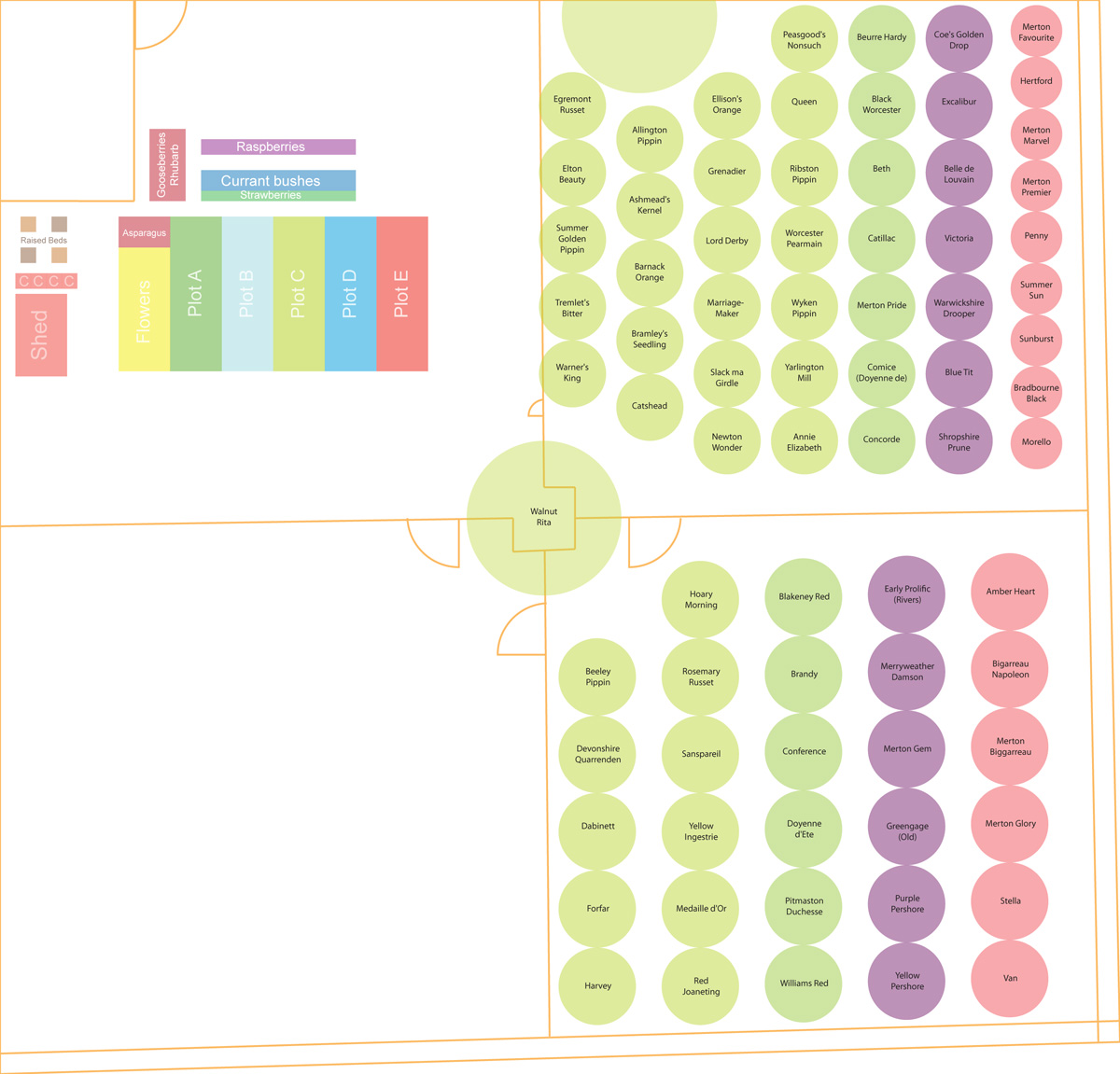 The replacement trees are not the only thing to have changed from the original patch layout, so it’s about time I put an updated version online.